Arsène Lupin, super-sleuth
Maurice Leblanc
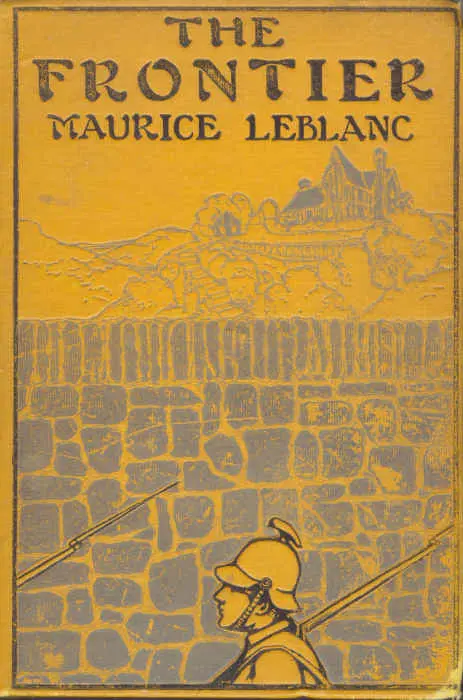
THE CLASSIC COLLECTION · 1912
"The Frontier" by Maurice Leblanc is a novel written in the early 20th century. The story revolves around the character of Morestal, a patriotic farmer and mayor, whose life is intricately connected to the tension between France and Germany, set against the backdrop of looming war. Through the lives of Morestal, his son Philippe, and the intertwining paths of other residents near the French-German border, the narrative grapples with themes of loyalty, national pride, and the personal costs of conflict. The opening of the book sets a tense atmosphere as Morestal and his wife discuss the ongoing disturbances along the French-German frontier, specifically the repeated damage to a boundary post, symbolizing deeper issues of national integrity and personal conflict stemming from past wars. We see Morestal's fierce pride in France and a palpable sense of foreboding as he reflects on the possibility of conflict re-emerging with Germany. The arrival of their son Philippe, a professor who has differing views, introduces an imminent clash of ideologies within the family, encapsulating the overarching struggle between old patriotic sentiments and newer, more progressive worldviews. As Philippe returns home with his wife Marthe, layers of personal history entwine with the national narrative, hinting at dramatic tensions both within the family and across the border.
Introduction adapted from the source catalogue; source summaries may be automatically generated.
Free to read · English · 57,388 words · No account needed
MAKE TIME FOR A GOOD BOOK
On by default. Untick to stop anonymous reading totals. Each page counts after 10 seconds in view. How this works.
Anonymous counting is on unless you have switched it off.
Old Poussiere had not finished eating the piece of bread which he had taken from his wallet. He was listening and observing, with eyes wide open and an evident effort to attend. He examined the captain, his uniform, the braid upon his sleeve, seemed to reflect on mysterious things, stood up and seized a rifle.
"That's right, Poussiere," grinned Morestal. "You know your country right enough, once it needs defending."
A man had made the same movement as the tramp, almost at the same time. One more division in the gun-rack was empty.
It was Duvauchel, still rather unsteady on his pins, but wearing an
undaunted look.
"What, Duvauchel!" asked Captain Daspry. "Aren't we deserting?"
"You're getting at me, captain! Let the beggars clear out of France first! I'll desert afterwards."
"But you've only one arm that's any good."
"A greaser's arm, captain ... and a French greaser's at that ... is
worth two, any day."
"Pass me one of them rifles," said the gardener's son. "I know my way
about with 'em."
Duvauchel began to laugh:
"You too, sonnie? You want one? You'll see, the babes at the breast will be rising up next, like the others. Lord, but it makes my blood boil to think that they're in France!"
All followed the captain, who allotted them a post along the parapet. The women busied themselves in placing ammunition within reach of the marksmen.
Marthe was left alone with her husband. She saw that the scene had stirred him. In the way in which those decent folk realized their duty and performed it without being compelled to, simply and spontaneously, there was that sort of greatness which touches a man to the very depths of his soul.
She said to him:
"Well, Philippe?"
His face was drawn; he did not reply.
She continued:
"Well, go.... What are you waiting for? No one will notice your flight.... Be quick.... Take the opportunity while it's here...."
They heard the captain addressing his lieutenant:
"Keep down your head, Fabregues, can't you? They'll see you, if you're
not careful...."
Marthe seized Philippe's arm and, bending towards him:
"Now confess that you can't go ... that all this upsets your notions ... and that your duty is here ... that you feel it."
"There they are! There they are!" said a voice.
"Yes," said Captain Daspry, searching the road through the orifice of a loop-hole, "yes, there they are!... At six hundred yards, at most ... It's the vanguard.... They are skirting the pool and they haven't a notion that ..."
A sergeant came to tell him that the enemy had hoisted a gun on the
slope of the pass. The officer was alarmed, but old Morestal began to
laugh:
Your reading position is saved on this browser. Take it to another device with a library code. Reading pages adapt to text, rather than matching a printed edition.
Maurice Leblanc
Maurice Leblanc
Maurice Leblanc
Maurice Leblanc
BEHIND THE BOOK
This eBook is for the use of anyone anywhere in the United States and most other parts of the world at no cost and with almost no restrictions whatsoever. You may copy it, give it away or re-use it under the terms of the Project Gutenberg License included with this eBook or online at www.gutenberg.org. If you are not located in the United States, you will have to check the laws of the country where you are located before using this eBook. Read the source licence.
The original source file, including credits and licence, is retained by this library. Request an original-format copy at no charge. Please include the book title and Project Gutenberg identifier #28480.
KEEP YOUR CURIOSITY GOING
Cécile Tormay

Moritz Busch
Coulson Kernahan
John L. Ransom

Maurice Baring
Frances Wright