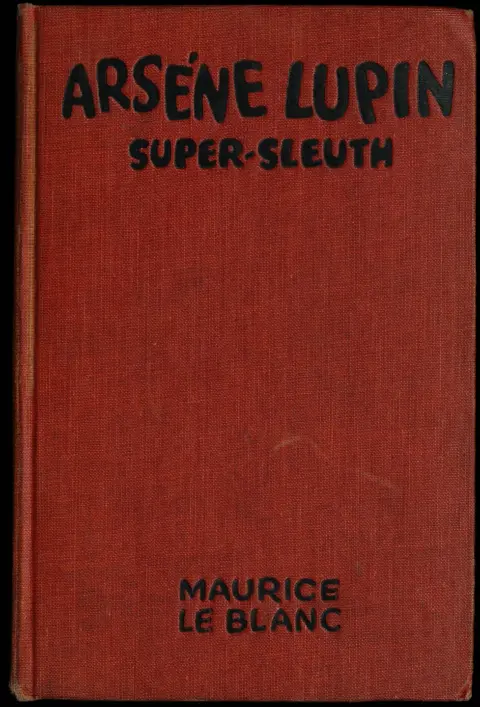
Arsène Lupin, super-sleuth
Maurice Leblanc
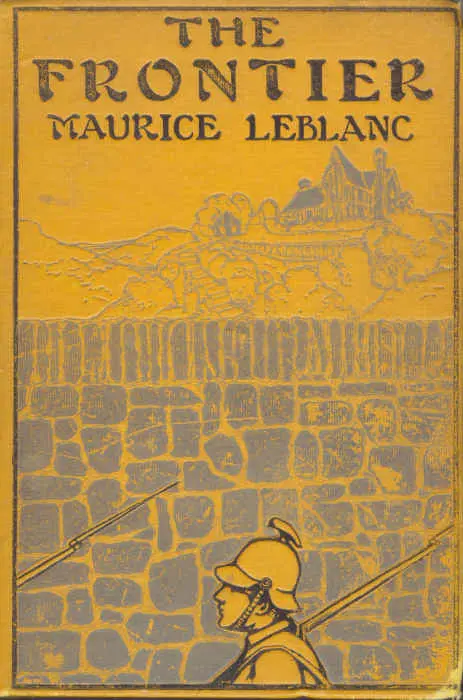
THE CLASSIC COLLECTION · 1912
"The Frontier" by Maurice Leblanc is a novel written in the early 20th century. The story revolves around the character of Morestal, a patriotic farmer and mayor, whose life is intricately connected to the tension between France and Germany, set against the backdrop of looming war. Through the lives of Morestal, his son Philippe, and the intertwining paths of other residents near the French-German border, the narrative grapples with themes of loyalty, national pride, and the personal costs of conflict. The opening of the book sets a tense atmosphere as Morestal and his wife discuss the ongoing disturbances along the French-German frontier, specifically the repeated damage to a boundary post, symbolizing deeper issues of national integrity and personal conflict stemming from past wars. We see Morestal's fierce pride in France and a palpable sense of foreboding as he reflects on the possibility of conflict re-emerging with Germany. The arrival of their son Philippe, a professor who has differing views, introduces an imminent clash of ideologies within the family, encapsulating the overarching struggle between old patriotic sentiments and newer, more progressive worldviews. As Philippe returns home with his wife Marthe, layers of personal history entwine with the national narrative, hinting at dramatic tensions both within the family and across the border.
Introduction adapted from the source catalogue; source summaries may be automatically generated.
Free to read · English · 57,388 words · No account needed
MAKE TIME FOR A GOOD BOOK
On by default. Untick to stop anonymous reading totals. Each page counts after 10 seconds in view. How this works.
Anonymous counting is on unless you have switched it off.
Suzanne did so. As she approached, she saw Philippe in the dusk of the passage. She did not make a movement nor give a start; and she closed the door upon him as though he had not been there.
"She too," thought Philippe, "she too will never forgive me, any more
than my father or Marthe."
And he resolved to go away at once, now that his mother's affection had given him a little comfort.
He found Victor at the foot of the garden-steps, indulging in
lamentations in the midst of the other servants and recommending
immediate flight:
"We can pack up the plate, the clocks, the valuables in an hour and be off.... When the enemy arrive, they will find no one here...."
Philippe called him and asked if it was possible to get a carriage at
Saint-Elophe:
"Oh, are you going, sir? You are quite right. But not just yet, are you? Presently, I suppose, with Mme. Philippe? I've orders to drive Mme. Philippe to Saint-Elophe. From there, there's the diligence that goes to Noirmont."
"No, I am not going in that direction."
"How do you mean, sir? There's only one line to Paris."
"I sha'n't go straight to Paris. I want to take the train at Langoux."
"The new line to Switzerland? But that's an endless journey, sir! It goes all the way down to Belfort."
"Yes, that's it. How far is it from Saint-Elophe to Langoux?"
"Three miles and a bit."
"In that case, I shall walk," said Philippe. "Thank you."
He was in a hurry to leave the Old Mill, for he felt that events were hastening to a crisis and that, at any moment, he might be prevented from carrying out his plan.
As a matter of fact, when he turned back, he was passed by Henriot, the gardener's son, who was clapping his hands:
"There they are! The soldiers of the manoeuvring company!... They are going to the Col du Diable, at the quick step. We shall see them from the terrace."
He was followed by the other servants, by his mother, by his little brother, who, like himself, was waving his hands; and they all crossed the drawing-room.
Philippe went to the edge of the terrace. The troops were already debouching in good order. They were young soldiers, beardless boys for the most part, and looked almost like children amusing themselves by marching in file. But he saw an unaccustomed expression of anxiety and doubt on their faces. They marched in silence, hanging their heads and as though bent by the fatigue of the recent manoeuvres.
Your reading position is saved on this browser. Take it to another device with a library code. Reading pages adapt to text, rather than matching a printed edition.
Maurice Leblanc
Maurice Leblanc
Maurice Leblanc
Maurice Leblanc
BEHIND THE BOOK
This eBook is for the use of anyone anywhere in the United States and most other parts of the world at no cost and with almost no restrictions whatsoever. You may copy it, give it away or re-use it under the terms of the Project Gutenberg License included with this eBook or online at www.gutenberg.org. If you are not located in the United States, you will have to check the laws of the country where you are located before using this eBook. Read the source licence.
The original source file, including credits and licence, is retained by this library. Request an original-format copy at no charge. Please include the book title and Project Gutenberg identifier #28480.
KEEP YOUR CURIOSITY GOING
Cécile Tormay

Moritz Busch
Coulson Kernahan
John L. Ransom

Maurice Baring
Frances Wright