Arsène Lupin, super-sleuth
Maurice Leblanc
THE CLASSIC COLLECTION · 1912
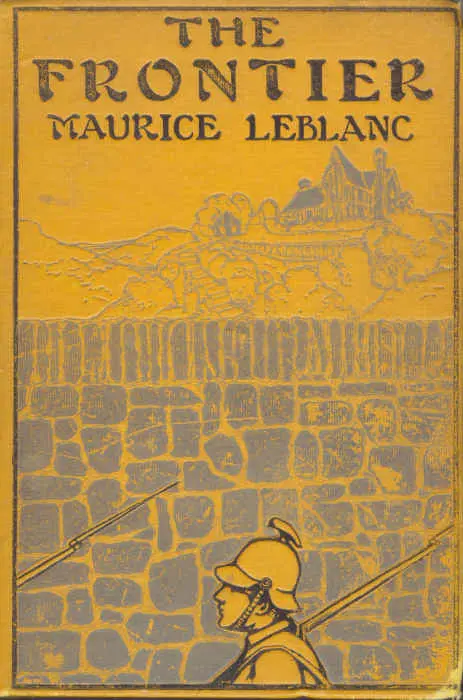
"The Frontier" by Maurice Leblanc is a novel written in the early 20th century. The story revolves around the character of Morestal, a patriotic farmer and mayor, whose life is intricately connected to the tension between France and Germany, set against the backdrop of looming war. Through the lives of Morestal, his son Philippe, and the intertwining paths of other residents near the French-German border, the narrative grapples with themes of loyalty, national pride, and the personal costs of conflict. The opening of the book sets a tense atmosphere as Morestal and his wife discuss the ongoing disturbances along the French-German frontier, specifically the repeated damage to a boundary post, symbolizing deeper issues of national integrity and personal conflict stemming from past wars. We see Morestal's fierce pride in France and a palpable sense of foreboding as he reflects on the possibility of conflict re-emerging with Germany. The arrival of their son Philippe, a professor who has differing views, introduces an imminent clash of ideologies within the family, encapsulating the overarching struggle between old patriotic sentiments and newer, more progressive worldviews. As Philippe returns home with his wife Marthe, layers of personal history entwine with the national narrative, hinting at dramatic tensions both within the family and across the border.
Introduction adapted from the source catalogue; source summaries may be automatically generated.
Free to read · English · 57,388 words · No account needed
MAKE TIME FOR A GOOD BOOK
On by default. Untick to stop anonymous reading totals. Each page counts after 10 seconds in view. How this works.
Anonymous counting is on unless you have switched it off.
But, as she was opening the door, she stopped, reflected and said:
"You are going back to Paris, are you not? To your own place?"
"Why do you ask, mother?"
"An idea that came to me, that's all. My head is in such a state, because of your father, that I did not think of it before...."
"What idea? Can you tell me?"
"About this war.... But, no, as a professor, you're exempt, aren't you?"
He understood her fears and, as he was unable to reassure her by confessing his secret intentions, he did not enlighten her further:
"Yes," he said, "I'm exempt."
"Still, you spent some time in the reserve?"
"Only at the government offices. And that's where we serve in time of
war."
"Oh," she said, "that's all right, that's all right!... Else I should have been very anxious.... You see, the mere thought that you might be fighting ... that you might be wounded ... oh, it would be horrible!"
She drew him to her with a sort of violence that delighted Philippe and kissed him as he had longed to be kissed. He was nearly saying:
"Do you understand, mother darling?... Do you understand what I was trying to do, the other day? Thousands and thousands of mothers will be made to shed tears.... Great as our private troubles are, they will pass. Those which begin to-morrow will never pass. Death is irreparable."
But why waste words? Did not his mother's emotion prove him absolutely
right?
They remained for a few moments locked in each other's embrace and the old lady's tears fell upon Philippe's cheeks.
At last, she said:
"You are not going at once, are you?"
"As soon as I have packed my bag."
"What a hurry you are in! Besides, there's no train yet. No, I want to kiss you once more and to make sure that you have all you want. And then it's impossible for you and Marthe to part like this. I will speak to her presently. But I must go to your father first: he may want me...."
He went with her as far as the sick man's room and, as she had taken from a cupboard a pile of towels that filled her arms, she said:
"Open the door for me, will you?"
Then he saw his father at the other end of the room, lying lifeless, very pale in the face, and Suzanne sitting at the foot of the bed. He clearly distinguished the red scratches on her cheeks and chin.
"Shut the door, Suzanne," said Mme. Morestal, when she was inside.
Your reading position is saved on this browser. Take it to another device with a library code. Reading pages adapt to text, rather than matching a printed edition.
Maurice Leblanc
Maurice Leblanc
Maurice Leblanc
Maurice Leblanc
BEHIND THE BOOK
This eBook is for the use of anyone anywhere in the United States and most other parts of the world at no cost and with almost no restrictions whatsoever. You may copy it, give it away or re-use it under the terms of the Project Gutenberg License included with this eBook or online at www.gutenberg.org. If you are not located in the United States, you will have to check the laws of the country where you are located before using this eBook. Read the source licence.
The original source file, including credits and licence, is retained by this library. Request an original-format copy at no charge. Please include the book title and Project Gutenberg identifier #28480.
KEEP YOUR CURIOSITY GOING
Cécile Tormay

Moritz Busch
Coulson Kernahan
John L. Ransom

Maurice Baring
Frances Wright