THE CLASSIC COLLECTION✦Elbow-Room: A Novel Without a PlotCLASSIC FREE BOOKS
Elbow-Room: A Novel Without a Plot
Charles Heber Clark
THE CLASSIC COLLECTION · 1881
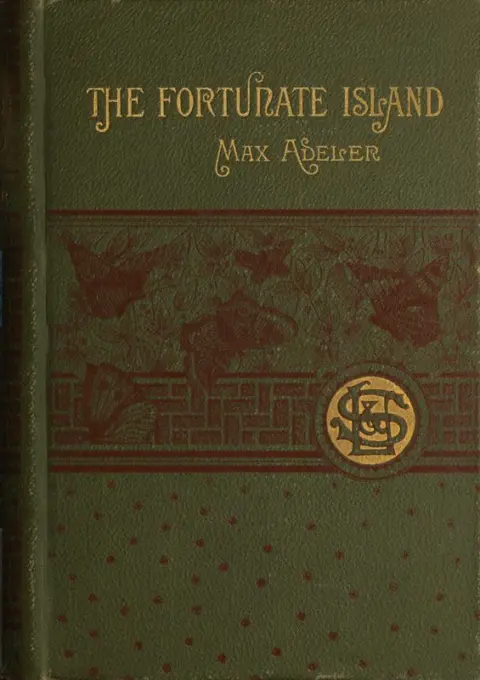
"The Fortunate Island, and Other Stories" by Charles Heber Clark is a collection of short stories written in the late 19th century. The book presents a blend of humor, adventure, and romance, with its opening tale focusing on the experiences of Professor E. L. Baffin and his daughter, Matilda, after they are shipwrecked and find themselves on a mysterious island harboring both natural beauty and unexpected inhabitants. As they navigate their new surroundings, themes of discovery and the clash between different cultures come to the fore. The opening of the book details the aftermath of the shipwreck of the "Morning Star," where Professor Baffin and Matilda manage to escape on a life-raft while the rest of the passengers are lost. As they drift towards a promising land, they wonder about what might await them—particularly whether it is inhabited by cannibals or features geological wonders. Their arrival on the island leads to an encounter with Father Anselm, a hermit who reveals that they have stumbled upon a lost civilization reminiscent of the time of King Arthur, setting the stage for the unique adventures and cultural encounters that follow, including humorous commentary on medieval customs and societal norms.
Introduction adapted from the source catalogue; source summaries may be automatically generated.
Free to read · English · 70,584 words · No account needed
MAKE TIME FOR A GOOD BOOK
On by default. Untick to stop anonymous reading totals. Each page counts after 10 seconds in view. How this works.
Anonymous counting is on unless you have switched it off.
The Professor, in silent desperation, banked his fires, threw open the furnace-door, and began to wonder what kind of chance he would have in the event of a boiler explosion. Blowing off steam, under the existing circumstances, was simply out of the question.
After a delay of considerable duration, Ysolt’s voice was heard again:
“Dearest!”
“What, love?” asked Sir Bleoberis.
“I am all ready now,” said Ysolt.
“So are we.”
“How must I get down?”
“Climb through the window and jump. You will fall into the water, but I shall catch you and place you in the boat.”
“But I shall get horridly wet!”
“Of course; but, darling, that can make no great difference, so that
you escape.”
“And spoil my clothes, too!”
“Yes, Ysolt, I know; but--”
“I cannot do it; I am afraid.” And Ysolt began to cry.
Wild despair filled the heart of Sir Bleoberis.
“I have a rope here,” said the Professor; “but how are we to get it up
to her?”
“Ysolt,” said Bleoberis, “if I throw you the end of a rope, do you think you can catch it?”
“I will try.”
Sir Bleoberis threw it. He threw it again. He threw it thirteen times, and then Ysolt contrived to catch it.
“What shall I do with it now?” she asked.
“Tie it fast to something; to the bed, or anything,” replied the
Knight.
“Now what shall I do?” asked the maiden, when she had made the rope
secure.
“Slide right down into the boat,” said the Professor.
“It would ruin my hands,” said Ysolt, mournfully.
“Make the attempt, and hold on tightly,” said Sir Bleoberis.
“We shall be caught if we stay here much longer,” observed the Professor, with anxious thoughts of the boiler.
“Good-bye then! I am lost. Go without me! Save yourselves! Oh, this is terrible!” Ysolt began again to cry.
“I will help her,” said Sir Bleoberis, seizing the rope and clambering up the wall until he reached the window.
Day began to dawn as he disappeared in the room. The Professor started his fire afresh and shut the furnace-door. Sir Bleoberis, he knew, would bring down Ysolt without delay.
A moment later, the Knight seated himself upon the stone sill of the window and caught the rope with his feet and one of his hands. Then he placed his arm about Ysolt, lifted her out and began to descend.
Professor Baffin, even in his condition of intense anxiety, could not fail to admire the splendid physical strength of the Knight. When the pair were about half-way down, the rope broke, and Ysolt and Sir Bleoberis were plunged into the lake.
Your reading position is saved on this browser. Take it to another device with a library code. Reading pages adapt to text, rather than matching a printed edition.
BEHIND THE BOOK
This eBook is for the use of anyone anywhere in the United States and most other parts of the world at no cost and with almost no restrictions whatsoever. You may copy it, give it away or re-use it under the terms of the Project Gutenberg License included with this eBook or online at www.gutenberg.org. If you are not located in the United States, you will have to check the laws of the country where you are located before using this eBook. Read the source licence.
The original source file, including credits and licence, is retained by this library. Request an original-format copy at no charge. Please include the book title and Project Gutenberg identifier #60632.
KEEP YOUR CURIOSITY GOING
Coulson Kernahan

Maurice Baring
Frances Wright
Cécile Tormay

Frederic Jesup Stimson

W. H. P. (William Henry Pope) Jarvis