THE CLASSIC COLLECTION✦Elbow-Room: A Novel Without a PlotCLASSIC FREE BOOKS
Elbow-Room: A Novel Without a Plot
Charles Heber Clark
THE CLASSIC COLLECTION · 1881
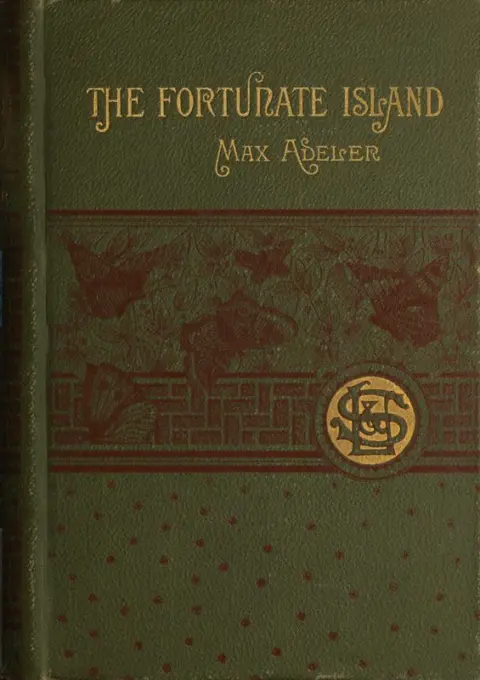
"The Fortunate Island, and Other Stories" by Charles Heber Clark is a collection of short stories written in the late 19th century. The book presents a blend of humor, adventure, and romance, with its opening tale focusing on the experiences of Professor E. L. Baffin and his daughter, Matilda, after they are shipwrecked and find themselves on a mysterious island harboring both natural beauty and unexpected inhabitants. As they navigate their new surroundings, themes of discovery and the clash between different cultures come to the fore. The opening of the book details the aftermath of the shipwreck of the "Morning Star," where Professor Baffin and Matilda manage to escape on a life-raft while the rest of the passengers are lost. As they drift towards a promising land, they wonder about what might await them—particularly whether it is inhabited by cannibals or features geological wonders. Their arrival on the island leads to an encounter with Father Anselm, a hermit who reveals that they have stumbled upon a lost civilization reminiscent of the time of King Arthur, setting the stage for the unique adventures and cultural encounters that follow, including humorous commentary on medieval customs and societal norms.
Introduction adapted from the source catalogue; source summaries may be automatically generated.
Free to read · English · 70,584 words · No account needed
MAKE TIME FOR A GOOD BOOK
On by default. Untick to stop anonymous reading totals. Each page counts after 10 seconds in view. How this works.
Anonymous counting is on unless you have switched it off.
As Sir Dinadan led the Professor and Miss Baffin along the lovely path which went winding through the woods toward the castle, the Professor lighted another cigar, and in response to Sir Dinadan, he entered upon an explanation of the nature of tobacco, the methods and extent of its use, and its effect upon the human system.
“The Lady Tilly, of course she smokes sometimes, also?” asked Sir
Dinadan.
“Oh, no,” replied Miss Baffin, “ladies in my country never do.”
“Of course not,” added the Professor.
“And yet, if it is so pleasing and so beneficial as you say,” responded the youth, “why should not ladies attempt it?”
The Professor really could not say; Sir Dinadan was pressing him almost too closely. He compromised further discussion by yielding promptly, although with a melancholy reflection that his store of cigars was small, to a request to teach Sir Dinadan, at the earliest opportunity, to smoke.
As they neared the castle, the Professor’s attention was absorbed in observing the details of the structure. It was a massive edifice of stone, having severe outlines and no ornamentation worthy of the name, but presenting, from the very grandeur of its proportions, an impressive and not unpleasing appearance. It was surrounded by a wide fosse filled with water; and the Professor was delighted to observe, as they drew near, that the entrance was protected with a portcullis and a drawbridge. The bridge was drawn up, and the iron portcullis, made of bars of huge size, was closed.
“Magnificent, isn’t it, Tilly?” exclaimed the Professor, gleefully. “It is probably the most perfect specimen of early English architecture now upon earth. Most fortunately I have in my trunks a photographic apparatus with which to obtain a picture of it.”
Sir Dinadan seized a curved horn which hung upon the branch of a tree, and blew a blast loud and long upon it.
The Professor regarded the performance with intense interest and not a
little enthusiasm.
The warder of the castle appeared at the grating, and, perceiving Sir Dinadan, saluted him; then lowering the drawbridge and lifting the portcullis, which ascended with many hideous creaks and groans from the rusty iron, Sir Dinadan and his companions entered.
Leaving the Professor and Miss Baffin comfortably seated in a great hall, the walls of which were adorned with curious tapestries dark with age, with swords and axes and trophies of the chase, Sir Dinadan went in search of the Baron.
“Little did we think, Tilly,” said the Professor, looking around, “when we left New York four weeks ago--it seems more like four years--that we should find ourselves, within a month, in such a place as this.”
Your reading position is saved on this browser. Take it to another device with a library code. Reading pages adapt to text, rather than matching a printed edition.
BEHIND THE BOOK
This eBook is for the use of anyone anywhere in the United States and most other parts of the world at no cost and with almost no restrictions whatsoever. You may copy it, give it away or re-use it under the terms of the Project Gutenberg License included with this eBook or online at www.gutenberg.org. If you are not located in the United States, you will have to check the laws of the country where you are located before using this eBook. Read the source licence.
The original source file, including credits and licence, is retained by this library. Request an original-format copy at no charge. Please include the book title and Project Gutenberg identifier #60632.
KEEP YOUR CURIOSITY GOING
Coulson Kernahan

Maurice Baring
Frances Wright
Cécile Tormay

Frederic Jesup Stimson

W. H. P. (William Henry Pope) Jarvis