THE CLASSIC COLLECTION✦Elbow-Room: A Novel Without a PlotCLASSIC FREE BOOKS
Elbow-Room: A Novel Without a Plot
Charles Heber Clark
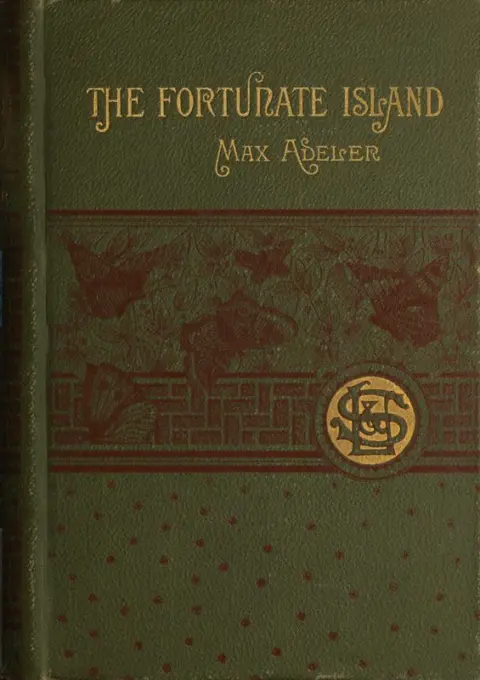
THE CLASSIC COLLECTION · 1881
"The Fortunate Island, and Other Stories" by Charles Heber Clark is a collection of short stories written in the late 19th century. The book presents a blend of humor, adventure, and romance, with its opening tale focusing on the experiences of Professor E. L. Baffin and his daughter, Matilda, after they are shipwrecked and find themselves on a mysterious island harboring both natural beauty and unexpected inhabitants. As they navigate their new surroundings, themes of discovery and the clash between different cultures come to the fore. The opening of the book details the aftermath of the shipwreck of the "Morning Star," where Professor Baffin and Matilda manage to escape on a life-raft while the rest of the passengers are lost. As they drift towards a promising land, they wonder about what might await them—particularly whether it is inhabited by cannibals or features geological wonders. Their arrival on the island leads to an encounter with Father Anselm, a hermit who reveals that they have stumbled upon a lost civilization reminiscent of the time of King Arthur, setting the stage for the unique adventures and cultural encounters that follow, including humorous commentary on medieval customs and societal norms.
Introduction adapted from the source catalogue; source summaries may be automatically generated.
Free to read · English · 70,584 words · No account needed
MAKE TIME FOR A GOOD BOOK
On by default. Untick to stop anonymous reading totals. Each page counts after 10 seconds in view. How this works.
Anonymous counting is on unless you have switched it off.
Mr. Cowdrick again sat in his easy-chair, in his library, before the sham fire, and with him sat his wife and daughter. They were talking of the trial of Mr. Cowdrick, which was to begin on the morrow.
“It is very disagreeable, of course,” said Mr. Cowdrick; “but in this life we have to take the bitter with the sweet.”
“But, oh, papa,” said Leonie, “how dreadful it will be if the verdict goes against you. Do you think they would actually send a man of your position to a horrid prison?”
“Leonie!” exclaimed Mrs. Cowdrick, “I am surprised at your speaking of such things. Pray don’t do it again. My nerves will not stand it.”
“You need not be alarmed, my dear child,” said Mr. Cowdrick, smiling. “My friends have arranged things comfortably for me with the prosecuting attorney, and the other authorities. I had an offer made to me to have the jury packed in my interest, but I was assured that it was unnecessary, and, besides, I felt that it would perhaps be wrong for me to descend to corruption.”
“It is a terrible experience at the best,” said Mrs. Cowdrick; “but there is some satisfaction in the reflection that we are not reduced to absolute poverty.”
“That is my greatest consolation,” rejoined Mr. Cowdrick. “Pinyard tells me that I may count on saving at least two hundred and fifty thousand dollars from the wreck; invested in good securities, too.”
“Then we can go to a watering-place, next summer, as usual?” asked
Leonie.
“Yes, dear.”
“And can we keep our carriage and our servants, and everything, just as
before?”
“Certainly; there will be no difference.”
Leonie reflected for a moment, and then sighed heavily.
“And I think very likely,” said Mr. Cowdrick, “that my poor little girl can have her lover back again, if she wants him, too.”
“Papa, what do you mean?” asked Leonie.
“Why, I commissioned a man named Gunn, in whom I have some confidence, to visit Weems, and to sound him, to ascertain how he felt with regard to the result of your suit.”
“Well?”
“Gunn reports to me that Weems feels repentant; says he always loved you, and would give anything to have the past recalled.”
Here Mr. Cowdrick, having constructed a sturdy falsehood, winked at his
wife; and Leonie said:
“Well, papa, I don’t know whether I am quite willing to forgive him, but I confess that I care more for Julius than for any other person.”
Your reading position is saved on this browser. Take it to another device with a library code. Reading pages adapt to text, rather than matching a printed edition.
BEHIND THE BOOK
This eBook is for the use of anyone anywhere in the United States and most other parts of the world at no cost and with almost no restrictions whatsoever. You may copy it, give it away or re-use it under the terms of the Project Gutenberg License included with this eBook or online at www.gutenberg.org. If you are not located in the United States, you will have to check the laws of the country where you are located before using this eBook. Read the source licence.
The original source file, including credits and licence, is retained by this library. Request an original-format copy at no charge. Please include the book title and Project Gutenberg identifier #60632.
KEEP YOUR CURIOSITY GOING
Coulson Kernahan

Maurice Baring
Frances Wright
Cécile Tormay

Frederic Jesup Stimson

W. H. P. (William Henry Pope) Jarvis