THE CLASSIC COLLECTION✦Elbow-Room: A Novel Without a PlotCLASSIC FREE BOOKS
Elbow-Room: A Novel Without a Plot
Charles Heber Clark
THE CLASSIC COLLECTION · 1881
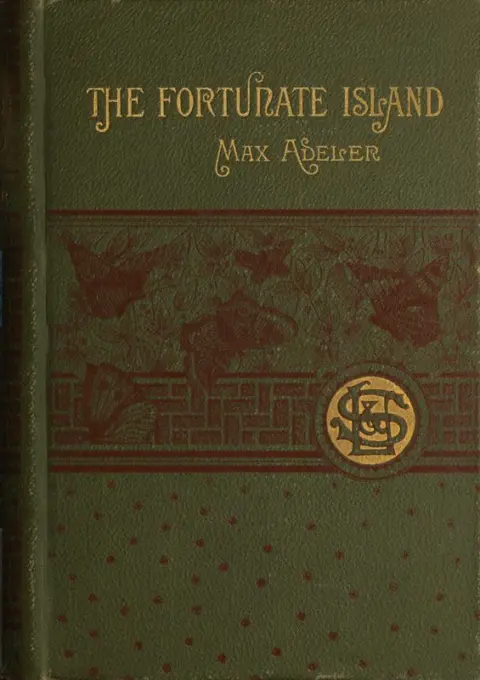
"The Fortunate Island, and Other Stories" by Charles Heber Clark is a collection of short stories written in the late 19th century. The book presents a blend of humor, adventure, and romance, with its opening tale focusing on the experiences of Professor E. L. Baffin and his daughter, Matilda, after they are shipwrecked and find themselves on a mysterious island harboring both natural beauty and unexpected inhabitants. As they navigate their new surroundings, themes of discovery and the clash between different cultures come to the fore. The opening of the book details the aftermath of the shipwreck of the "Morning Star," where Professor Baffin and Matilda manage to escape on a life-raft while the rest of the passengers are lost. As they drift towards a promising land, they wonder about what might await them—particularly whether it is inhabited by cannibals or features geological wonders. Their arrival on the island leads to an encounter with Father Anselm, a hermit who reveals that they have stumbled upon a lost civilization reminiscent of the time of King Arthur, setting the stage for the unique adventures and cultural encounters that follow, including humorous commentary on medieval customs and societal norms.
Introduction adapted from the source catalogue; source summaries may be automatically generated.
Free to read · English · 70,584 words · No account needed
MAKE TIME FOR A GOOD BOOK
On by default. Untick to stop anonymous reading totals. Each page counts after 10 seconds in view. How this works.
Anonymous counting is on unless you have switched it off.
The Professor entered the craft, and applying a lighted match to the wood beneath the boiler, he pushed the boat away from the shore, and waited until he could get steam enough to move with.
A few moments sufficed for this, and then, opening the throttle-valve gently, the tiny steamer sailed swiftly over the bosom of the lake, through the intense darkness, until the wall of the castle, dark and gloomy, loomed up directly ahead.
A light was faintly burning in Ysolt’s chamber in the tower, and the
casement was open.
As the prow of the boat lightly touched the stones of the wall and rested, Sir Bleoberis softly whistled.
“I have always been uncertain,” said the Professor to himself, “if the ancients knew how to whistle. This seems to indicate that they did know how. It is extremely interesting. I must remember to tell Tilly to note it in her journal.”
In response to the signal, a head appeared at the casement, and a soft,
sweet voice said:
“Is that you, darling?”
“Yes, yes, it is I,” replied Sir Bleoberis. “Oh, my love! my Ysolt!” he exclaimed, in an ecstasy.
“Is Sir Baffin there, too?”
“Yes. We are both here; and we have a swift boat. Come to me at once, dear love, that we may fly with you homeward.”
“I am not quite ready, love,” replied Ysolt. “Will not you wait for a
moment?”
“It is important,” said the Professor, “that we should act quickly.”
“But I must fix up my hair,” returned Ysolt. “I will hurry as much as
I can.”
“Women,” said the Professor to his companion, “are all alike. She would rather remain in prison for life than come out with her hair mussed.”
The occupants of the boat waited very impatiently for fifteen or twenty minutes. Then Ysolt, coming again to the window, said:
“Are you there, dearest?”
“Yes,” replied Sir Bleoberis, eagerly. “We are all ready.”
“And there’s no time to lose,” added Professor Baffin.
“Is your hair fixed?” asked the Knight.
“Oh, yes,” said Ysolt.
“Then come right down.”
“Would ten minutes more make any difference?” asked Ysolt.
“It might ruin us,” replied the Professor.
“We can wait no longer, darling,” said Sir Bleoberis, firmly.
“Then you will have to go without me,” said Ysolt, with a tinge of bitterness. “It is simply impossible for me to come till I get my bundle packed.”
“We will wait, then,” returned Sir Bleoberis, gloomily. Then he said to the Professor: “She had no bundle with her when she was captured.”
Your reading position is saved on this browser. Take it to another device with a library code. Reading pages adapt to text, rather than matching a printed edition.
BEHIND THE BOOK
This eBook is for the use of anyone anywhere in the United States and most other parts of the world at no cost and with almost no restrictions whatsoever. You may copy it, give it away or re-use it under the terms of the Project Gutenberg License included with this eBook or online at www.gutenberg.org. If you are not located in the United States, you will have to check the laws of the country where you are located before using this eBook. Read the source licence.
The original source file, including credits and licence, is retained by this library. Request an original-format copy at no charge. Please include the book title and Project Gutenberg identifier #60632.
KEEP YOUR CURIOSITY GOING
Coulson Kernahan

Maurice Baring
Frances Wright
Cécile Tormay

Frederic Jesup Stimson

W. H. P. (William Henry Pope) Jarvis