THE CLASSIC COLLECTION✦Ringan Gilhaize, or, The CovenantersCLASSIC FREE BOOKS
Ringan Gilhaize, or, The Covenanters
John Galt
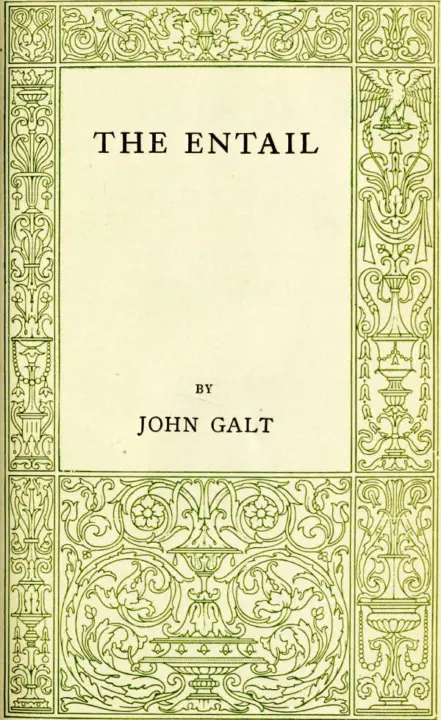
THE CLASSIC COLLECTION · 1822
"The Entail; or, The Lairds of Grippy" by John Galt is a novel written in the early 19th century. The story delves into the challenges faced by Claud Walkinshaw, the sole surviving heir of the Walkinshaws of Kittlestonheugh, as he navigates his family's history, loss, and ambitions to reclaim his ancestral estate. Galt portrays Scottish life and character, weaving themes of heritage, social status, and familial duties throughout the narrative. The opening of the novel introduces Claud's tragic background, revealing how his family's fortunes were ruined when his father embarked on a doomed voyage to the Darien. Raised primarily by the loyal servant Maudge Dobbie, Claud experiences the hardships of poverty while being instilled with a desire to reclaim his family's lost legacy. In the early chapters, Galt contrasts Claud’s noble aspirations with the social realities he encounters, particularly through his interactions with wealthier characters, like Provost Gorbals and his wife, who inadvertently display the social hierarchies in which Claud finds himself trapped. As Claud grows into adulthood and seeks to restore his family's honor, the tension between familial duty and personal ambition begins to take center stage in the unfolding drama.
Introduction adapted from the source catalogue; source summaries may be automatically generated.
Free to read · English · 155,660 words · No account needed
MAKE TIME FOR A GOOD BOOK
On by default. Untick to stop anonymous reading totals. Each page counts after 10 seconds in view. How this works.
Anonymous counting is on unless you have switched it off.
‘Hey, Charlie! are ye sae muckle ta’en up wi’ your bonny bride, that your mother’s already forgotten?’
He felt the reproof, and immediately turned and went back to make some apology, but she prevented him by saying,--
‘See that this is no a Jacob and Esau business, Charlie, and that ye dinna wrang poor Watty; for he’s an easy good-natured lad, and will just do what either you or his father bids him.’
Charles laughed, and replied,--
‘I think, mother, your exhortation should rather be to Watty than me; for ye ken Jacob was the youngest, and beguiled his auld brother of the birthright.’
The old man heard the remark, and felt it rush through his very soul with the anguish of a barbed and feathered arrow; and he exclaimed, with an accent of remorse as sharp and bitter as the voice of anger,--
‘Hae done wi’ your clavers, and come awa. Do ye think Mr. Keelevin has nothing mair to do than to wait for us, while ye’re talking profanity, and taigling at this gait? Come awa, Watty, ye gumshionless cuif as ever father was plagued wi’; and Charlie, my lad, let us gang thegither, the haverel will follow; for if it has na the colley-dog’s sense, it has something like its instinct.’
And so saying, he stepped on hastily towards the gate, swinging his staff in his right hand, and walking faster and more erectly than he was wont.
The two sons, seeing the pace at which their father was going forward, parted from their mother and followed him, Charles laughing and jeering at the beau which Walter had made of himself.
During the journey the old man kept aloof from them, turning occasionally round to rebuke their mirth, for there was something in the freedom and gaiety of Charles’s laugh that reproached his spirit, and the folly of Walter was never so disagreeable to him before.
When they reached the office of Mr. Keelevin, they found him with the parchments ready on the desk; but before reading them over, he requested the Laird to step in with him into his inner-chamber.
‘Noo, Mr. Walkinshaw,’ said he, when he had shut the door, ‘I hope ye have well reflected on this step, for when it is done, there’s nae power in the law o’ Scotland to undo it. I would, therefore, fain hope ye’re no doing this out of any motive or feeling of resentment for the thoughtless marriage, it may be, of your auld son.’
Your reading position is saved on this browser. Take it to another device with a library code. Reading pages adapt to text, rather than matching a printed edition.
John Galt
John Galt
John Galt
John Galt
BEHIND THE BOOK
This eBook is for the use of anyone anywhere in the United States and most other parts of the world at no cost and with almost no restrictions whatsoever. You may copy it, give it away or re-use it under the terms of the Project Gutenberg License included with this eBook or online at www.gutenberg.org. If you are not located in the United States, you will have to check the laws of the country where you are located before using this eBook. Read the source licence.
The original source file, including credits and licence, is retained by this library. Request an original-format copy at no charge. Please include the book title and Project Gutenberg identifier #44573.
KEEP YOUR CURIOSITY GOING
Coulson Kernahan

Maurice Baring
Frances Wright
Cécile Tormay

Frederic Jesup Stimson

W. H. P. (William Henry Pope) Jarvis