THE CLASSIC COLLECTION✦Ringan Gilhaize, or, The CovenantersCLASSIC FREE BOOKS
Ringan Gilhaize, or, The Covenanters
John Galt
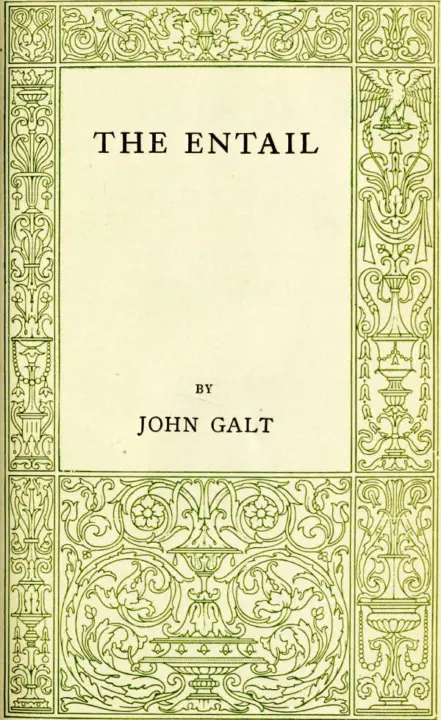
THE CLASSIC COLLECTION · 1822
"The Entail; or, The Lairds of Grippy" by John Galt is a novel written in the early 19th century. The story delves into the challenges faced by Claud Walkinshaw, the sole surviving heir of the Walkinshaws of Kittlestonheugh, as he navigates his family's history, loss, and ambitions to reclaim his ancestral estate. Galt portrays Scottish life and character, weaving themes of heritage, social status, and familial duties throughout the narrative. The opening of the novel introduces Claud's tragic background, revealing how his family's fortunes were ruined when his father embarked on a doomed voyage to the Darien. Raised primarily by the loyal servant Maudge Dobbie, Claud experiences the hardships of poverty while being instilled with a desire to reclaim his family's lost legacy. In the early chapters, Galt contrasts Claud’s noble aspirations with the social realities he encounters, particularly through his interactions with wealthier characters, like Provost Gorbals and his wife, who inadvertently display the social hierarchies in which Claud finds himself trapped. As Claud grows into adulthood and seeks to restore his family's honor, the tension between familial duty and personal ambition begins to take center stage in the unfolding drama.
Introduction adapted from the source catalogue; source summaries may be automatically generated.
Free to read · English · 155,660 words · No account needed
MAKE TIME FOR A GOOD BOOK
On by default. Untick to stop anonymous reading totals. Each page counts after 10 seconds in view. How this works.
Anonymous counting is on unless you have switched it off.
On Monday Claud rose early, and, without waiting for breakfast, or heeding the remonstrances of his wife on the risk he ran in going afield fasting, walked to Glasgow, and went directly to the house of his mother-in-law, the aged Leddy Plealands, now considerably above fourscore. The natural delicacy of her constitution had received so great a shock from the death of Charles, that she was unable that morning to leave her room. Having, however, brought home with her the two orphans until after the funeral, their grandfather found them playing in the parlour, and perhaps he was better pleased to meet with them than had she been there herself.
Although they knew him perfectly, yet the cold and distant intercourse which arose from his estrangement towards their father, had prevented them from being on those terms of familiarity which commonly subsist between children and their grandfathers; and when they saw him enter the room, they immediately left their toys on the floor, and, retiring to a corner, stood looking at him timidly, with their hands behind.
The old man, without seeming to notice their innocent reverence, walked to a chair near the window, and sat down. His demeanour was as calm, and his features as sedate, as usual, but his eyes glittered with a slight sprinkling of tears, and twice or thrice he pressed his elbows into his sides, as if to restrain some inordinate agitation of the heart. In the course of a few minutes he became quite master of himself, and, looking for a short time compassionately at the children, he invited them to come to him. Mary, the girl, who was the youngest, obeyed at once the summons; but James, the boy, still kept back.
‘What for wilt t’ou no come to me?’ said Claud.
‘I’ll come, if ye’ll no hurt me,’ replied the child.
‘Hurt thee! what for, poor thing, should I hurt thee?’ inquired his grandfather, somewhat disturbed by the proposed condition.
‘I dinna ken,’ said the boy, still retreating,--‘but I am feart, for ye hurt papa for naething, and mamma used to greet for’t.’
Claud shuddered, and in the spasmodic effort which he made to suppress his emotion, he unconsciously squeezed the little hand of the girl so hardly, as he held her between his knees, that she shrieked with the pain, and flew towards her brother, who, equally terrified, ran to shelter himself behind a chair.
For some time the old man was so much affected, that he felt himself incapable of speaking to them. But he said to himself,--
‘It is fit that I should endure this. I sowed tares, and maunna expek
wheat.’
Your reading position is saved on this browser. Take it to another device with a library code. Reading pages adapt to text, rather than matching a printed edition.
John Galt
John Galt
John Galt
John Galt
BEHIND THE BOOK
This eBook is for the use of anyone anywhere in the United States and most other parts of the world at no cost and with almost no restrictions whatsoever. You may copy it, give it away or re-use it under the terms of the Project Gutenberg License included with this eBook or online at www.gutenberg.org. If you are not located in the United States, you will have to check the laws of the country where you are located before using this eBook. Read the source licence.
The original source file, including credits and licence, is retained by this library. Request an original-format copy at no charge. Please include the book title and Project Gutenberg identifier #44573.
KEEP YOUR CURIOSITY GOING
Coulson Kernahan

Maurice Baring
Frances Wright
Cécile Tormay

Frederic Jesup Stimson

W. H. P. (William Henry Pope) Jarvis