THE CLASSIC COLLECTION✦Ringan Gilhaize, or, The CovenantersCLASSIC FREE BOOKS
Ringan Gilhaize, or, The Covenanters
John Galt
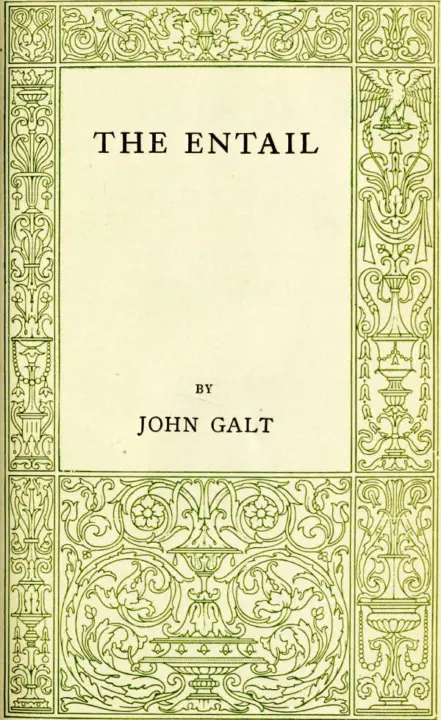
THE CLASSIC COLLECTION · 1822
"The Entail; or, The Lairds of Grippy" by John Galt is a novel written in the early 19th century. The story delves into the challenges faced by Claud Walkinshaw, the sole surviving heir of the Walkinshaws of Kittlestonheugh, as he navigates his family's history, loss, and ambitions to reclaim his ancestral estate. Galt portrays Scottish life and character, weaving themes of heritage, social status, and familial duties throughout the narrative. The opening of the novel introduces Claud's tragic background, revealing how his family's fortunes were ruined when his father embarked on a doomed voyage to the Darien. Raised primarily by the loyal servant Maudge Dobbie, Claud experiences the hardships of poverty while being instilled with a desire to reclaim his family's lost legacy. In the early chapters, Galt contrasts Claud’s noble aspirations with the social realities he encounters, particularly through his interactions with wealthier characters, like Provost Gorbals and his wife, who inadvertently display the social hierarchies in which Claud finds himself trapped. As Claud grows into adulthood and seeks to restore his family's honor, the tension between familial duty and personal ambition begins to take center stage in the unfolding drama.
Introduction adapted from the source catalogue; source summaries may be automatically generated.
Free to read · English · 155,660 words · No account needed
MAKE TIME FOR A GOOD BOOK
On by default. Untick to stop anonymous reading totals. Each page counts after 10 seconds in view. How this works.
Anonymous counting is on unless you have switched it off.
Next day, when the Court again assembled, Walter was there, seated beside his agent, and dressed in his best. Every eye was directed towards him; and the simple expression of wonder, mingled with anxiety, which the scene around him occasioned, gave an air of so much intelligence to his features, which were regular, and, indeed, handsome, that he excited almost universal sympathy; even Mr. Threeper was perplexed, when he saw him, at the proper time, rise from beside his friend, and, approaching the bottom of the table, make a slow and profound bow, first to the Sheriff and then to the jury.
‘You are Mr. Walkinshaw, I believe?’ said Mr. Threeper.
‘I believe I am,’ replied Walter, timidly.
‘What are you, Mr. Walkinshaw?’
‘A man, sir.--My mother and brother want to mak me a daft ane.’
‘How do you suspect them of any such intention?’
‘Because ye see I’m here--I would na hae been here but for that.’
The countenance of honest Keelevin began to brighten, while that of George was clouded and overcast.
‘Then you do not think you are a daft man?’ said the advocate.
‘Nobody thinks himsel daft. I dare say ye think ye’re just as wise as
me.’
A roar of laughter shook the Court, and Threeper blushed and was disconcerted; but he soon resumed, tartly,--
‘Upon my word, Mr. Walkinshaw, you have a good opinion of yourself. I should like to know for what reason?’
‘That’s a droll question to speer at a man,’ replied Walter. ‘A poll parrot thinks weel o’ itsel, which is but a feathered creature, and short o’ the capacity of a man by twa hands.’
Mr. Keelevin trembled and grew pale; and the advocate, recovering full possession of his assurance, proceeded,--
‘And so ye think, Mr. Walkinshaw, that the two hands make all the difference between a man and a parrot?’
‘No, no, sir,’ replied Walter, ‘I dinna think that,--for ye ken the
beast has feathers.’
‘And why have not men feathers?’
‘That’s no a right question, sir, to put to the like o’ me, a weak human creature;--ye should ask their Maker,’ said Walter gravely.
The advocate was again repulsed; Pitwinnoch sat doubting the intelligence of his ears, and George shivering from head to foot: a buzz of satisfaction pervaded the whole Court.
‘Well, but not to meddle with such mysteries,’ said Mr. Threeper, assuming a jocular tone, ‘I suppose you think yourself a very clever fellow?’
‘At some things,’ replied Walter modestly; ‘but I dinna like to make a
roos o’ mysel.’
‘And pray now, Mr. Walkinshaw, may I ask what do you think you do best?’
Your reading position is saved on this browser. Take it to another device with a library code. Reading pages adapt to text, rather than matching a printed edition.
John Galt
John Galt
John Galt
John Galt
BEHIND THE BOOK
This eBook is for the use of anyone anywhere in the United States and most other parts of the world at no cost and with almost no restrictions whatsoever. You may copy it, give it away or re-use it under the terms of the Project Gutenberg License included with this eBook or online at www.gutenberg.org. If you are not located in the United States, you will have to check the laws of the country where you are located before using this eBook. Read the source licence.
The original source file, including credits and licence, is retained by this library. Request an original-format copy at no charge. Please include the book title and Project Gutenberg identifier #44573.
KEEP YOUR CURIOSITY GOING
Coulson Kernahan

Maurice Baring
Frances Wright
Cécile Tormay

Frederic Jesup Stimson

W. H. P. (William Henry Pope) Jarvis