THE CLASSIC COLLECTION✦Ringan Gilhaize, or, The CovenantersCLASSIC FREE BOOKS
Ringan Gilhaize, or, The Covenanters
John Galt
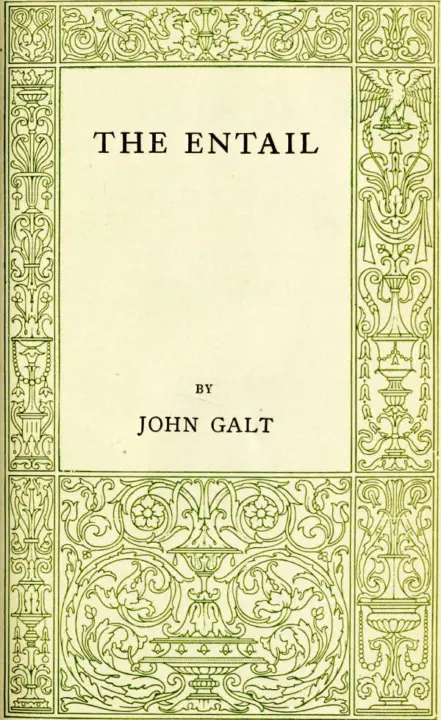
THE CLASSIC COLLECTION · 1822
"The Entail; or, The Lairds of Grippy" by John Galt is a novel written in the early 19th century. The story delves into the challenges faced by Claud Walkinshaw, the sole surviving heir of the Walkinshaws of Kittlestonheugh, as he navigates his family's history, loss, and ambitions to reclaim his ancestral estate. Galt portrays Scottish life and character, weaving themes of heritage, social status, and familial duties throughout the narrative. The opening of the novel introduces Claud's tragic background, revealing how his family's fortunes were ruined when his father embarked on a doomed voyage to the Darien. Raised primarily by the loyal servant Maudge Dobbie, Claud experiences the hardships of poverty while being instilled with a desire to reclaim his family's lost legacy. In the early chapters, Galt contrasts Claud’s noble aspirations with the social realities he encounters, particularly through his interactions with wealthier characters, like Provost Gorbals and his wife, who inadvertently display the social hierarchies in which Claud finds himself trapped. As Claud grows into adulthood and seeks to restore his family's honor, the tension between familial duty and personal ambition begins to take center stage in the unfolding drama.
Introduction adapted from the source catalogue; source summaries may be automatically generated.
Free to read · English · 155,660 words · No account needed
MAKE TIME FOR A GOOD BOOK
On by default. Untick to stop anonymous reading totals. Each page counts after 10 seconds in view. How this works.
Anonymous counting is on unless you have switched it off.
‘You’ll be drowned,’ cried the cabin-boy, who had seated himself on the lee-side of the companion; and the bitterness of the reproachful accent with which this was said stung the proud merchant to the quick--but he said nothing; his fears were, however, now all awake, and he saw, with a feeling of inexpressible alarm, that the crew were looking eagerly and sorrowfully towards the roaring precipices of Caithness.
Still the vessel kept bravely to her helm, and was working slowly outward; but, as she gradually wore round, her broadside became more and more exposed to the sea, and once or twice her decks were washed fore and aft.
‘This is terrible work, Captain,’ said Mr. Walkinshaw.
‘It is,’ was all the answer he received.
‘Is there no port we can bear away for?’
‘None.’
‘Good Heavens! Captain, if this continues till night?’
The master eyed him for a moment, and said with a shudder,--
‘If it does, sir, we shall never see night.’
‘You’ll be drowned,’ added the little boy, casting an angry look from behind the companion.
‘Almighty Powers!--surely we are not in such danger?’ exclaimed the
terrified merchant.
‘Hold your tongue,’ again cried the boy.
Mr. Walkinshaw heard him, and for a moment was petrified, for the command was not given with insolence, but solemnity.
A cry of ‘Hold fast’, in the same instant, came from the forecastle, and, after a momentary pause, a dreadful sea broke aboard, and swept the deck. The master, who had himself taken the helm, was washed overboard, and the tiller was broken.
‘We are gone!’ said the little boy, as he shook the water from his jacket, and crawled on towards the mast, at the foot of which he seated himself, for the loss of the tiller, and the damage the rudder had sustained, rendered the vessel unmanageable, and she drifted to her fate before the wind.
‘Is there indeed no hope?’ cried Mr. Walkinshaw to one of the sailors, who was holding by the shrouds.
‘If we get into Sinclair’s Bay, there is a sandy beach,’ replied the
sailor.
‘And if we do not?’ exclaimed the passenger in the accent of despair.
‘We’ll a’ be drowned,’ replied the boy with a scowling glance, as he sat cowering with his head between his knees, at the foot of the mast.
‘We shall not get into Sinclair’s Bay,’ said the sailor, firmly; ‘but we may pass Noss-head.’
‘Do you think so?’ said Mr. Walkinshaw, catching something like hope and fortitude from the sedate courage of the sailor.
Your reading position is saved on this browser. Take it to another device with a library code. Reading pages adapt to text, rather than matching a printed edition.
John Galt
John Galt
John Galt
John Galt
BEHIND THE BOOK
This eBook is for the use of anyone anywhere in the United States and most other parts of the world at no cost and with almost no restrictions whatsoever. You may copy it, give it away or re-use it under the terms of the Project Gutenberg License included with this eBook or online at www.gutenberg.org. If you are not located in the United States, you will have to check the laws of the country where you are located before using this eBook. Read the source licence.
The original source file, including credits and licence, is retained by this library. Request an original-format copy at no charge. Please include the book title and Project Gutenberg identifier #44573.
KEEP YOUR CURIOSITY GOING
Coulson Kernahan

Maurice Baring
Frances Wright
Cécile Tormay

Frederic Jesup Stimson

W. H. P. (William Henry Pope) Jarvis