THE CLASSIC COLLECTION✦Ringan Gilhaize, or, The CovenantersCLASSIC FREE BOOKS
Ringan Gilhaize, or, The Covenanters
John Galt
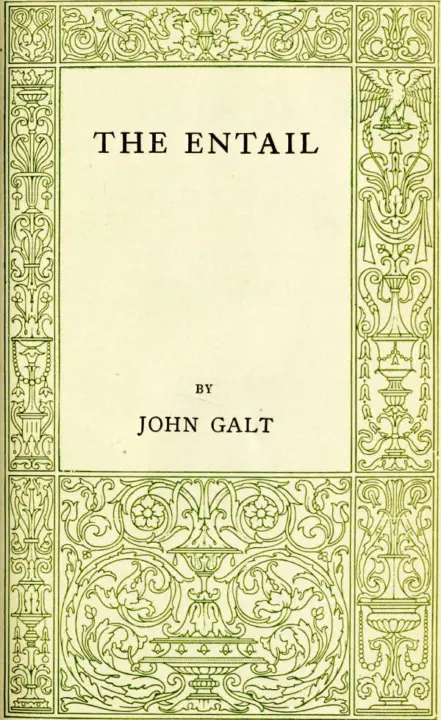
THE CLASSIC COLLECTION · 1822
"The Entail; or, The Lairds of Grippy" by John Galt is a novel written in the early 19th century. The story delves into the challenges faced by Claud Walkinshaw, the sole surviving heir of the Walkinshaws of Kittlestonheugh, as he navigates his family's history, loss, and ambitions to reclaim his ancestral estate. Galt portrays Scottish life and character, weaving themes of heritage, social status, and familial duties throughout the narrative. The opening of the novel introduces Claud's tragic background, revealing how his family's fortunes were ruined when his father embarked on a doomed voyage to the Darien. Raised primarily by the loyal servant Maudge Dobbie, Claud experiences the hardships of poverty while being instilled with a desire to reclaim his family's lost legacy. In the early chapters, Galt contrasts Claud’s noble aspirations with the social realities he encounters, particularly through his interactions with wealthier characters, like Provost Gorbals and his wife, who inadvertently display the social hierarchies in which Claud finds himself trapped. As Claud grows into adulthood and seeks to restore his family's honor, the tension between familial duty and personal ambition begins to take center stage in the unfolding drama.
Introduction adapted from the source catalogue; source summaries may be automatically generated.
Free to read · English · 155,660 words · No account needed
MAKE TIME FOR A GOOD BOOK
On by default. Untick to stop anonymous reading totals. Each page counts after 10 seconds in view. How this works.
Anonymous counting is on unless you have switched it off.
Much and devoutly as the Laird of Dirdumwhamle wished for such a consummation, he was not quite prepared for proceedings of so sudden and hasty a character. And being a personage of some worldly prudence, eagerly as he longed for the match, he was averse to expose himself to any strictures for the part he might take in promoting it. Accordingly, instead of acquiescing at once in his mother-in-law’s suggestion, he said jocularly,
‘Hooly, hooly, Leddy; it may come vera weel off Walky and Robina’s hands to make a private marriage for themselves, poor young things, but it never will do for the like o’ you and me to mess or mell in the matter, by ony open countenancing o’ a ceremony. It’s vera true that I see nae objection to the match, and would think I did nae ill in the way o’ a quiet conneevance to help them on in their courtship, but things are no ripe for an affhand ploy.’
‘I’m glad to hear you say sae,’ interposed Mrs. Milrookit; ‘for really my mother seems fey about this connection; and nae gude can come o’ ony thing sae rashly devised. My brother would, in my opinion, have great cause to complain, were the gudeman to be art or part in ony such conspiracy.’
The Leddy never liked to have her judgement called in question; (indeed, what ladies do?) and still less by a person so much her inferior in point of understanding (so she herself thought) as her daughter.
‘My word, Meg,’ was her reply, ‘but t’ou has a stock o’ impudence, to haud up thy snout in that gait to the she that bore thee.--Am I one of these that hae, by reason of more strength, amaist attain’t to the age of fourscore, without learning the right frae the wrang o’ a’ moral conduct, as that delightful man, Dr. Pringle o’ Garnock, said in his sermon on the Fast Day, when he preached in the Wynd Kirk, that t’ou has the spirit o’ sedition, to tell me that I hae lost my solid judgement, when I’m labouring in the vineyard o’ thy family?--Dirdumwhamle, your wife there, she’s my dochter, and sorry am I to say’t, but it’s well known, and I dinna misdoot ye hae found it to your cost, that she is a most unreasonable, narrow, contracted woman, and wi’ a’ her ’conomical throughgality--her direction-books to mak grozette wine for deil-be-lickit, and her Katy Fisher’s cookery, whereby she would gar us trow she can mak fat kail o’ chucky stanes and an auld horse shoe--we a’ ken, and ye ken, Laird, warst o’ a’, that she flings away the peas, and maks her hotch-potch wi’ the shawps, or, as the auld bye-word says, tynes bottles gathering straes. So what need the like o’ you and me sit in council, and the Shanedrims of the people, wi’ ane o’ the stupidest bawkie birds that e’er the Maker o’t took the trouble to put the breath o’ life in? Fey, did ye say?--that’s a word o’ discretion to fling at the head o’ your aged parent. Howsever, it’s no worth my condescendence to lose my temper wi’ the like o’ her. But, Meg Walkinshaw, or Mrs. Milrookit, though ye be there afore your gudeman, the next time ye diminish my understanding, I’ll may be let ye ken what it is to blaspheme your mother, so tak heed lest ye fall. And now to wind up the thread o’ what we were discoursing anent--It’s my opinion, Dirdumwhamle, we should put no molestation in the way o’ that purpose o’ marriage. So, if ye dinna like to tell your son to gang for a minister, I’ll do it mysel; and the sooner it’s by hand and awa, as the sang sings, the sooner we’ll a’ be in a situation to covenant and ’gree again wi’ Beenie’s father.’
Your reading position is saved on this browser. Take it to another device with a library code. Reading pages adapt to text, rather than matching a printed edition.
John Galt
John Galt
John Galt
John Galt
BEHIND THE BOOK
This eBook is for the use of anyone anywhere in the United States and most other parts of the world at no cost and with almost no restrictions whatsoever. You may copy it, give it away or re-use it under the terms of the Project Gutenberg License included with this eBook or online at www.gutenberg.org. If you are not located in the United States, you will have to check the laws of the country where you are located before using this eBook. Read the source licence.
The original source file, including credits and licence, is retained by this library. Request an original-format copy at no charge. Please include the book title and Project Gutenberg identifier #44573.
KEEP YOUR CURIOSITY GOING
Coulson Kernahan

Maurice Baring
Frances Wright
Cécile Tormay

Frederic Jesup Stimson

W. H. P. (William Henry Pope) Jarvis