THE CLASSIC COLLECTION✦A dead man’s diaryCLASSIC FREE BOOKS
A dead man’s diary
Coulson Kernahan
THE CLASSIC COLLECTION · 1923
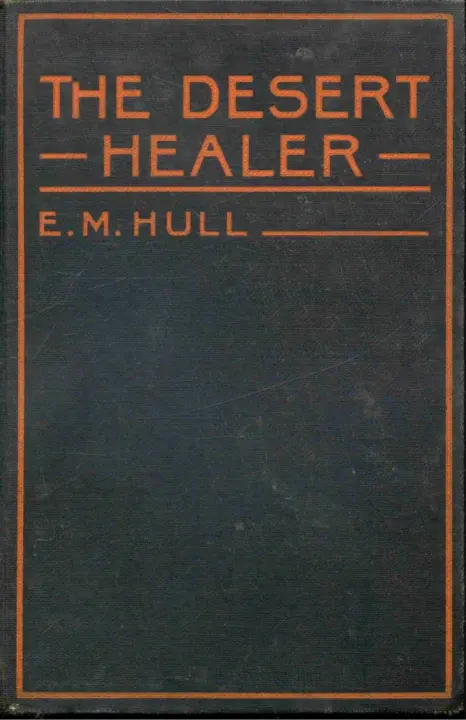
"The Desert Healer" by E. M. Hull is a novel written in the early 20th century. The story unfolds primarily in the vibrant yet harsh landscapes of Algeria, focusing on the characters' complex interactions against the backdrop of personal turmoil and cultural tensions. Central to the narrative is Gervas Carew, an enigmatic Englishman living in isolation in the desert who has a mysterious past, as well as Marny Geradine, a woman grappling with her own troubled marriage. At the start of the novel, we are introduced to the serene setting of the Little Atlas Mountains, where we meet William Chalmers, a doctor, and his wife, who discuss their planned departure from Algeria. They mention Carew, a reclusive figure with an intriguing background, hinting at the tragic elements of his story. As Mrs. Chalmers reveals her concerns for a young woman named Lady Geradine, we learn of the mysteries lurking around Carew, whose life is steeped in hardship and emotional scars from his past. The narrative quickly escalates when Marny unexpectedly finds herself in grave danger, prompting Carew to intervene and rescue her from a violent situation, setting the stage for their complicated relationship as they navigate the intricacies of their pasts and their feelings for one another. The opening establishes a rich world of emotional depth and conflict, drawing readers into the lives of its compelling characters.
Introduction adapted from the source catalogue; source summaries may be automatically generated.
Free to read · English · 86,816 words · No account needed
MAKE TIME FOR A GOOD BOOK
On by default. Untick to stop anonymous reading totals. Each page counts after 10 seconds in view. How this works.
Anonymous counting is on unless you have switched it off.
She stifled a sigh as she looked at him again, sure of his
preoccupation.
The change of dress seemed to alter him completely. In the well-fitting blue serge suit that clung closely to his muscular figure he appeared taller, slenderer than she had supposed; but he looked older, too, and the gravity of face and demeanour that had seemed natural in an Arab struck her even more forcibly now that she knew his true nationality. The soft felt hat, pulled far forward over his eyes, shaded features that to her looked sterner and more rigidly set than when she had first seen them. It was a strong face, she decided, too strong, too hard perhaps for absolute beauty but, clean cut, and bronzed as a native’s, lean and healthy looking, it was a face that arrested and compelled attention. Strength seemed the key note of his composition. His spare frame appeared to be made up of only bone and muscle, his long slow stride was springy and elastic, and he carried himself magnificently. Again she found herself wondering who he was, wishing she might ask him, but fearing the same rebuff she had met with before. And yet, if she only knew his name! It would be something to remember, something to cling to. And as the thought came she turned her head away hastily with a feeling of acute and miserable shame, realising how completely he had filled her mind during what had seemed to her the longest and most unhappy weeks she had ever experienced. She had wrestled with herself, striving to forget him, hoping that time would obliterate the image that seemed to possess her every conscious moment. But this second meeting had shattered the resolutions she had formed so bravely. She would always remember, always care. The memory of him would go with her through life—the memory of a man who was indifferent to her, whom honour demanded that she should root out of her heart. Did love always come like that, so suddenly, so irresistible, so unsought? Could she have conquered it if she had really tried to do so from the first moment of realization? She had tried. She had fought against it, shuddering from what seemed to her a sin, praying desperately for strength to put it from her. But her prayers had been unavailing and daily, hourly, the love she could not deny had grown stronger and more insistent. Only in the last three weeks had she come to know how starved her heart had been. Love had entered very little into her life. Her father had loved her but she was a child when he died, and since his death she had had no outlet for the affection lying dormant in her. She had lived in the open, a boy’s life rather than a girl’s, finding abundant happiness and contentment in sport and outdoor pursuits. She had had no girlish dreams of the possible lover who might some day come to win her heart, no opportunity of filling her imagination with tales of sentiment and romance. During the long winter evenings in the lonely house in Ireland she had read much but the books that formed her father’s library were books of travel and the histories of many countries. She had been singularly innocent, singularly young. Then she had married, and marriage had brought her not the joy and wonder of a man’s devotion but the loathing of a man’s possession. All that was brutal, all that was sordid and degrading in such a union she had learned with horror and amazement. Forced to hide the revulsion that filled her, forced into a mode of life that shocked her every sense of decency, she had steeled herself to endure until she had come to look upon herself as a thing of stone, a heartless, lifeless automaton. The hope of a child, that might have been another woman’s salvation, had never touched her. She shrank with abhorrence from the thought of possible motherhood. It would have been the last drop in her cup of bitterness. In spite of the disappointment and anger of her husband, who never ceased to reproach her for failing to give him the heir he desired, she prayed God passionately to spare her the shame of bringing into the world the offspring of such a man. That through her his vices might be perpetuated was a fear that never left her, a fear that year by year as she learned more thoroughly her husband’s character and innate viciousness had grown into an obsession. And now the dread that filled her continually had become a thousand times more poignant, a thousand times more horrible for the strange overwhelming emotion that had leaped into being that awful night three weeks ago. Love she had never thought to know had come to her—and come too late. Free, she could have loved him though he had never turned to her; bound, to even think of him was disloyalty to the man who had the right to claim her affection. The right to claim—but when had he ever claimed it! When had he ever shown by look or word that he even desired it? Her feelings were nothing to him, obedience was all he demanded—slavish submission to his domination, absolute surrender to his will, his caprices, and his inordinate passion. The pride he displayed in her beauty was the same he exhibited for any animal his wealth enabled him to acquire. The pride merely of arrogant ownership. And as he treated his animals so did he treat her. And as they flinched from him so did her whole soul recoil from his proximity. The last three weeks had been purgatory. He had been more intolerant, more hard to please, more insistent in his selfish demands than he had ever been. He had also been drinking more heavily than usual with disastrous results to his temper which had been felt by all the household. Malec, the Arab valet, the scarcely healed cut across his face a burning, throbbing reminder of his master’s heavy hand, went sullenly about his duties with hatred in his half-veiled eyes, and Tanner was in open rebellion.
Your reading position is saved on this browser. Take it to another device with a library code. Reading pages adapt to text, rather than matching a printed edition.
BEHIND THE BOOK
This eBook is for the use of anyone anywhere in the United States and most other parts of the world at no cost and with almost no restrictions whatsoever. You may copy it, give it away or re-use it under the terms of the Project Gutenberg License included with this eBook or online at www.gutenberg.org. If you are not located in the United States, you will have to check the laws of the country where you are located before using this eBook. Read the source licence.
The original source file, including credits and licence, is retained by this library. Request an original-format copy at no charge. Please include the book title and Project Gutenberg identifier #59199.
KEEP YOUR CURIOSITY GOING
Coulson Kernahan

Maurice Baring
Frances Wright
Cécile Tormay

Frederic Jesup Stimson

W. H. P. (William Henry Pope) Jarvis