THE CLASSIC COLLECTION✦A dead man’s diaryCLASSIC FREE BOOKS
A dead man’s diary
Coulson Kernahan
THE CLASSIC COLLECTION · 1923
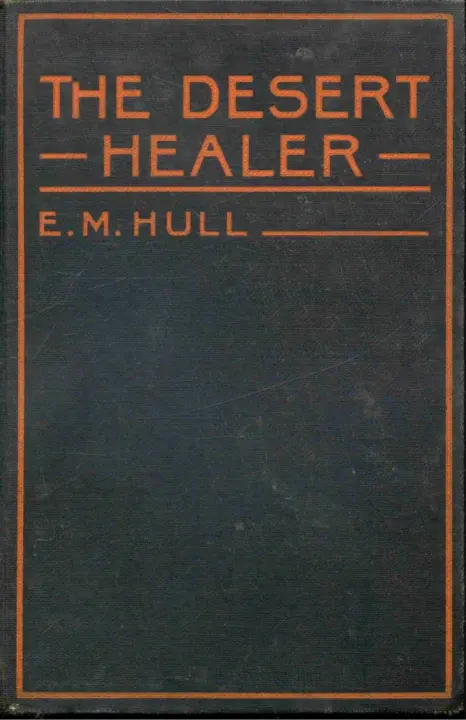
"The Desert Healer" by E. M. Hull is a novel written in the early 20th century. The story unfolds primarily in the vibrant yet harsh landscapes of Algeria, focusing on the characters' complex interactions against the backdrop of personal turmoil and cultural tensions. Central to the narrative is Gervas Carew, an enigmatic Englishman living in isolation in the desert who has a mysterious past, as well as Marny Geradine, a woman grappling with her own troubled marriage. At the start of the novel, we are introduced to the serene setting of the Little Atlas Mountains, where we meet William Chalmers, a doctor, and his wife, who discuss their planned departure from Algeria. They mention Carew, a reclusive figure with an intriguing background, hinting at the tragic elements of his story. As Mrs. Chalmers reveals her concerns for a young woman named Lady Geradine, we learn of the mysteries lurking around Carew, whose life is steeped in hardship and emotional scars from his past. The narrative quickly escalates when Marny unexpectedly finds herself in grave danger, prompting Carew to intervene and rescue her from a violent situation, setting the stage for their complicated relationship as they navigate the intricacies of their pasts and their feelings for one another. The opening establishes a rich world of emotional depth and conflict, drawing readers into the lives of its compelling characters.
Introduction adapted from the source catalogue; source summaries may be automatically generated.
Free to read · English · 86,816 words · No account needed
MAKE TIME FOR A GOOD BOOK
On by default. Untick to stop anonymous reading totals. Each page counts after 10 seconds in view. How this works.
Anonymous counting is on unless you have switched it off.
For a few moments after the train that was carrying Major Meredith back to Algiers had pulled jerkily out of the station, Carew lingered on the deserted ill-lit platform. Then, acknowledging with a curt nod the half-caste stationmaster’s obsequious greeting, he strode leisurely to where the horses were waiting in the care of a Kabyle lad he had picked out from among the heterogeneous collection of loafers lounging before the station entrance. He signed to the boy to follow him with Captain André’s horse and trotted Suliman slowly towards the town. Entering by the Es-Sebt Gate he turned in the direction of the cavalry barracks. Despite the late hour the numberless cafés with their flaring gas lamps and tawdry garishness were at their busiest. The pavements were thronged, a ceaseless stream of cosmopolitan humanity; slow-moving, dignified Arabs, servile and furtive-eyed Jews meekly giving place to all who elbowed them, and eager, chattering Frenchmen—all jostling, indiscriminately. Even the roadway was invaded, and bands of Zouaves with interlocked arms reeled along regardless of the traffic, roaring out the latest musical song with unmelodious vigour and shouting questionable jibes at the passers by.
Tonight Blidah seemed to be en fête, noisier and more blatant than usual. And to Carew, fresh from nearly a year in the desert, the scene was distasteful. It was not new to him, years spent in Algeria had familiarised him with the nightly aspect of the garrison towns, and he was in no mood to be either interested or amused by what he saw. He had no love for Blidah at the best of times and he had already been there once before that day.
At the cavalry barracks he handed over Captain André’s grey to the sleepy groom who was waiting and, dismissing the Kabyle lad, turned with a sigh of relief in the direction of the Bab-el-Rabah. Passing through the gateway he headed towards the east, intending to return by the same route by which he had brought Major Meredith. Once clear of the town Suliman broke of his own accord into the long, swinging gallop to which he was accustomed and for a time Carew let him take his own pace. But soon he checked him, drawing him into a reluctant walk. And as the bay sidled and reared, snorting impatiently, his master bent forward in the saddle and ran his hand caressingly over the glossy arched neck. “Gently, gently, core of my heart,” he murmured in the language that came more readily to his lips than his own, “there is no need for haste. Tomorrow is also a day.” And pacing slowly forward through the quiet night he set himself at last to face the torturing recollections of the past that for years he had put resolutely out of his mind but which had been cruelly awakened by the wholly unexpected advent of his old friend. Inscrutable as the Arabs amongst whom he lived, he exhibited no outward sign of agitation, but under the passivity that had become second nature with him there was raging a bitter storm of anger and revolt against fate that had thrown Micky Meredith across his path to shatter the hard-won peace that had come to him in the desert. Meredith was bound up with all he wished to forget, was the living reminder of the home and happiness he had lost. His coming had reopened the wound that Carew had thought healed forever. Memories, like stabs of actual pain, crowded in upon him. The old struggle, the old bitterness he had conquered once was overwhelming him again, shaking him to the very depths of his being. The past he had resolved to forget rose up anew with terrible distinctness. Royal Carew—and the woman he had loved! With the sweat of agony thick on his forehead he lived again through the horror of that ghastly homecoming. He saw again, clearly as though they stood before him, the pitying, terrified faces of the old servants from whom he learned the sordid story of his betrayal. He passed once more through the hours of anguish when he had knelt in dumb, helpless misery beside the tiny cot in the luxurious nursery and watched the death struggle of the child whom, worse than motherless, he loved so passionately. The dark waters of despair had closed over his head that night. Weak from the terrible wound that had brought him back to England, crushed by the double tragedy, he had longed and prayed for death. And when he had at last found courage to go forward with what remained to him of life, it was as a changed man, embittered out of any semblance to his former self. He had divorced his wife that she might marry the man for whom she had left him, and with grim justice, because she had been the mother of his son, he had settled upon her an adequate fortune. But for the woman herself he had no feeling left but loathing and contempt. She had deceived him, lied to him. She had destroyed his faith, his trust. She had opened his eyes at last to the unworthiness that had been patent to all but the husband who worshipped her. She had killed his love—and with it had died esteem and belief in the sex she represented. With her his ideal of womanhood, pinnacled high with chivalrous regard, had shattered into nothingness. Because of her he had become the cynical misogynist he was, seeing in all women the one woman whose falseness had poisoned his life. The thought of her stirred him now to nothing but a sense of cold disgust.
Your reading position is saved on this browser. Take it to another device with a library code. Reading pages adapt to text, rather than matching a printed edition.
BEHIND THE BOOK
This eBook is for the use of anyone anywhere in the United States and most other parts of the world at no cost and with almost no restrictions whatsoever. You may copy it, give it away or re-use it under the terms of the Project Gutenberg License included with this eBook or online at www.gutenberg.org. If you are not located in the United States, you will have to check the laws of the country where you are located before using this eBook. Read the source licence.
The original source file, including credits and licence, is retained by this library. Request an original-format copy at no charge. Please include the book title and Project Gutenberg identifier #59199.
KEEP YOUR CURIOSITY GOING
Coulson Kernahan

Maurice Baring
Frances Wright
Cécile Tormay

Frederic Jesup Stimson

W. H. P. (William Henry Pope) Jarvis