THE CLASSIC COLLECTION✦A dead man’s diaryCLASSIC FREE BOOKS
A dead man’s diary
Coulson Kernahan
THE CLASSIC COLLECTION · 1923
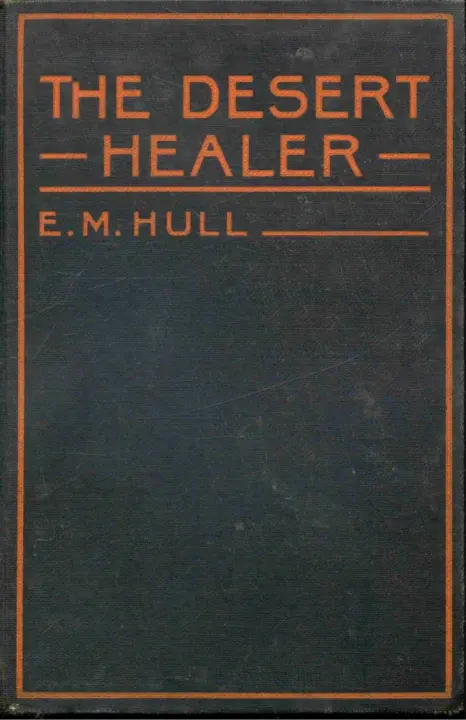
"The Desert Healer" by E. M. Hull is a novel written in the early 20th century. The story unfolds primarily in the vibrant yet harsh landscapes of Algeria, focusing on the characters' complex interactions against the backdrop of personal turmoil and cultural tensions. Central to the narrative is Gervas Carew, an enigmatic Englishman living in isolation in the desert who has a mysterious past, as well as Marny Geradine, a woman grappling with her own troubled marriage. At the start of the novel, we are introduced to the serene setting of the Little Atlas Mountains, where we meet William Chalmers, a doctor, and his wife, who discuss their planned departure from Algeria. They mention Carew, a reclusive figure with an intriguing background, hinting at the tragic elements of his story. As Mrs. Chalmers reveals her concerns for a young woman named Lady Geradine, we learn of the mysteries lurking around Carew, whose life is steeped in hardship and emotional scars from his past. The narrative quickly escalates when Marny unexpectedly finds herself in grave danger, prompting Carew to intervene and rescue her from a violent situation, setting the stage for their complicated relationship as they navigate the intricacies of their pasts and their feelings for one another. The opening establishes a rich world of emotional depth and conflict, drawing readers into the lives of its compelling characters.
Introduction adapted from the source catalogue; source summaries may be automatically generated.
Free to read · English · 86,816 words · No account needed
MAKE TIME FOR A GOOD BOOK
On by default. Untick to stop anonymous reading totals. Each page counts after 10 seconds in view. How this works.
Anonymous counting is on unless you have switched it off.
For a few moments, Marny Geradine, fighting to keep her own mount to a standstill, watched the fast retreating horseman until his tall, upright figure was blurred by the rush of hot tears that filled her eyes. She forced them back before they fell, the relief of tears was a luxury she had learned to deny herself, and turning once more towards Algiers cantered forward as slowly as her eager horse would permit. After all, what was the use of hurrying, she thought with a kind of dreary fatalism. If Clyde had already returned he would have arrived last night, a few minutes extra delay now would make no difference. The mischief would have been done. Nothing she could do would lessen his anger, nothing she could say would convince him against his own inclination. The true story of her terrible experience would find no credence with him. And even all the truth she dare not tell him. The latter part of the night’s adventure could never be divulged. The strange Arab who rescued her, his hospitality, his chivalrous regard and consideration would be beyond her husband’s comprehension. He was incapable of understanding a temperament other than his own, he would believe only the vile conclusion his own foul mind would leap at and hold in spite of all denials. She could never tell him. Enough that his return had found her absent, that she had lost a valuable horse for which he had recently paid a large figure. True, she had been promised that the horse would be returned, and the curious unaccountable faith she had in the man who had made that promise did not waver in spite of the seeming improbability of its fulfillment, but would his return even satisfy Clyde for his temporary loss? A cold feeling of fear ran through her, and then a wave of contemptuous anger at her own cowardice. She could make no explanations and offer no excuses. She would have to be silent as she always was silent rather than lie to shield herself from his imputations. Whatever she did was wrong, no matter how hard she tried to please him she always failed. She wondered, sometimes, how she found courage to go on trying. It all seemed so utterly useless. She pushed the heavy hair off her forehead with a bitter sigh. There wasn’t much courage about her this morning, she thought. The exultation of that wild swift gallop through the night had passed, the new strength that had come to her had evaporated, leaving her utterly weary and sick at heart. It would have settled so many difficulties if the Arab who had abducted her had used with purpose the knife with which he had threatened her the previous day. Death would mean release from a life that was unbearable, and she was not afraid to die. Death was life—and the life she led was death. All whom she loved, all who had ever loved her—for Clyde’s gross passion was not love—were dead. All except Ann—and how much longer would Ann be left to her? Clyde had so often threatened that she must go. For Ann’s sake she must try and struggle on. But if Ann was taken from her—the beautiful, tired little face grew suddenly cold and set like a piece of carved white ivory and the slender, drooping figure drew straighter in the saddle as she wrenched her thoughts to the present. To get it over as soon as might be—to take her medicine like a man. Despite her unhappiness, she smiled at the recollection of the well remembered formula that in her childhood had been her father’s invariable prelude to any correction he administered. And the father who had died so long ago, who had idolised her as she had idolised him, had never punished without reason. Clyde punished without either reason or provocation. The thought goaded her. No matter what form his anger took she would not give him the satisfaction he always hoped for. She would not let him see the physical fear he inspired that even her courageous spirit could not conquer. It would be worse for her in the end for her apparent callousness infuriated him, but she would rather break than bend, rather die than grovel at his feet which she knew was his desire. Avoiding the main road which she was approaching, she struck into a narrow bridle path that wound upward to the woods behind Mustapha, from where she had easy access to the little door that half hidden by flowering shrubs lay at the far end of the villa garden. The courage she still clung to did not extend to braving the curiosity of the gatekeeper at the main entrance. A turn in the track brought her to the path that led down to the garden gate. She reined in and slid to the ground. For a moment she stood still by the horse that had carried her so well, her face pressed against his neck, her fingers caressing the black muzzle thrust affectionately against her arm. Then she turned and handed the bridle to Hosein who was waiting stolidly beside her.
Your reading position is saved on this browser. Take it to another device with a library code. Reading pages adapt to text, rather than matching a printed edition.
BEHIND THE BOOK
This eBook is for the use of anyone anywhere in the United States and most other parts of the world at no cost and with almost no restrictions whatsoever. You may copy it, give it away or re-use it under the terms of the Project Gutenberg License included with this eBook or online at www.gutenberg.org. If you are not located in the United States, you will have to check the laws of the country where you are located before using this eBook. Read the source licence.
The original source file, including credits and licence, is retained by this library. Request an original-format copy at no charge. Please include the book title and Project Gutenberg identifier #59199.
KEEP YOUR CURIOSITY GOING
Coulson Kernahan

Maurice Baring
Frances Wright
Cécile Tormay

Frederic Jesup Stimson

W. H. P. (William Henry Pope) Jarvis