THE CLASSIC COLLECTION✦A dead man’s diaryCLASSIC FREE BOOKS
A dead man’s diary
Coulson Kernahan
THE CLASSIC COLLECTION · 1923
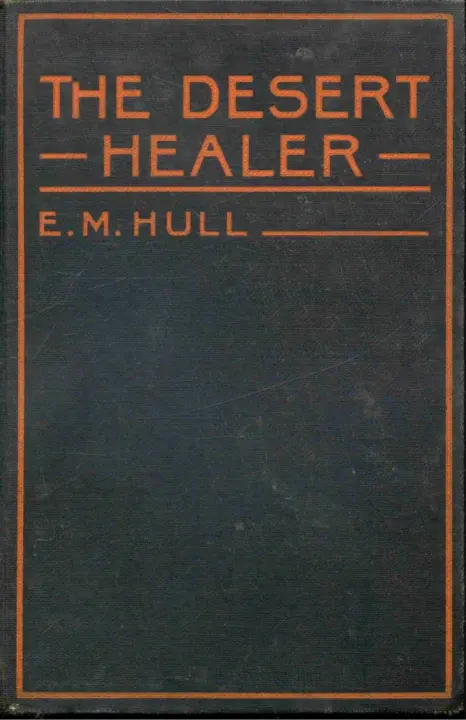
"The Desert Healer" by E. M. Hull is a novel written in the early 20th century. The story unfolds primarily in the vibrant yet harsh landscapes of Algeria, focusing on the characters' complex interactions against the backdrop of personal turmoil and cultural tensions. Central to the narrative is Gervas Carew, an enigmatic Englishman living in isolation in the desert who has a mysterious past, as well as Marny Geradine, a woman grappling with her own troubled marriage. At the start of the novel, we are introduced to the serene setting of the Little Atlas Mountains, where we meet William Chalmers, a doctor, and his wife, who discuss their planned departure from Algeria. They mention Carew, a reclusive figure with an intriguing background, hinting at the tragic elements of his story. As Mrs. Chalmers reveals her concerns for a young woman named Lady Geradine, we learn of the mysteries lurking around Carew, whose life is steeped in hardship and emotional scars from his past. The narrative quickly escalates when Marny unexpectedly finds herself in grave danger, prompting Carew to intervene and rescue her from a violent situation, setting the stage for their complicated relationship as they navigate the intricacies of their pasts and their feelings for one another. The opening establishes a rich world of emotional depth and conflict, drawing readers into the lives of its compelling characters.
Introduction adapted from the source catalogue; source summaries may be automatically generated.
Free to read · English · 86,816 words · No account needed
MAKE TIME FOR A GOOD BOOK
On by default. Untick to stop anonymous reading totals. Each page counts after 10 seconds in view. How this works.
Anonymous counting is on unless you have switched it off.
The first pale streaks of dawn were stealing across the sky before Carew stirred from the chair into which he had dropped two hours before to face the knowledge that had come to him in that tense moment of self-understanding in the little winter garden at the Palace. Stunned by the realisation of his own feelings, racked by the painful scene following his return to the villa, at first concrete thought had been impossible. His whole ability to will and do, his whole mental and physical being seemed crushed under a weight of sorrow that for the time was paralysing. He felt numbed, conscious only of the suffering that, clogging his brain, reacted on his body leaving him inert and lifeless.
But gradually his mind cleared and he was able to think more calmly. He loved. For the second time in his life he loved. And yet it seemed to him that only now did he know the depths of his own heart, only now did he comprehend what true devotion could really mean. The love of his early manhood, the love he had given the woman who had been his wife, was not comparable with this overmastering passion that had come to him in his maturity. If he had loved then as he loved now not even the tragedy of twelve years ago could kill that love. And the greater, deeper, more wonderful emotion he had only just realised was as the dust of ashes in his mouth. There was no joy, no hope in this new love. There was only the pain of renunciation and the bitter knowledge that he had brought sorrow to her for whose sake he would gladly die rather than even a shadow should cross her path. For that she also loved him he knew beyond all doubt. He had read it in her eyes, he had heard it in the anguished tones of her voice when the thought of his peril had driven her to self betrayal as she listened to his story of the finish of Abdul el Dhib. The pain that was his was hers also. The thought was torment. Had she not already enough to bear without this additional burden of a love that could never be satisfied, that would bring her only grief and the torturing remembrance of what might have been? What did his own suffering matter compared with the fact that because of him she too must suffer? It would have been better, a thousand times better, if he had never returned from that last hazardous expedition that had ended in the meeting in the deserted village by Blidah. And yet, to his fatalistic reasoning, that same meeting had seemed a thing ordained; but for his coming she must have experienced a fate too horrible even to contemplate. It was almost as if he had been deliberately guided in the choice of road he had taken, as if he had been led to her by some inscrutable ruling of providence. And though at the time he had raged at the necessity that had forced him to help her, though his whole soul had revolted from his self-imposed task, he knew now that love had leaped into being when he had carried her to his camp, and that it was love struggling for recognition that had caused the misery and mental upheaval of the succeeding weeks. But only tonight had he realised it, only tonight had he awakened to a full understanding of the almost unbelievable thing that had happened to him. And how or when during their brief meetings she had come to care for him he did not know, nor would he ever know. He only knew that for some strange inexplicable reason she had given him her love, that though she would never be his he would carry through life the knowledge that her heart was in his keeping. And the knowledge humbled him. How could she care! What could she see in him, a man nearly twice her age who, until tonight, had treated her with scant civility, that she should stoop to bestow on him the priceless treasure of her love. But what did it matter—enough that she did care and that he would have to be content with just the fact of her caring. Content! Good God, was the intolerable ache that filled him, the mad longing that possessed him, contentment! He would never be content. The mere knowledge of their love was not enough. He wanted her, above his very hope of heaven he wanted her. The barriers of defense he had raised about himself were torn away at last. The dead heart that had lain cold and lifeless within him was alive once more. Passion swept, and seething with jealousy he made no effort to stem the elemental impulses that seemed suddenly let loose and for a time only the primitive man in him existed urging his desperate need until even murder seemed justifiable to obtain her—the murder of the one who stood between him and what he wanted. Geradine! His fingers curled and tightened as though they were about the throat of the man he hated with all the force of his being. That strange hatred was no longer incomprehensible, and the thought that had so appalled him the night at the opera he viewed now with cold dispassion. What was the life of such a brute compared with her happiness and well-being! Was it murder to rid the earth of such scum, to free her from the tyranny that was killing her, body and soul? Murder! A terrible smile flitted across his face. For her sake he could do even that. Nothing mattered but her necessity. Beside that justice, honour, the man-made laws of society seemed to fade into utter insignificance. And the laws of God—was he to trample them under foot as well? If it must be. He was willing to risk even his soul to save her from further suffering. But was there need for such a drastic measure—was there no easier way to follow? Was there not the way that others had taken—the way that would free her from a life of bondage, that would give him his heart’s desire? What was scruple to stand between them? They had only one life to live—and she loved him. She would come to him—if he made her. And for her own sake he would make her—for her sake, or for the sake of his own lust?
Your reading position is saved on this browser. Take it to another device with a library code. Reading pages adapt to text, rather than matching a printed edition.
BEHIND THE BOOK
This eBook is for the use of anyone anywhere in the United States and most other parts of the world at no cost and with almost no restrictions whatsoever. You may copy it, give it away or re-use it under the terms of the Project Gutenberg License included with this eBook or online at www.gutenberg.org. If you are not located in the United States, you will have to check the laws of the country where you are located before using this eBook. Read the source licence.
The original source file, including credits and licence, is retained by this library. Request an original-format copy at no charge. Please include the book title and Project Gutenberg identifier #59199.
KEEP YOUR CURIOSITY GOING
Coulson Kernahan

Maurice Baring
Frances Wright
Cécile Tormay

Frederic Jesup Stimson

W. H. P. (William Henry Pope) Jarvis