THE CLASSIC COLLECTION✦A dead man’s diaryCLASSIC FREE BOOKS
A dead man’s diary
Coulson Kernahan
THE CLASSIC COLLECTION · 1923
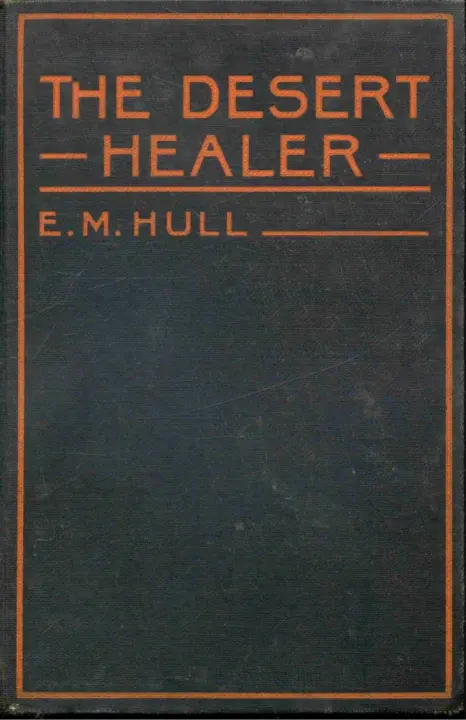
"The Desert Healer" by E. M. Hull is a novel written in the early 20th century. The story unfolds primarily in the vibrant yet harsh landscapes of Algeria, focusing on the characters' complex interactions against the backdrop of personal turmoil and cultural tensions. Central to the narrative is Gervas Carew, an enigmatic Englishman living in isolation in the desert who has a mysterious past, as well as Marny Geradine, a woman grappling with her own troubled marriage. At the start of the novel, we are introduced to the serene setting of the Little Atlas Mountains, where we meet William Chalmers, a doctor, and his wife, who discuss their planned departure from Algeria. They mention Carew, a reclusive figure with an intriguing background, hinting at the tragic elements of his story. As Mrs. Chalmers reveals her concerns for a young woman named Lady Geradine, we learn of the mysteries lurking around Carew, whose life is steeped in hardship and emotional scars from his past. The narrative quickly escalates when Marny unexpectedly finds herself in grave danger, prompting Carew to intervene and rescue her from a violent situation, setting the stage for their complicated relationship as they navigate the intricacies of their pasts and their feelings for one another. The opening establishes a rich world of emotional depth and conflict, drawing readers into the lives of its compelling characters.
Introduction adapted from the source catalogue; source summaries may be automatically generated.
Free to read · English · 86,816 words · No account needed
MAKE TIME FOR A GOOD BOOK
On by default. Untick to stop anonymous reading totals. Each page counts after 10 seconds in view. How this works.
Anonymous counting is on unless you have switched it off.
Five years—only five years!
With a bitter sigh she sank wearily into a big chintz covered Chesterfield. For a long time she lay thinking, almost dreaming, until at last she awoke with a sudden sense of shock to the import of her thoughts. The Arab who had saved her! She could see distinctly every line of his tall, graceful figure, every feature of his grave, bronzed face. She found herself wondering again at the cold austerity of his expression, so different from the appraising glances of admiration usually accorded her and which made her hate the beauty that inspired them. He had not even appeared to know that she was beautiful. His sombre eyes had rested on her with complete indifference, almost, so it seemed to her, with dislike. Hyper-sensitive, she had been conscious that his aid, his hospitality had been given unwillingly. She remembered the curt impatient voice, “I do not keep you to please myself—” and wondered why the fact of his indifference seemed so suddenly to hurt her. If he had not been indifferent, if he had looked on her as other men did, what would have been her fate? She would have escaped one horrible peril only to fall into another as horrible. She had been utterly in his power, utterly at his mercy—the mercy of an Arab. She owed her honour to an Arab—and she did not even know his name! Why had he evaded what was a perfectly natural question, why hidden his identity under a sobriquet? Was he afraid that she would try to trace him, try to force on him some tangible proof of the gratitude he had refused to listen to? Her cheeks burned. What he had done was beyond payment. In all probability she would never see him again. She would have to be content with the meagre information he had given her, content with the memory of a wonderful chivalry she had never thought to experience and which had been a revelation. It was as though some healing power had touched her, like the clean, wholesome breath of some purifying wind penetrating the defiling atmosphere that surrounded her, opening her eyes to a new conception of man’s attitude towards woman. The men she had hitherto met had been uniformly alike in taste and inclination to the husband who forced their society upon her. She shrank from them as she shrank from him with a sense of shame that was unendurable. Compelled to participate in a life she abhorred, she seemed to be on the brink of some loathsome pit, choked with the fetid fumes of its foul putrescence, steadily sinking downward into an abyss of horrible and terrible darkness, her whole soul recoiling from the moral destruction that appeared to loom inevitably ahead of her. What did her soul matter to Clyde? It was only her body he wanted. It was only physical admiration she saw in the eyes of his friends. Yesterday for the first time she had met a man who had ignored her sex, whose gaze had not lingered desirously on the fair exterior compelling a remembrance of her womanhood, whose proximity had not moved her to hot discomfort, but had given instead a sense of security and trust. With him she had felt safe—safe and curiously unstrange. The hours spent in his tent, the long ride through the night at his side, would never be effaced from her memory. He had given her a glimpse of a finer, cleaner manhood than in her unhappy experience she had ever known. In some undefinable way he seemed to have restored the self-respect that year by year she had felt being torn from her. And he was an Arab! An Arab. She whispered it again, lying very still on the sofa, her fingers twining and untwining restlessly about the emerald chain. What did his nationality matter—it was the man himself who counted. The man who had shown her a nobler type than she had ever met with, the man who had shown her that all strength was not merciless, that all men did not look on women merely as their natural prey. And as with this desert man, so must it be with many men of her own race. Her brooding eyes darkened with sudden anguish, and she flung on to her face burying her head in the silken cushions, fighting the agony of misery and revolt that swept over her. Why had she been destined for such a fate? Why had it been her lot to be thrown only amongst those whose vileness debased the sacred image in which they were made? Why had she been given no chance of the happiness that must be the portion of luckier women than she? If it had been otherwise, if for her marriage had meant not only physical union but a higher, holier companionship of mind and spirit, how gladly would she have yielded to a passion hallowed by love, to possession tempered by consideration. If she could have loved and respected where now she only obeyed and endured! A marriage such as hers was ignoble, degrading, horrible beyond all thought. If she had known what it would mean, would she have had the courage to face what she had done in ignorance? She sat up, pushing the heavy hair off her forehead, staring into space with pain-filled eyes. Yes, she would have done it again in spite of everything. Not for love of Denis, she had never loved him—in childhood he had bullied her, in girlhood he had neglected her, and on the threshold of her womanhood he had made her pay the price of his infamy—but for love of the name and family that meant so much to her. And because of that, because her wretchedness was the result of her own willing sacrifice she must struggle on as she had struggled all these five terrible years, beaten and hopeless, but striving to fulfill her part of the marriage vows her husband treated so lightly. But, oh, dear God, she had never known it would be so hard! Harder now than ever. Why did her thoughts turn so persistently to the man who had saved her? Why did the recollection of his chivalry and generosity seem to make her feel so much more acutely the misery of her life? Was it only the contrast to the man whose wife she was? She hid her face in her hands with a sharp little cry of fear. It was more than that. Quite suddenly she realised it—the full meaning of what had happened to her, the full significance of the thoughts that were crowding in her brain. She shivered, clasping her hands closer over her eyes. Why, oh why had this come to her—had she not already enough to bear! And if she had not been bound, if she were free, it would make no difference. He was an Arab! Then her self-control gave way and she fell back among the cushions, dry-eyed but shaking with emotion. “I wouldn’t have cared,” she wailed, “I wouldn’t care what he was.”
Your reading position is saved on this browser. Take it to another device with a library code. Reading pages adapt to text, rather than matching a printed edition.
BEHIND THE BOOK
This eBook is for the use of anyone anywhere in the United States and most other parts of the world at no cost and with almost no restrictions whatsoever. You may copy it, give it away or re-use it under the terms of the Project Gutenberg License included with this eBook or online at www.gutenberg.org. If you are not located in the United States, you will have to check the laws of the country where you are located before using this eBook. Read the source licence.
The original source file, including credits and licence, is retained by this library. Request an original-format copy at no charge. Please include the book title and Project Gutenberg identifier #59199.
KEEP YOUR CURIOSITY GOING
Coulson Kernahan

Maurice Baring
Frances Wright
Cécile Tormay

Frederic Jesup Stimson

W. H. P. (William Henry Pope) Jarvis