THE CLASSIC COLLECTION✦A dead man’s diaryCLASSIC FREE BOOKS
A dead man’s diary
Coulson Kernahan
THE CLASSIC COLLECTION · 1923
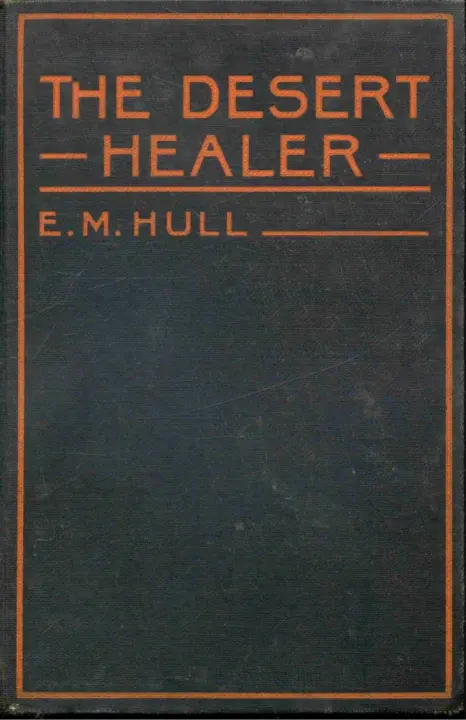
"The Desert Healer" by E. M. Hull is a novel written in the early 20th century. The story unfolds primarily in the vibrant yet harsh landscapes of Algeria, focusing on the characters' complex interactions against the backdrop of personal turmoil and cultural tensions. Central to the narrative is Gervas Carew, an enigmatic Englishman living in isolation in the desert who has a mysterious past, as well as Marny Geradine, a woman grappling with her own troubled marriage. At the start of the novel, we are introduced to the serene setting of the Little Atlas Mountains, where we meet William Chalmers, a doctor, and his wife, who discuss their planned departure from Algeria. They mention Carew, a reclusive figure with an intriguing background, hinting at the tragic elements of his story. As Mrs. Chalmers reveals her concerns for a young woman named Lady Geradine, we learn of the mysteries lurking around Carew, whose life is steeped in hardship and emotional scars from his past. The narrative quickly escalates when Marny unexpectedly finds herself in grave danger, prompting Carew to intervene and rescue her from a violent situation, setting the stage for their complicated relationship as they navigate the intricacies of their pasts and their feelings for one another. The opening establishes a rich world of emotional depth and conflict, drawing readers into the lives of its compelling characters.
Introduction adapted from the source catalogue; source summaries may be automatically generated.
Free to read · English · 86,816 words · No account needed
MAKE TIME FOR A GOOD BOOK
On by default. Untick to stop anonymous reading totals. Each page counts after 10 seconds in view. How this works.
Anonymous counting is on unless you have switched it off.
The lane was a cul-de-sac, the house he sought at the far end of it, for there only did a dim light filtering through an unshuttered window show any sign of habitation. Deep shadows masked the entrance and a few feet short of it, in a patch of vivid moonlight, he pulled up and, leaping to the ground, raced towards the hidden doorway. His foot was on the crumbling step when out of the gloom three figures rose up to bar his entrance and hurled themselves upon him. The attack was silent, and in silence he met it. There was no time to reach for the revolver he had neglected to draw. Straining, heaving, he wrestled in the darkness with opponents whose faces he could not see, whose arms encircled him and whose clutching sinewy hands tore murderously at his throat. A knife pricked him and with a blind instinct he caught at and held the hand that brandished it, crushing it in his strong fingers till he felt the yielding bones crack and the weapon slipped to the ground with a faint tinkle. In perfect physical condition, with steely muscles toughened by years of strenuous and active life, he knew that singly he could have matched any one of the men who were hemming him in, but against three even his great strength was unavailing. Struggling to free his arms, he gave back step by step as they pressed him closer in a continued silence that was menacing by its very unusualness. Even the man whose hand he had maimed had made no sound beyond a muffled growl. Only the shuffling of feet on the dry ground, the panting, animal-like grunts of exertion as they grappled with him, were audible. The rank stench of filthy, sweat-drenched garments was pungent in his nostrils; hot, fetid breath fanning his face gave him—accustomed though he was to the dirt and squalor of the Arabs—a feeling of nausea that sent a shiver of disgust through him. At last with a tremendous effort he wrenched himself free and reeled back, gasping, into the patch of moonlight, his heart pounding against his ribs, perspiration pouring from him. And as the bright light struck across his face the men who had followed him swiftly drew back with sudden indetermination, muttering amongst themselves. He caught the words “El Hakim,” the title he bore amongst the desert people, and almost before he realised it they had vanished into the shadows of the neighbouring houses and he was alone. For a moment he fought for breath, wiping the blinding moisture from his dripping face, fumbling for the revolver in his waistcloth. Then another strangled cry from within the lighted hut spurred him into action and he sprang forward, flinging back the heavy burnous from his shoulders as he ran. The rotting door crashed open under the sudden impact of his weight and in the entrance he halted with levelled revolver. For a second only. His eyes sweeping the tiny room met those of a gigantic, evil-faced Arab who, startled at his appearance, had flung to the ground the woman who struggled in his arms and turned to meet the intruder with a scowl of murderous ferocity. A grim smile of recognition flickered across Carew’s stern face. “Thou—dog?” he thundered, and leaped at him. For a moment the Arab wavered, then a knife flashed in his hand. But with a quick feint Carew dodged the sweeping blow and caught the upraised wrist in a vice-like grip. With his revolver pressing into the man’s stomach he forced him back slowly against the wall of the hut, his fingers tightening their hold until the paralysed hand unclenched and the knife clattered to the floor. Kicking it beyond reach, Carew backed a few paces and, still keeping the Arab covered, turned his attention for the first time to the woman he had come reluctantly to aid. Only a girl apparently, her face almost childish in its strained, white piteousness, she had dragged herself up from the floor and was standing rocking on her feet in the middle of the room. He looked with a kind of cruel deliberation on the slender, shaking limbs which, clothed in boyish riding dress that intimately revealed their delicate beauty, would have been the joy of an artist, but which filled him only with an acute feeling of antagonism. The folly of it, the shameless, senseless folly of it! A woman must be a fool and worse than a fool to expose herself thus in a land of veiled femininity. His antagonism augmented and he viewed unmoved the signs of terrible struggle through which she had passed. That she had fought desperately was evidenced in the marks of violent handling she bore, in the unbound hair that lay in curling chestnut waves about her shoulders, in the tattered silk shirt that, ripped from throat to waist, bared the soft whiteness of her heaving breasts to the austere gaze bent so pitilessly on her. She seemed unaware of Carew’s nearness. Panting for breath, her hands clenching and unclenching mechanically, she stood like a driven animal at bay, her eyes fixed on the Arab in a wild, unblinking stare. Carew broke the silence abruptly with a blunt question addressed to her that was brutally direct. He spoke in French that both could understand and because he had no wish tonight to pass as other than an Arab himself. The harsh voice roused her to a realisation of his presence. She started violently, her hunted eyes turning slowly to him as if she dared not lose sight of the sinister figure by the wall. For a few seconds she stared at him uncomprehendingly, then her cheeks flamed suddenly as the meaning of his words penetrated. Her lips quivered and she shrank back, dragging the tangle of soft hair over her uncovered bosom with an instinctive gesture of modesty. She tried to speak, but for some time no words would come, then a wail of entreaty burst from her. “Take me away, oh, for God’s sake take me away!” she cried, and buried her face in her hands with a convulsive shudder.
Your reading position is saved on this browser. Take it to another device with a library code. Reading pages adapt to text, rather than matching a printed edition.
BEHIND THE BOOK
This eBook is for the use of anyone anywhere in the United States and most other parts of the world at no cost and with almost no restrictions whatsoever. You may copy it, give it away or re-use it under the terms of the Project Gutenberg License included with this eBook or online at www.gutenberg.org. If you are not located in the United States, you will have to check the laws of the country where you are located before using this eBook. Read the source licence.
The original source file, including credits and licence, is retained by this library. Request an original-format copy at no charge. Please include the book title and Project Gutenberg identifier #59199.
KEEP YOUR CURIOSITY GOING
Coulson Kernahan

Maurice Baring
Frances Wright
Cécile Tormay

Frederic Jesup Stimson

W. H. P. (William Henry Pope) Jarvis