THE CLASSIC COLLECTION✦A dead man’s diaryCLASSIC FREE BOOKS
A dead man’s diary
Coulson Kernahan
THE CLASSIC COLLECTION · 1923
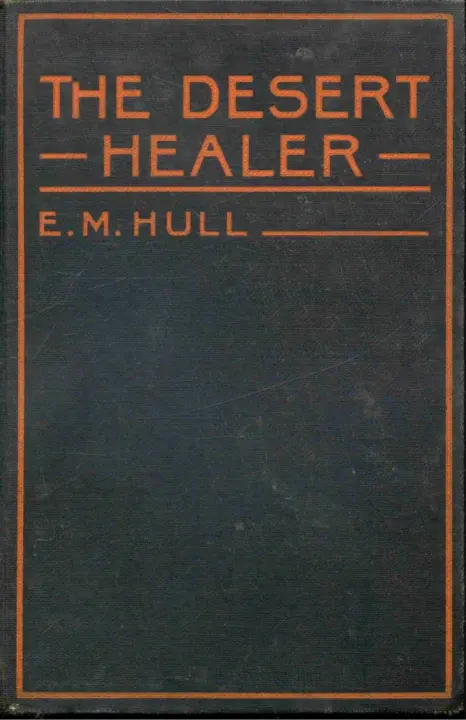
"The Desert Healer" by E. M. Hull is a novel written in the early 20th century. The story unfolds primarily in the vibrant yet harsh landscapes of Algeria, focusing on the characters' complex interactions against the backdrop of personal turmoil and cultural tensions. Central to the narrative is Gervas Carew, an enigmatic Englishman living in isolation in the desert who has a mysterious past, as well as Marny Geradine, a woman grappling with her own troubled marriage. At the start of the novel, we are introduced to the serene setting of the Little Atlas Mountains, where we meet William Chalmers, a doctor, and his wife, who discuss their planned departure from Algeria. They mention Carew, a reclusive figure with an intriguing background, hinting at the tragic elements of his story. As Mrs. Chalmers reveals her concerns for a young woman named Lady Geradine, we learn of the mysteries lurking around Carew, whose life is steeped in hardship and emotional scars from his past. The narrative quickly escalates when Marny unexpectedly finds herself in grave danger, prompting Carew to intervene and rescue her from a violent situation, setting the stage for their complicated relationship as they navigate the intricacies of their pasts and their feelings for one another. The opening establishes a rich world of emotional depth and conflict, drawing readers into the lives of its compelling characters.
Introduction adapted from the source catalogue; source summaries may be automatically generated.
Free to read · English · 86,816 words · No account needed
MAKE TIME FOR A GOOD BOOK
On by default. Untick to stop anonymous reading totals. Each page counts after 10 seconds in view. How this works.
Anonymous counting is on unless you have switched it off.
Almost hidden by the palm trees and the crumbling masonry of the well, two riderless horses stood with dejected, down-drooping heads, ridden to a standstill apparently for even Suliman’s angry squeal failed to attract their attention. Motionless like creatures of bronze, their backs to the driving sand, their dangling bridles flapping in the wind, there was something singularly forlorn in their attitude. At sight of them Carew scowled in momentary indecision. He had no wish to be hampered with the care of two spent horses, but it was not a night to pass even an animal in distress. With a word to Hosein, he swung Suliman towards the little dead oasis. The weary beasts took no notice of their approach and did not move as Carew drew rein beside them. A quick glance about him and he slid suddenly out of the saddle. Near by lay an Arab, face downwards on the ground, and a few steps away a powerfully built European sat with his back propped against the broken wall of the well nursing a heavy riding whip across his knees. His head was sunk between his shoulders, his face hidden by the wide brim of the helmet pulled low on his forehead. Rain-drenched and spattered with mud and sand that caked his once immaculate boots and clung closely to the rough surface of his tweed coat, he presented a sorry spectacle, but his plight had evidently not impaired his power of speech for there came from his lips a steady flow of uninterrupted blasphemy that sounded oddly in such a place and at such a time.
Carew was no purist himself, but the unnecessary foulness of the words that assailed his ears roused in him a feeling of disgust and he turned abruptly to the prostrate Arab who seemed in more immediate need of attention. But as he touched him the man rolled from under his hands and stumbling to his feet, shrank away with upraised arm as though to ward off a blow. His eyes were dazed but mingling with the pain in them there was a look of deep hatred, and his bruised and bleeding mouth told their own tale. The individual by the well was evidently a hard hitter as well as a hard swearer. To Carew, the sullen, twitching features were vaguely familiar and it was obvious, when after a few moments the Arab collected himself sufficiently to speak, that he himself was recognised. But he could not place him and the name that was reluctantly vouchsafed conveyed nothing—he knew dozens of Arabs with the same designation. More he could not ask. Whatever were his feelings on the subject he could not interfere between master and servant. But his expression was not pleasant and he was conscious of a rising anger as he swung on his heel to go back to the well. He did not reach it. With slow clenching hands he stood where he had turned staring at the man who was leisurely coming towards him—the man he had been trying to avoid since the night, weeks ago, of the opera. The sodden helmet was pushed back revealing clearly, even in the dim light, the blotched, dissipated looking face that had stirred him to so strange and deadly a hatred. And now, in their close proximity, that strange hatred seemed to increase a thousandfold and it was all Carew could do to preserve semblance of passivity and conceal the boiling rage that filled him. It was like nothing he had ever experienced in his life before. As on that night in Algiers it was sweeping him with a force that was beyond all reason, all explanation. He could not explain it. He could not conquer it. He could only hope to retain the self-command that seemed perilously near to breaking point, for again the same appalling desire to kill was pouring over him. Aghast at the horrible impulse that was almost more than he could resist he thrust his hands behind him to keep them from the weapon that lay hidden in the folds of his waistcloth. And completely oblivious of the storm of passion his presence had evoked, Geradine strode up to him with the swaggering gait and overbearing demeanour that characterised him always, but which was especially notable in his dealings with any native, irrespective of rank. A native to him was a native, an inferior creature little better than the beasts of the field, to be dominated by fear and kept in his place. He stood now, his legs planted widely apart, slapping his boot with his riding whip, surveying Carew through insolent half-closed eyes.
Your reading position is saved on this browser. Take it to another device with a library code. Reading pages adapt to text, rather than matching a printed edition.
BEHIND THE BOOK
This eBook is for the use of anyone anywhere in the United States and most other parts of the world at no cost and with almost no restrictions whatsoever. You may copy it, give it away or re-use it under the terms of the Project Gutenberg License included with this eBook or online at www.gutenberg.org. If you are not located in the United States, you will have to check the laws of the country where you are located before using this eBook. Read the source licence.
The original source file, including credits and licence, is retained by this library. Request an original-format copy at no charge. Please include the book title and Project Gutenberg identifier #59199.
KEEP YOUR CURIOSITY GOING
Coulson Kernahan

Maurice Baring
Frances Wright
Cécile Tormay

Frederic Jesup Stimson

W. H. P. (William Henry Pope) Jarvis