THE CLASSIC COLLECTION✦A dead man’s diaryCLASSIC FREE BOOKS
A dead man’s diary
Coulson Kernahan
THE CLASSIC COLLECTION · 1923
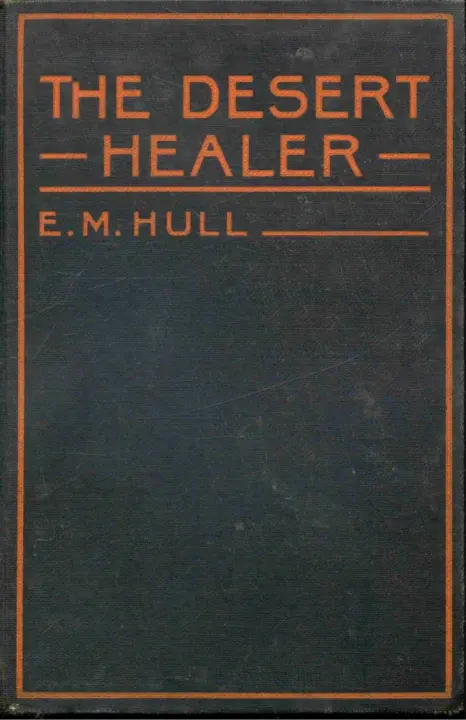
"The Desert Healer" by E. M. Hull is a novel written in the early 20th century. The story unfolds primarily in the vibrant yet harsh landscapes of Algeria, focusing on the characters' complex interactions against the backdrop of personal turmoil and cultural tensions. Central to the narrative is Gervas Carew, an enigmatic Englishman living in isolation in the desert who has a mysterious past, as well as Marny Geradine, a woman grappling with her own troubled marriage. At the start of the novel, we are introduced to the serene setting of the Little Atlas Mountains, where we meet William Chalmers, a doctor, and his wife, who discuss their planned departure from Algeria. They mention Carew, a reclusive figure with an intriguing background, hinting at the tragic elements of his story. As Mrs. Chalmers reveals her concerns for a young woman named Lady Geradine, we learn of the mysteries lurking around Carew, whose life is steeped in hardship and emotional scars from his past. The narrative quickly escalates when Marny unexpectedly finds herself in grave danger, prompting Carew to intervene and rescue her from a violent situation, setting the stage for their complicated relationship as they navigate the intricacies of their pasts and their feelings for one another. The opening establishes a rich world of emotional depth and conflict, drawing readers into the lives of its compelling characters.
Introduction adapted from the source catalogue; source summaries may be automatically generated.
Free to read · English · 86,816 words · No account needed
MAKE TIME FOR A GOOD BOOK
On by default. Untick to stop anonymous reading totals. Each page counts after 10 seconds in view. How this works.
Anonymous counting is on unless you have switched it off.
Mrs. Chalmers wrinkled her nose at him disgustedly. “That’s a cliché,” she said with fine scorn, ignoring the implied compliment, “it merely means that you haven’t yet met the right woman. However—” she laughed mischievously—“there’s still hope for you. A year at home after nearly ten years of exile will probably make you change your mind. It’s a pity you didn’t take your leave sooner, there were some charming girls here last winter. Unfortunately this year’s sample is not recommendable, there is scarcely a really nice girl in the place—always excepting Marny Geradine, and she’s married already—poor child.”
“Why ‘poor child?’ ” asked the soldier, his cousin’s sudden change of tone seeming to call for some comment. “Because—” Mrs. Chalmers paused frowningly, “oh, well, you haven’t seen Lord Geradine or you wouldn’t ask,” she went on soberly, “he’s been away on a shooting trip since you’ve been here—and the air of Algiers has been consequently cleaner,” she added with a little shiver.
Major Meredith hoisted his long limbs up into a sitting position. “A case of a misfit marriage?” he suggested.
“Marriage!” echoed Mrs. Chalmers scornfully, “it isn’t a marriage, it’s a crime. It makes my blood boil to think of it. And yet I hardly know them. He’s impossible, and she is the shyest, most reserved young woman I have ever met. I’d give a great deal to be able to help her, she seems so lonely and there is tragedy staring at you out of her eyes. But of course one can’t do anything. She isn’t the kind of person who makes confidants. I’ve blundered in pretty often during my life when it hasn’t been my business, but I simply shouldn’t dare to speak to Lady Geradine of her affairs—though I am old enough to be her mother. Ugh! let’s talk of something less revolting,” she said hastily, a trace of huskiness in her voice. And for a time she sat silent, staring absently in front of her with eyes that had become very wistful and tender. Then with a shrug and a half sigh she turned again eagerly to her companion. “There is a great deal that wants putting right in the world, Micky,” she said with ungrammatical decisiveness, “but I’m not going to spoil a perfect afternoon by moralising. It has been jolly, hasn’t it? I thought you would like this little valley. So few people seem to know of it, no special inducement to bring them here except peace and quietness which most of the folk wintering in Algiers don’t seem particularly to hanker after. We found it years ago and have camped here often, a haven of refuge when life was especially strenuous or perplexing. It is sad to think that it is our last visit and that in a few weeks we shall have shaken the dust of Algeria off our feet. Five years, Micky, five years that Bill has been marking time in this Back of Beyond because of my stupid lungs. But they are all right now, thank God, and we are off to America as soon as may be to investigate some new nerve treatment Bill is interested in. And when he has picked the brains of his transatlantic confrères we shall come home to end our days in Harley Street in an odour of sanctity and general stuffiness. Won’t London be simply horrid after years of fresh air and open spaces? So, you see, you only just caught us in time. If your leave had been delayed you would have missed us, and I did want you to see our Algerian home. It’s been a hectic fortnight, but I’ve enjoyed every minute of it, and I think we’ve managed to show you all the sights of Algiers and its immediate surroundings. But I do regret one thing—I wish you could have seen our Mystery-man. He is quite a feature of the place. An Englishman who lives like an Arab—you needn’t pull a face, Micky, I don’t mean that he has ‘gone native’ or anything horrid of that kind, he is much too dignified. But he lives in a sort of splendid isolation in the loveliest villa in Mustapha, with a retinue like a Chief’s. And though he is tremendously popular with the French officers and all the important Sheiks who come into Algiers he pointedly avoids his fellow countrymen. And he won’t speak to or even look at a woman! He wears Arab dress most of the time and would pass for a native anywhere. He lives for months together in the desert and descends on Algiers at irregular intervals. One hears that he is in the town, and glimpses him occasionally stalking along with his head in the air rather like a supercilious camel, or riding like a hurricane through the streets in approved Arab style, but that is all that the English community ever see of him. And he has obviously heaps of money—and it’s a gorgeous villa. He might be such an acquisition to the place, but, as it is, he is merely an intriguing personality who is ‘wropt in mystery,’ as old Nannie used to say. Needless to add that in a place like this, where we all discuss our neighbours, he is the subject of endless speculation. But nobody really knows anything about him.”
Your reading position is saved on this browser. Take it to another device with a library code. Reading pages adapt to text, rather than matching a printed edition.
BEHIND THE BOOK
This eBook is for the use of anyone anywhere in the United States and most other parts of the world at no cost and with almost no restrictions whatsoever. You may copy it, give it away or re-use it under the terms of the Project Gutenberg License included with this eBook or online at www.gutenberg.org. If you are not located in the United States, you will have to check the laws of the country where you are located before using this eBook. Read the source licence.
The original source file, including credits and licence, is retained by this library. Request an original-format copy at no charge. Please include the book title and Project Gutenberg identifier #59199.
KEEP YOUR CURIOSITY GOING
Coulson Kernahan

Maurice Baring
Frances Wright
Cécile Tormay

Frederic Jesup Stimson

W. H. P. (William Henry Pope) Jarvis