THE CLASSIC COLLECTION✦Plays and controversiesCLASSIC FREE BOOKS
Plays and controversies
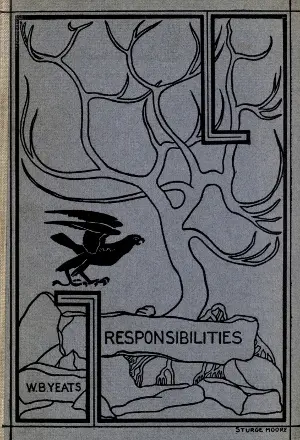
W. B. (William Butler) Yeats
THE CLASSIC COLLECTION · 1912
"The Cutting of an Agate" by William Butler Yeats is a collection of essays written in the early 20th century. The work primarily addresses themes related to Irish literature, theatre, and the cultural identity of Ireland, reflecting on the influence of myth and folklore in shaping artistic expression. Through discussions of prominent figures such as Cuchulain and the Fianna, Yeats delves into the unique narrative style of Irish storytelling, illuminating its lyrical qualities and emotional depth. The opening of this collection presents Yeats reflecting on the impact of Irish storytelling traditions and their relationship to the larger cultural landscape. He contrasts the robust and imaginative nature of Irish myths with the logical and historical narratives favored by other traditions, emphasizing the emotional resonance and communal spirit found in stories of legendary heroes like Cuchulain. Yeats draws upon his experiences and observations of the Irish theatre community, articulating a vision for a new artistic expression rooted in the richness of Irish folklore, while also critiquing contemporary literature and its disconnection from profound emotional truths. This opening sets the stage for a broader examination of how artistic forms can encapsulate cultural and historical identities, revealing insights that resonate with both the past and present.
Introduction adapted from the source catalogue; source summaries may be automatically generated.
Free to read · English · 46,290 words · No account needed
MAKE TIME FOR A GOOD BOOK
On by default. Untick to stop anonymous reading totals. Each page counts after 10 seconds in view. How this works.
Anonymous counting is on unless you have switched it off.
The dramatists lived in a disorderly world, reproached by many, persecuted even, but following their imagination wherever it led them. Their imagination, driven hither and thither by beauty and sympathy, put on something of the nature of eternity. Their subject was always the soul, the whimsical, self-awakening, self-exciting, self-appeasing soul. They celebrated its heroical, passionate will going by its own path to immortal and invisible things. Spenser, on the other hand, except among those smooth pastoral scenes and lovely effeminate islands that have made him a great poet, tried to be of his time, or rather of the time that was all but at hand. Like Sidney, whose charm it may be led many into slavery, he persuaded himself that we enjoy Virgil because of the virtues of AEneas, and so planned out his immense poem that it would set before the imagination of citizens, in whom there would soon be no great energy, innumerable blameless AEneases. He had learned to put the State, which desires all the abundance for itself, in the place of the Church, and he found it possible to be moved by expedient emotions, merely because they were expedient, and to think serviceable thoughts with no self-contempt. He loved his Queen a little because she was the protectress of poets and an image of that old Anglo-French nation that lay a-dying, but a great deal because she was the image of the State which had taken possession of his conscience. She was over sixty years old, and ugly and, it is thought, selfish, but in his poetry she is 'fair Cynthia,' 'a crown of lilies,' 'the image of the heavens,' 'without mortal blemish,' and has 'an angelic face,' where 'the red rose' has 'meddled with the white'; 'Phoebus thrusts out his golden head' but to look upon her, and blushes to find himself outshone. She is 'a fourth Grace,' 'a queen of love,' 'a sacred saint,' and 'above all her sex that ever yet has been.' In the midst of his praise of his own sweetheart he stops to remember that Elizabeth is more beautiful, and an old man in Daphnaida, although he has been brought to death's door by the death of a beautiful daughter, remembers that though his daughter 'seemed of angelic race,' she was yet but the primrose to the rose beside Elizabeth. Spenser had learned to look to the State not only as the rewarder of virtue but as the maker of right and wrong, and had begun to love and hate as it bid him. The thoughts that we find for ourselves are timid and a little secret, but those modern thoughts that we share with large numbers are confident and very insolent. We have little else to-day, and when we read our newspaper and take up its cry, above all its cry of hatred, we will not think very carefully, for we hear the marching feet. When Spenser wrote of Ireland he wrote as an official, and out of thoughts and emotions that had been organised by the State. He was the first of many Englishmen to see nothing but what he was desired to see. Could he have gone there as a poet merely, he might have found among its poets more wonderful imaginations than even those islands of Phaedria and Acrasia. He would have found among wandering story-tellers, not indeed his own power of rich, sustained description, for that belongs to lettered ease, but certainly all the kingdom of Faerie, still unfaded, of which his own poetry was often but a troubled image. He would have found men doing by swift strokes of the imagination much that he was doing with painful intellect, with that imaginative reason that soon was to drive out imagination altogether and for a long time. He would have met with, at his own door, story-tellers among whom the perfection of Greek art was indeed as unknown as his own power of detailed description, but who, none the less, imagined or remembered beautiful incidents and strange, pathetic outcrying that made them of Homer's lineage. Flaubert says somewhere, 'There are things in Hugo, as in Rabelais, that I could have mended, things badly built, but then what thrusts of power beyond the reach of conscious art!' Is not all history but the coming of that conscious art which first makes articulate and then destroys the old wild energy? Spenser, the first poet struck with remorse, the first poet who gave his heart to the State, saw nothing but disorder, where the mouths that have spoken all the fables of the poets had not yet become silent. All about him were shepherds and shepherdesses still living the life that made Theocritus and Virgil think of shepherd and poet as the one thing; but though he dreamed of Virgil's shepherds he wrote a book to advise, among many like things, the harrying of all that followed flocks upon the hills, and of all 'the wandering companies that keep the woods.' His View of the State of Ireland commends indeed the beauty of the hills and woods where they did their shepherding, in that powerful and subtle language of his which I sometimes think more full of youthful energy than even the language of the great playwrights. He is 'sure it is yet a most beautiful and sweet country as any under heaven,' and that all would prosper but for those agitators, 'those wandering companies that keep the woods,' and he would rid it of them by a certain expeditious way. There should be four great garrisons. 'And those fowre garrisons issuing foorthe, at such convenient times as they shall have intelligence or espiall upon the enemye, will so drive him from one side to another and tennis him amongst them, that he shall finde nowhere safe to keepe his creete, or hide himselfe, but flying from the fire shall fall into the water, and out of one daunger into another, that in short space his creete, which is his moste sustenence, shall be wasted in preying, or killed in driving, or starved for wante of pasture in the woodes, and he himselfe brought soe lowe, that he shall have no harte nor abilitye to indure his wretchednesse, the which will surely come to passe in very short space; for one winters well following of him will so plucke him on his knees that he will never be able to stand up agayne.'
Your reading position is saved on this browser. Take it to another device with a library code. Reading pages adapt to text, rather than matching a printed edition.
W. B. (William Butler) Yeats
W. B. (William Butler) Yeats
W. B. (William Butler) Yeats
W. B. (William Butler) Yeats
BEHIND THE BOOK
This eBook is for the use of anyone anywhere in the United States and most other parts of the world at no cost and with almost no restrictions whatsoever. You may copy it, give it away or re-use it under the terms of the Project Gutenberg License included with this eBook or online at www.gutenberg.org. If you are not located in the United States, you will have to check the laws of the country where you are located before using this eBook. Read the source licence.
The original source file, including credits and licence, is retained by this library. Request an original-format copy at no charge. Please include the book title and Project Gutenberg identifier #33094.
KEEP YOUR CURIOSITY GOING

David Patterson (Spirit) Hatch

David Patterson (Spirit) Hatch

David Patterson (Spirit) Hatch
Cécile Tormay

Moritz Busch
John L. Ransom