THE CLASSIC COLLECTION✦Plays and controversiesCLASSIC FREE BOOKS
Plays and controversies
W. B. (William Butler) Yeats
THE CLASSIC COLLECTION · 1912
"The Cutting of an Agate" by William Butler Yeats is a collection of essays written in the early 20th century. The work primarily addresses themes related to Irish literature, theatre, and the cultural identity of Ireland, reflecting on the influence of myth and folklore in shaping artistic expression. Through discussions of prominent figures such as Cuchulain and the Fianna, Yeats delves into the unique narrative style of Irish storytelling, illuminating its lyrical qualities and emotional depth. The opening of this collection presents Yeats reflecting on the impact of Irish storytelling traditions and their relationship to the larger cultural landscape. He contrasts the robust and imaginative nature of Irish myths with the logical and historical narratives favored by other traditions, emphasizing the emotional resonance and communal spirit found in stories of legendary heroes like Cuchulain. Yeats draws upon his experiences and observations of the Irish theatre community, articulating a vision for a new artistic expression rooted in the richness of Irish folklore, while also critiquing contemporary literature and its disconnection from profound emotional truths. This opening sets the stage for a broader examination of how artistic forms can encapsulate cultural and historical identities, revealing insights that resonate with both the past and present.
Introduction adapted from the source catalogue; source summaries may be automatically generated.
Free to read · English · 46,290 words · No account needed
MAKE TIME FOR A GOOD BOOK
On by default. Untick to stop anonymous reading totals. Each page counts after 10 seconds in view. How this works.
Anonymous counting is on unless you have switched it off.
When Spenser was buried at Westminster Abbey many poets read verses in his praise, and then threw their verses and the pens that had written them into his tomb. Like him they belonged, for all the moral zeal that was gathering like a London fog, to that indolent, demonstrative Merry England that was about to pass away. Men still wept when they were moved, still dressed themselves in joyous colours, and spoke with many gestures. Thoughts and qualities sometimes come to their perfect expression when they are about to pass away, and Merry England was dying in plays, and in poems, and in strange adventurous men. If one of those poets who threw his copy of verses into the earth that was about to close over his master were to come alive again, he would find some shadow of the life he knew, though not the art he knew, among young men in Paris, and would think that his true country. If he came to England he would find nothing there but the triumph of the Puritan and the merchant--those enemies he had feared and hated--and he would weep perhaps, in that womanish way of his, to think that so much greatness had been, not as he had hoped, the dawn, but the sunset of a people. He had lived in the last days of what we may call the Anglo-French nation, the old feudal nation that had been established when the Norman and the Angevin made French the language of court and market. In the time of Chaucer English poets still wrote much in French, and even English labourers lilted French songs over their work; and I cannot read any Elizabethan poem or romance without feeling the pressure of habits of emotion, and of an order of life which were conscious, for all their Latin gaiety, of a quarrel to the death with that new Anglo-Saxon nation that was arising amid Puritan sermons and Mar-Prelate pamphlets. This nation had driven out the language of its conquerors, and now it was to overthrow their beautiful haughty imagination and their manners, full of abandon and wilfulness, and to set in their stead earnestness and logic and the timidity and reserve of a counting-house. It had been coming for a long while, for it had made the Lollards; and when Anglo-French Chaucer was at Westminster its poet, Langland, sang the office at St. Paul's. Shakespeare, with his delight in great persons, with his indifference to the State, with his scorn of the crowd, with his feudal passion, was of the old nation, and Spenser, though a joyless earnestness had cast shadows upon him, and darkened his intellect wholly at times, was of the old nation too. His Faerie Queene was written in Merry England, but when Bunyan wrote in prison the other great English allegory, Modern England had been born. Bunyan's men would do right that they might come some day to the Delectable Mountain, and not at all that they might live happily in a world whose beauty was but an entanglement about their feet. Religion had denied the sacredness of an earth that commerce was about to corrupt and ravish, but when Spenser lived the earth had still its sheltering sacredness. His religion, where the paganism that is natural to proud and happy people had been strengthened by the platonism of the Renaissance, cherished the beauty of the soul and the beauty of the body with, as it seemed, an equal affection. He would have had men live well, not merely that they might win eternal happiness but that they might live splendidly among men and be celebrated in many songs. How could one live well if one had not the joy of the Creator and of the Giver of gifts? He says in his Hymn to Beauty that a beautiful soul, unless for some stubbornness in the ground, makes for itself a beautiful body, and he even denies that beautiful persons ever lived who had not souls as beautiful. They may have been tempted until they seemed evil, but that was the fault of others. And in his Hymn to Heavenly Beauty he sets a woman little known to theology, one that he names Wisdom or Beauty, above Seraphim and Cherubim and in the very bosom of God, and in the Faerie Queene it is pagan Venus and her lover Adonis who create the forms of all living things and send them out into the world, calling them back again to the gardens of Adonis at their lives' end to rest there, as it seems, two thousand years between life and life. He began in English poetry, despite a temperament that delighted in sensuous beauty alone with perfect delight, that worship of Intellectual Beauty which Shelley carried to a greater subtlety and applied to the whole of life.
Your reading position is saved on this browser. Take it to another device with a library code. Reading pages adapt to text, rather than matching a printed edition.
W. B. (William Butler) Yeats
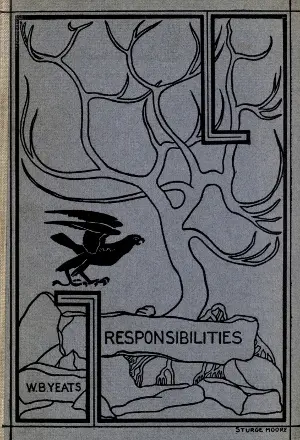
W. B. (William Butler) Yeats
W. B. (William Butler) Yeats
W. B. (William Butler) Yeats
BEHIND THE BOOK
This eBook is for the use of anyone anywhere in the United States and most other parts of the world at no cost and with almost no restrictions whatsoever. You may copy it, give it away or re-use it under the terms of the Project Gutenberg License included with this eBook or online at www.gutenberg.org. If you are not located in the United States, you will have to check the laws of the country where you are located before using this eBook. Read the source licence.
The original source file, including credits and licence, is retained by this library. Request an original-format copy at no charge. Please include the book title and Project Gutenberg identifier #33094.
KEEP YOUR CURIOSITY GOING

David Patterson (Spirit) Hatch

David Patterson (Spirit) Hatch

David Patterson (Spirit) Hatch
Cécile Tormay

Moritz Busch
John L. Ransom