THE CLASSIC COLLECTION✦Plays and controversiesCLASSIC FREE BOOKS
Plays and controversies
W. B. (William Butler) Yeats
THE CLASSIC COLLECTION · 1912
"The Cutting of an Agate" by William Butler Yeats is a collection of essays written in the early 20th century. The work primarily addresses themes related to Irish literature, theatre, and the cultural identity of Ireland, reflecting on the influence of myth and folklore in shaping artistic expression. Through discussions of prominent figures such as Cuchulain and the Fianna, Yeats delves into the unique narrative style of Irish storytelling, illuminating its lyrical qualities and emotional depth. The opening of this collection presents Yeats reflecting on the impact of Irish storytelling traditions and their relationship to the larger cultural landscape. He contrasts the robust and imaginative nature of Irish myths with the logical and historical narratives favored by other traditions, emphasizing the emotional resonance and communal spirit found in stories of legendary heroes like Cuchulain. Yeats draws upon his experiences and observations of the Irish theatre community, articulating a vision for a new artistic expression rooted in the richness of Irish folklore, while also critiquing contemporary literature and its disconnection from profound emotional truths. This opening sets the stage for a broader examination of how artistic forms can encapsulate cultural and historical identities, revealing insights that resonate with both the past and present.
Introduction adapted from the source catalogue; source summaries may be automatically generated.
Free to read · English · 46,290 words · No account needed
MAKE TIME FOR A GOOD BOOK
On by default. Untick to stop anonymous reading totals. Each page counts after 10 seconds in view. How this works.
Anonymous counting is on unless you have switched it off.
I have read in a fabulous book that Adam had but to imagine a bird and it was born into life, and that he created all things out of himself by nothing more important than an unflagging fancy; and heroes who can make a ship out of a shaving have but little less of the divine prerogatives. They have no speculative thoughts to wander through eternity and waste heroic blood; but how could that be otherwise? for it is at all times the proud angels who sit thinking upon the hill-side and not the people of Eden. One morning we meet them hunting a stag that is 'as joyful as the leaves of a tree in summertime'; and whatever they do, whether they listen to the harp or follow an enchanter over-sea, they do for the sake of joy, their joy in one another, or their joy in pride and movement; and even their battles are fought more because of their delight in a good fighter than because of any gain that is in victory. They live always as if they were playing a game; and so far as they have any deliberate purpose at all, it is that they may become great gentlemen and be worthy of the songs of the poets. It has been said, and I think the Japanese were the first to say it, that the four essential virtues are to be generous among the weak, and truthful among one's friends, and brave among one's enemies, and courteous at all times; and if we understand by courtesy not merely the gentleness the story-tellers have celebrated, but a delight in courtly things, in beautiful clothing and in beautiful verse, one understands that it was no formal succession of trials that bound the Fianna to one another. Only the Table Round, that is indeed, as it seems, a rivulet from the same well-head, is bound in a like fellowship, and there the four heroic virtues are troubled by the abstract virtues of the cloister. Every now and then some noble knight builds a cell upon the hill-side, or leaves kind women and joyful knights to seek the vision of the Grail in lonely adventures. But when Oisin or some kingly forerunner--Bran, son of Febal, or the like--rides or sails in an enchanted ship to some divine country, he but looks for a more delighted companionship, or to be in love with faces that will never fade. No thought of any life greater than that of love, and the companionship of those that have drawn their swords upon the darkness of the world, ever troubles their delight in one another as it troubles Iseult amid her love, or Arthur amid his battles. It is an ailment of our speculation that thought, when it is not the planning of something, or the doing of something, or some memory of a plain circumstance, separates us from one another because it makes us always more unlike, and because no thought passes through another's ear unchanged. Companionship can only be perfect when it is founded on things, for things are always the same under the hand, and at last one comes to hear with envy the voices of boys lighting a lantern to ensnare moths, or of the maids chattering in the kitchen about the fox that carried off a turkey before breakfast. Lady Gregory's book of tales is full of fellowship untroubled like theirs, and made noble by a courtesy that has gone perhaps out of the world. I do not know in literature better friends and lovers. When one of the Fianna finds Osgar dying the proud death of a young man, and asks is it well with him, he is answered, 'I am as you would have me be.' The very heroism of the Fianna is indeed but their pride and joy in one another, their good fellowship. Goll, old and savage, and letting himself die of hunger in a cave because he is angry and sorry, can speak lovely words to the wife whose help he refuses. 'It is best as it is,' he said, 'and I never took the advice of a woman east or west, and I never will take it. And oh, sweet-voiced queen,' he said, 'what ails you to be fretting after me? And remember now your silver and your gold, and your silks ... and do not be crying tears after me, queen with the white hands,' he said, 'but remember your constant lover Aodh, son of the best woman of the world, that came from Spain asking for you, and that I fought on Corcar-an-Dearg; and go to him now,' he said, 'for it is bad when a woman is without a good man.'
Your reading position is saved on this browser. Take it to another device with a library code. Reading pages adapt to text, rather than matching a printed edition.
W. B. (William Butler) Yeats
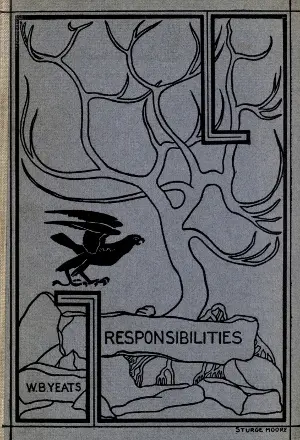
W. B. (William Butler) Yeats
W. B. (William Butler) Yeats
W. B. (William Butler) Yeats
BEHIND THE BOOK
This eBook is for the use of anyone anywhere in the United States and most other parts of the world at no cost and with almost no restrictions whatsoever. You may copy it, give it away or re-use it under the terms of the Project Gutenberg License included with this eBook or online at www.gutenberg.org. If you are not located in the United States, you will have to check the laws of the country where you are located before using this eBook. Read the source licence.
The original source file, including credits and licence, is retained by this library. Request an original-format copy at no charge. Please include the book title and Project Gutenberg identifier #33094.
KEEP YOUR CURIOSITY GOING

David Patterson (Spirit) Hatch

David Patterson (Spirit) Hatch

David Patterson (Spirit) Hatch
Cécile Tormay

Moritz Busch
John L. Ransom