THE CLASSIC COLLECTION✦Plays and controversiesCLASSIC FREE BOOKS
Plays and controversies
W. B. (William Butler) Yeats
THE CLASSIC COLLECTION · 1912
"The Cutting of an Agate" by William Butler Yeats is a collection of essays written in the early 20th century. The work primarily addresses themes related to Irish literature, theatre, and the cultural identity of Ireland, reflecting on the influence of myth and folklore in shaping artistic expression. Through discussions of prominent figures such as Cuchulain and the Fianna, Yeats delves into the unique narrative style of Irish storytelling, illuminating its lyrical qualities and emotional depth. The opening of this collection presents Yeats reflecting on the impact of Irish storytelling traditions and their relationship to the larger cultural landscape. He contrasts the robust and imaginative nature of Irish myths with the logical and historical narratives favored by other traditions, emphasizing the emotional resonance and communal spirit found in stories of legendary heroes like Cuchulain. Yeats draws upon his experiences and observations of the Irish theatre community, articulating a vision for a new artistic expression rooted in the richness of Irish folklore, while also critiquing contemporary literature and its disconnection from profound emotional truths. This opening sets the stage for a broader examination of how artistic forms can encapsulate cultural and historical identities, revealing insights that resonate with both the past and present.
Introduction adapted from the source catalogue; source summaries may be automatically generated.
Free to read · English · 46,290 words · No account needed
MAKE TIME FOR A GOOD BOOK
On by default. Untick to stop anonymous reading totals. Each page counts after 10 seconds in view. How this works.
Anonymous counting is on unless you have switched it off.
Lyrical poems, when they but speak of emotions common to all, require not indeed a religious belief like the spiritual arts, but a life that has leisure for itself, and a society that is quickly stirred that our emotion may be strengthened by the emotion of others. All circumstance that makes emotion at once dignified and visible, increases the poet's power, and I think that is why I have always longed for some stringed instrument, and a listening audience, not drawn out of the hurried streets, but from a life where it would be natural to murmur over again the singer's thought. When I heard Yvette Guilbert the other day, who has the lyre or as good, I was not content, for she sang among people whose life had nothing it could share with an exquisite art, that should rise out of life as the blade out of the spearshaft, a song out of the mood, the fountain from its pool, all art out of the body, laughter from a happy company. I longed to make all things over again, that she might sing in some great hall, where there was no one that did not love life and speak of it continually.
When all art was struck out of personality, whether as in our daily business or in the adventure of religion, there was little separation between holy and common things, and just as the arts themselves passed quickly from passion to divine contemplation, from the conversation of peasants to that of princes, the one song remembering the drunken miller and but half forgetting Cambuscan bold; so did a man feel himself near sacred presences when he turned his plough from the slope of Cruachmaa or of Olympus. The occupations and the places known to Homer or to Hesiod, those pure first artists, might, as it were, if but the fashioners' hands had loosened, have changed before the poem's end to symbols and vanished, winged and unweary, into the unchanging worlds where religion alone can discover life as well as peace. A man of that unbroken day could have all the subtlety of Shelley, and yet use no image unknown among the common people, and speak no thought that was not a deduction from the common thought. Unless the discovery of legendary knowledge and the returning belief in miracle, or what we must needs call so, can bring once more a new belief in the sanctity of common ploughland, and new wonders that reward no difficult ecclesiastical routine but the common, wayward, spirited man, we may never see again a Shelley and a Dickens in the one body, but be broken to the end. We have grown jealous of the body, and we dress it in dull unshapely clothes, that we may cherish aspiration alone. Moliere being but the master of common sense lived ever in the common daylight, but Shakespeare could not, and Shakespeare seems to bring us to the very marketplace, when we remember Shelley's dizzy and Landor's calm disdain of usual daily things. And at last we have Villiers de L'Isle-Adam crying in the ecstasy of a supreme culture, of a supreme refusal, 'as for living, our servants will do that for us.' One of the means of loftiness, of marmorean stillness has been the choice of strange and far-away places, for the scenery of art, but this choice has grown bitter to me, and there are moments when I cannot believe in the reality of imaginations that are not inset with the minute life of long familiar things and symbols and places. I have come to think of even Shakespeare's journeys to Rome or to Verona as the outflowing of an unrest, a dissatisfaction with natural interests, an unstable equilibrium of the whole European mind that would not have come had John Palaeologus cherished, despite that high and heady look, copied by Burne Jones for his Cophetua, a hearty disposition to fight the Turk. I am orthodox and pray for a resurrection of the body, and am certain that a man should find his Holy Land where he first crept upon the floor, and that familiar woods and rivers should fade into symbol with so gradual a change that he never discover, no, not even in ecstasy itself, that he is beyond space, and that time alone keeps him from Primum Mobile, the Supernal Eden, and the White Rose over all.
Your reading position is saved on this browser. Take it to another device with a library code. Reading pages adapt to text, rather than matching a printed edition.
W. B. (William Butler) Yeats
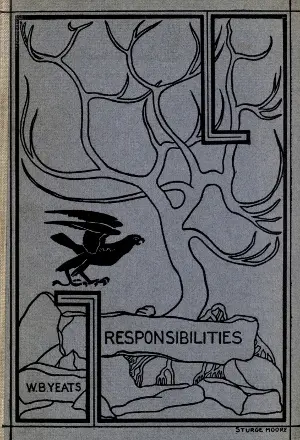
W. B. (William Butler) Yeats
W. B. (William Butler) Yeats
W. B. (William Butler) Yeats
BEHIND THE BOOK
This eBook is for the use of anyone anywhere in the United States and most other parts of the world at no cost and with almost no restrictions whatsoever. You may copy it, give it away or re-use it under the terms of the Project Gutenberg License included with this eBook or online at www.gutenberg.org. If you are not located in the United States, you will have to check the laws of the country where you are located before using this eBook. Read the source licence.
The original source file, including credits and licence, is retained by this library. Request an original-format copy at no charge. Please include the book title and Project Gutenberg identifier #33094.
KEEP YOUR CURIOSITY GOING

David Patterson (Spirit) Hatch

David Patterson (Spirit) Hatch

David Patterson (Spirit) Hatch
Cécile Tormay

Moritz Busch
John L. Ransom