THE CLASSIC COLLECTION✦A dead man’s diaryCLASSIC FREE BOOKS
A dead man’s diary
Coulson Kernahan
THE CLASSIC COLLECTION · 1910
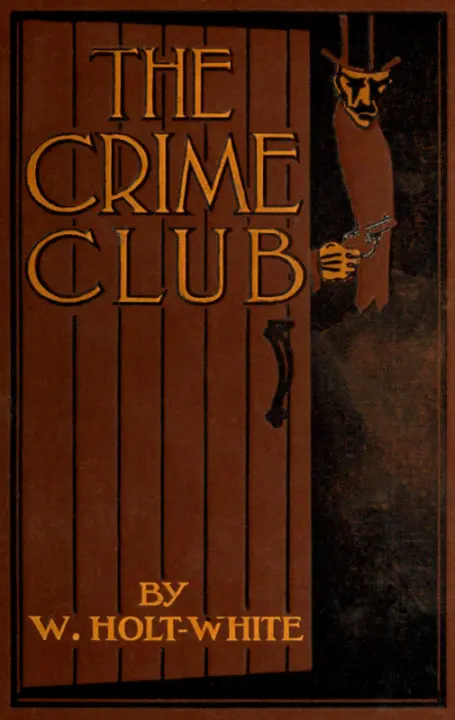
"The Crime Club" by W. Holt-White is a novel written in the early 20th century. The plot revolves around Captain Melun and Sir Paul Westerham, who find themselves embroiled in a complex web of crime, blackmail, and intrigue as they navigate their relationship with Lady Kathleen Carfax, the daughter of the Prime Minister of England. The novel presents a world of deception and moral ambiguity as characters grapple with their motives and the consequences of their actions. At the start of the narrative, Captain Melun confronts Sir Paul Westerham on board the "Gigantic", leading to a tense exchange that reveals their complicated pasts and ambitions. Sir Paul, having inherited immense wealth and a title, is determined to pursue Lady Kathleen, whom he has seen only in a picture. Meanwhile, Melun expresses his own desire to marry her, hinting at a darker intention. The ensuing dialogue exposes themes of blackmail and manipulation, setting the stage for the deeper conspiracies that will unfold as Sir Paul seeks to protect Lady Kathleen from the dangers tied to Melun and the secretive crime syndicate they are both drawn into.
Introduction adapted from the source catalogue; source summaries may be automatically generated.
Free to read · English · 86,385 words · No account needed
MAKE TIME FOR A GOOD BOOK
On by default. Untick to stop anonymous reading totals. Each page counts after 10 seconds in view. How this works.
Anonymous counting is on unless you have switched it off.
Westerham whipped round on his heel towards Melun.
“What is that?” he asked sharply.
Melun shrugged his shoulders.
From Melun Westerham turned to the negro, whose teeth were bared in a
wide grin.
“What is that?” Westerham demanded of him.
But the negro took his cue from Melun and merely shrugged his shoulders.
Then there came the scream again, louder and more terror-stricken than before. Westerham did not hesitate.
Before the negro had time to utter any protest he had snatched the lantern from his hand and was racing up the stairs.
Again came the scream, and Westerham blundered up the second flight, the negro and Melun hard upon his heels.
On the second landing there was no longer any doubt as to where the cries came from. Westerham dashed at the door, only to find it locked. In a second he had his shoulder against the crazy panel, and the door went in with a crash, disclosing a frowsy little sitting-room somewhat in disorder. All about was spread signs of a meal. Two girls—Westerham judged them to be young East End Jewesses—were huddled in a corner, while a man, whom Westerham at once recognised as a sailor, stood swaying drunkenly over them.
He had his hand at the man's collar in a moment, and swung him heavily
backwards.
The negro, his face quivering with passion, blocked the doorway, knife
in hand.
It was Westerham's turn to use firearms now, and he covered the man with as certain and as deadly an aim as that which had extorted the confession of Captain Melun on the Gigantic.
The girls ceased to scream, but clung together, crying and looking at Westerham in an appealing way with eyes blurred with tears.
Melun thrust the negro aside and brushed into the room.
“You fool!” he said to Westerham, shortly, “this is enough to bring the whole crowd about your ears.”
Westerham laughed. He had known what in Western parlance is called a “rough house” before, and was prepared for all emergencies. As usual, too, when he found himself in an emergency, he was cool and smiling to the point of insolence.
“You forget,” he said to Melun, “that there is a window in this room, and beyond the window is the street. You forget, too, that one good man is worth all that crowd you seem so much afraid of. I am going to take these girls away.”
The drunken sailor, who had by this time half-recovered his senses, sat on the floor, blinking at Westerham and cursing steadily.
Your reading position is saved on this browser. Take it to another device with a library code. Reading pages adapt to text, rather than matching a printed edition.
BEHIND THE BOOK
This eBook is for the use of anyone anywhere in the United States and most other parts of the world at no cost and with almost no restrictions whatsoever. You may copy it, give it away or re-use it under the terms of the Project Gutenberg License included with this eBook or online at www.gutenberg.org. If you are not located in the United States, you will have to check the laws of the country where you are located before using this eBook. Read the source licence.
The original source file, including credits and licence, is retained by this library. Request an original-format copy at no charge. Please include the book title and Project Gutenberg identifier #46566.
KEEP YOUR CURIOSITY GOING
Coulson Kernahan

Maurice Baring
Frances Wright
Cécile Tormay

Frederic Jesup Stimson

W. H. P. (William Henry Pope) Jarvis