THE CLASSIC COLLECTION✦A dead man’s diaryCLASSIC FREE BOOKS
A dead man’s diary
Coulson Kernahan
THE CLASSIC COLLECTION · 1910
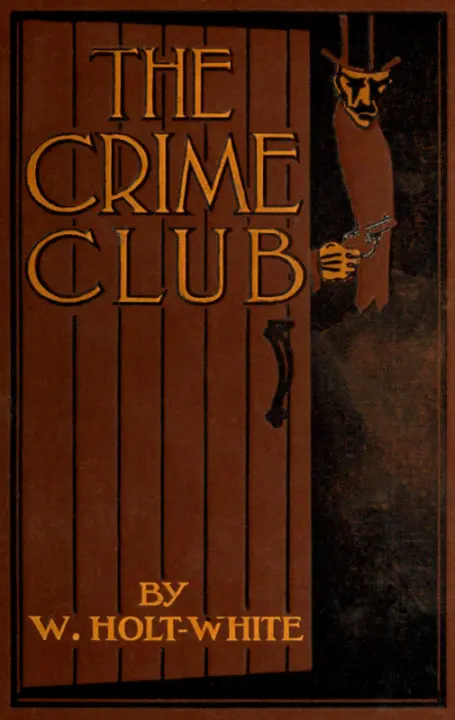
"The Crime Club" by W. Holt-White is a novel written in the early 20th century. The plot revolves around Captain Melun and Sir Paul Westerham, who find themselves embroiled in a complex web of crime, blackmail, and intrigue as they navigate their relationship with Lady Kathleen Carfax, the daughter of the Prime Minister of England. The novel presents a world of deception and moral ambiguity as characters grapple with their motives and the consequences of their actions. At the start of the narrative, Captain Melun confronts Sir Paul Westerham on board the "Gigantic", leading to a tense exchange that reveals their complicated pasts and ambitions. Sir Paul, having inherited immense wealth and a title, is determined to pursue Lady Kathleen, whom he has seen only in a picture. Meanwhile, Melun expresses his own desire to marry her, hinting at a darker intention. The ensuing dialogue exposes themes of blackmail and manipulation, setting the stage for the deeper conspiracies that will unfold as Sir Paul seeks to protect Lady Kathleen from the dangers tied to Melun and the secretive crime syndicate they are both drawn into.
Introduction adapted from the source catalogue; source summaries may be automatically generated.
Free to read · English · 86,385 words · No account needed
MAKE TIME FOR A GOOD BOOK
On by default. Untick to stop anonymous reading totals. Each page counts after 10 seconds in view. How this works.
Anonymous counting is on unless you have switched it off.
Melun took one quick look at Westerham's unpleasantly bright and steady gaze, and again shrugged his shoulders. But this time the shrug indicated assent.
“Very well,” he said.
Westerham again turned to the negro. “Drop that knife,” he ordered.
“Not me!” said the negro.
“Drop it!” said Westerham again.
And the man dropped it.
He turned to the shivering girls. “Come along,” he said, “let's get out of this while there is time.”
Rising unsteadily to their feet, and still clinging together, the girls
moved towards the door.
“Follow me down closely,” said Westerham, and then he thrust the nozzle of his six-shooter against the negro's breast.
“Right about,” he said, “and down the stairs before me.”
Melun he ignored altogether, and the captain brought up the rear. In this wise they went down the stairs.
The hubbub, however, had attracted the attention of the men below, and two or three of them were now gathered together in the darkness of the passage, swearing angrily.
Westerham, who had taken the lantern from the negro, swung it aloft.
“Permit me to show you a light,” he cried.
They blinked as the lantern dazzled their eyes, but they did not blink so much that they failed to catch the glint of the weapon Westerham carried.
“You dog, Melun!” cried one of them, “is this your friend that is to help us all? If he goes on at this rate he will land us all in gaol.”
Melun, however, by this time saw who was the better man, and felt that at the present pinch he was wise to stand by Westerham.
So he cursed the men roundly and ordered them back, asking them, with pleasant oaths, how long it was since they had ceased to have faith in him.
To this altercation Westerham paid no heed. He contented himself that at his direction the negro opened the door. The girls he told to wait for him outside.
On the threshold he turned about and faced the angry men.
“The sooner you people come to recognise,” he said, “that while I am here I shall do things in my own way so much the better for you. I am not in the habit of being interfered with by scum such as yourselves.”
He purposely gave the negro a push, which sent him rolling back into the passage; then he went out and drew the door after him with a slam.
Once in the street, Melun broke into a torrent of rebuke. Westerham was of no mind to listen to him and cut him short. Turning to the girls, he said:
Your reading position is saved on this browser. Take it to another device with a library code. Reading pages adapt to text, rather than matching a printed edition.
BEHIND THE BOOK
This eBook is for the use of anyone anywhere in the United States and most other parts of the world at no cost and with almost no restrictions whatsoever. You may copy it, give it away or re-use it under the terms of the Project Gutenberg License included with this eBook or online at www.gutenberg.org. If you are not located in the United States, you will have to check the laws of the country where you are located before using this eBook. Read the source licence.
The original source file, including credits and licence, is retained by this library. Request an original-format copy at no charge. Please include the book title and Project Gutenberg identifier #46566.
KEEP YOUR CURIOSITY GOING
Coulson Kernahan

Maurice Baring
Frances Wright
Cécile Tormay

Frederic Jesup Stimson

W. H. P. (William Henry Pope) Jarvis