THE CLASSIC COLLECTION✦A dead man’s diaryCLASSIC FREE BOOKS
A dead man’s diary
Coulson Kernahan
THE CLASSIC COLLECTION · 1910
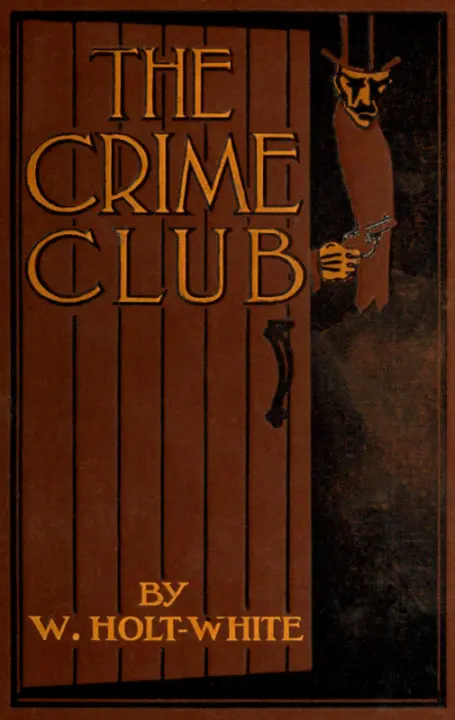
"The Crime Club" by W. Holt-White is a novel written in the early 20th century. The plot revolves around Captain Melun and Sir Paul Westerham, who find themselves embroiled in a complex web of crime, blackmail, and intrigue as they navigate their relationship with Lady Kathleen Carfax, the daughter of the Prime Minister of England. The novel presents a world of deception and moral ambiguity as characters grapple with their motives and the consequences of their actions. At the start of the narrative, Captain Melun confronts Sir Paul Westerham on board the "Gigantic", leading to a tense exchange that reveals their complicated pasts and ambitions. Sir Paul, having inherited immense wealth and a title, is determined to pursue Lady Kathleen, whom he has seen only in a picture. Meanwhile, Melun expresses his own desire to marry her, hinting at a darker intention. The ensuing dialogue exposes themes of blackmail and manipulation, setting the stage for the deeper conspiracies that will unfold as Sir Paul seeks to protect Lady Kathleen from the dangers tied to Melun and the secretive crime syndicate they are both drawn into.
Introduction adapted from the source catalogue; source summaries may be automatically generated.
Free to read · English · 86,385 words · No account needed
MAKE TIME FOR A GOOD BOOK
On by default. Untick to stop anonymous reading totals. Each page counts after 10 seconds in view. How this works.
Anonymous counting is on unless you have switched it off.
Horrified though he was, Westerham made no sign. He had stood in the presence of death before, and he had faced it in more dreadful forms, though it is true he had never known it so intimately and so poignantly.
“The girl may be the next,” the words seemed ominous—like a doom. Troubles encompassed him on every side. An hour or so previously he had faced the greatest odds he had ever known till then. The odds were greater now.
Conscious that the keen eyes of Rookley were upon him, he saw that instant action was necessary, and turning on his heel he walked deliberately into the sitting-room.
The detective followed him, and then seating himself at the table, Westerham bade the man take a chair.
For a moment the detective's face lighted up with anticipation. It seemed to him that at last the mysterious Mr. Robinson was about to make some statement. His anticipations were, however, to be disappointed.
“Well,” said Westerham, in a pleasant, even voice, “I am waiting for
you to begin.”
“I was hoping,” said Mr. Rookley, “that you were about to make some
statement.”
“I never make statements,” said Westerham, “any more than I answer questions which are inconvenient. What have you to say?”
Suddenly the detective leant forward and spoke so quickly that Westerham was almost thrown off his guard.
“Who are you, Mr. Robinson?”
“I can only give you the same answer,” said Westerham, “which I gave you before—that my name is my own business.”
“You are aware, of course,” pursued Rookley, “that the present occasion is more serious than the last. You seem to have an unfortunate habit of coming in on the heels of awkward occurrences.”
“It does seem like it just now,” agreed Westerham.
There was a pause and Westerham was the first to speak again. “As you yourself know full well that I was not here when this business happened, I think that you had better clear the ground by telling me all you know if you wish me to assist you.”
Rookley looked at him sharply, but decided that Westerham was right.
“I will tell you,” he said.
“At about ten o'clock two men called and asked for you. Both of them were dressed rather like sailors, one man being short, the other tall. They were told that you were out.
“The tall man, however, said that he had come to see you in response to a letter, and that, as he knew you had a sitting-room, he would be obliged if they would allow him to wait with his friend.
Your reading position is saved on this browser. Take it to another device with a library code. Reading pages adapt to text, rather than matching a printed edition.
BEHIND THE BOOK
This eBook is for the use of anyone anywhere in the United States and most other parts of the world at no cost and with almost no restrictions whatsoever. You may copy it, give it away or re-use it under the terms of the Project Gutenberg License included with this eBook or online at www.gutenberg.org. If you are not located in the United States, you will have to check the laws of the country where you are located before using this eBook. Read the source licence.
The original source file, including credits and licence, is retained by this library. Request an original-format copy at no charge. Please include the book title and Project Gutenberg identifier #46566.
KEEP YOUR CURIOSITY GOING
Coulson Kernahan

Maurice Baring
Frances Wright
Cécile Tormay

Frederic Jesup Stimson

W. H. P. (William Henry Pope) Jarvis