THE CLASSIC COLLECTION✦My diaries, being a personal narrative of events 1888-1914, Part 2 (1900-1914)CLASSIC FREE BOOKS
My diaries, being a personal narrative of events 1888-1914, Part 2 (1900-1914)
Wilfrid Scawen Blunt
THE CLASSIC COLLECTION · 1908
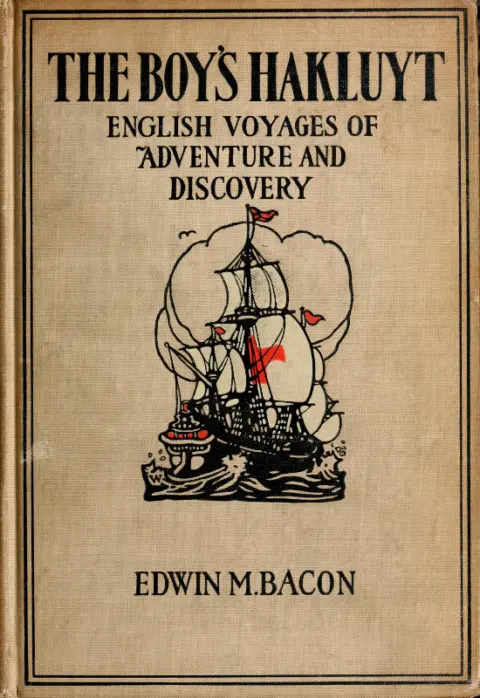
"The Boy's Hakluyt: English Voyages of Adventure and Discovery" by Edwin M. Bacon is a historical account aimed at younger audiences, written in the early 20th century. The book explores the early English voyages of discovery and colonization, retelling the narratives compiled by Richard Hakluyt, a pivotal figure in promoting English maritime exploration in the late 16th century. It serves as an introduction to America's colonial history while celebrating the spirit of adventure and discovery shown by early explorers. At the start of the narrative, the text discusses the publication of Hakluyt's pamphlet "Divers Voyages," which emerged in 1582 and served to promote English colonization efforts in North America. The pamphlet sought to incite the interest and ambition of the English public by compiling accounts of earlier discoveries made by Englishmen and others, detailing the potential for trade and settlement in the New World. Hakluyt's influential work eventually laid the groundwork for subsequent expeditions, including those spearheaded by prominent explorers like Sir Humphrey Gilbert and Sir Walter Raleigh. This opening portion sets the stage for a comprehensive exploration of the achievements and failures associated with early English attempts to establish presence in the Americas.
Introduction adapted from the source catalogue; source summaries may be automatically generated.
Free to read · English · 103,906 words · No account needed
MAKE TIME FOR A GOOD BOOK
On by default. Untick to stop anonymous reading totals. Each page counts after 10 seconds in view. How this works.
Anonymous counting is on unless you have switched it off.
A decade before Martin Frobisher had opened the north parts of the North American continent to Englishmen, John Hawkins had surveyed the southern tip at Florida, and upon his return had represented this fair and favoured region, then to indefinite bounds included among Spain’s American possessions, and in a corner of which France for more than a year had maintained a slender foothold, as ripe for England to venture in and colonize. His was the first account in detail of Florida by an Englishman, and it was the germ from which fruitage later developed in Raleigh’s schemes.
Hawkins’s were purely trading voyages, and he was a fighting trader, demanding the open market for his wares at the point of the sword when it was denied him by representatives of foreign governments. His wares, too, were more or less fought for. The most profitable of them were Negroes seized on the African coast and bartered into slavery in the West Indies and on the Spanish Main—along the north coast of South America. He was the first (or his father before him as some historians say) to bring the African slave trade into English commerce, and to plant Negro slavery in America. Discovery was only an incident in the pursuit of his trade. Yet what he accomplished in this direction was of no slight import, since it opened the way to others of loftier aims. While his fame is tarnished by the blotch of traffic in human beings (in his day, we must remember, deemed by the godly and godless alike as not an unrighteous traffic), it is enduring by virtue of heroic deeds, and his place is fairly with the great English captains of the sea who had part in the beginnings of America.
John Hawkins, born in Plymouth in or about 1532, was the son and grandson of notable mariners, and so well born to the sea. His grandfather, John Hawkyns, had served in Henry the eighth’s navy; his father, William Hawkyns, shipbuilder and merchant, had been one of the principal sea-captains of the west parts of England, and was the first Englishman to carry on a trade with Brazil. Hakluyt informs us that William Hawkyns was “for his wisdome, valure [valour], experience, and skill in sea causes much esteemed, and beloved of K. Henry the 8.” His Brazilian voyages comprised “three long and famous” ones, made in his own “tall and goodly shippe” of two hundred and fifty tons, the “Paul of Plymouth,” between the years 1530 and 1532. He sailed first to the coast of Guinea where he traded with the Negroes for elephants’ teeth and other commodities of the region, and thence crossed to Brazil, where he “used such discretion and behaved himself so wisely with those savage people that he grew into great familiarity and friendship with them.” His greatest exploit, or that which won him largest attention, seems to have been the bringing to England on a visit one of the kings of the country, leaving behind as a pledge of his safety and return a member of the ship’s company—Martin Cockeram, a Plymouth man. The savage monarch was brought over on the second voyage and his appearance created great astonishment in London and at court when he was presented to King Henry at Whitehall, as well it might. For, as Hakluyt describes, “in his cheekes were holes made according to their savage maner, and therein small bones were planted, standing an inch out from the said holes, which in his own Countrey were reputed for a great braverie. He had also another hole in his nether lip, wherein was set a precious stone about the bigness of a pease [pea]. All his apparel, behaviour, and jesture were very strange to the beholders.” He remained in London for nearly a year, and then, satiated with his entertainment, embarked for his home in Master Hawkins’s care, on the latter’s third voyage to Brazil. But it was his fate to sicken and die at sea. Thereat Master Hawkins was much troubled, fearing that the life of Cockeram would be forfeited. But when he arrived at port and told his story, the savages were “fully persuaded” that their prince had been honestly dealt with, and freely gave up the hostage. Cockeram returned with his captain none the worse for his sojourn here, and lived to spin, long years after, among his fellows at home in Plymouth, rare sailors’ yarns about the Simple Life among savages.
Your reading position is saved on this browser. Take it to another device with a library code. Reading pages adapt to text, rather than matching a printed edition.
BEHIND THE BOOK
This eBook is for the use of anyone anywhere in the United States and most other parts of the world at no cost and with almost no restrictions whatsoever. You may copy it, give it away or re-use it under the terms of the Project Gutenberg License included with this eBook or online at www.gutenberg.org. If you are not located in the United States, you will have to check the laws of the country where you are located before using this eBook. Read the source licence.
The original source file, including credits and licence, is retained by this library. Request an original-format copy at no charge. Please include the book title and Project Gutenberg identifier #57917.
KEEP YOUR CURIOSITY GOING
Wilfrid Scawen Blunt
Wilfrid Scawen Blunt

E. W. (Edgar Watson) Howe
Cécile Tormay

Moritz Busch
John L. Ransom