
The unhallowed harvest
Homer Greene
THE CLASSIC COLLECTION · 1887
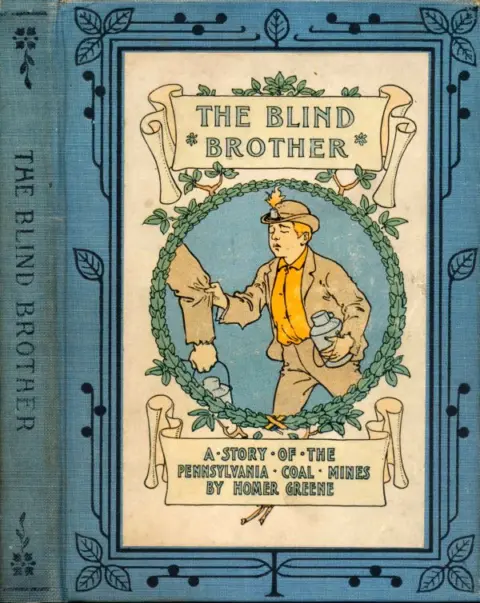
"The Blind Brother: A Story of the Pennsylvania Coal Mines" by Homer Greene is a novel written in the late 19th century. The story revolves around two brothers, Tom and Bennie Taylor, who are navigating the harsh realities of life in the Pennsylvania coal mines during a time of labor strikes. Tom, the older brother, is determined to help his blind sibling regain his sight, highlighting themes of familial loyalty, sacrifice, and the moral dilemmas faced by the working class. At the start of the novel, we are introduced to Bennie, a blind boy who works as a door-boy in the coal mine, relying on his older brother Tom for support and guidance. The narrative sets the stage for their struggles as they navigate the complexities of life in a mining community facing turmoil from strikes. A significant moment occurs when Bennie shares his hopes of saving money to seek medical treatment for his blindness, which underscores the brothers' deep bond. As the story unfolds, Bennie becomes lost in the mine, prompting a desperate search by Tom, which ultimately tests their resilience and love for one another amid a backdrop of social unrest and personal sacrifice. This opening sets up a poignant exploration of the intersection of personal dreams and harsh realities.
Introduction adapted from the source catalogue; source summaries may be automatically generated.
Free to read · English · 27,621 words · No account needed
MAKE TIME FOR A GOOD BOOK
On by default. Untick to stop anonymous reading totals. Each page counts after 10 seconds in view. How this works.
Anonymous counting is on unless you have switched it off.
“I guess so,” answered Tom; “but you aint goin’ to die; we’re goin’ to get out--both of us.”
But Bennie was still thinking of the heavenly vision.
“Then I wouldn’t care, Tom; I’d just as lieve die--if only Mommie could
be with me.”
Again Tom spoke, in earnest, cheerful tones, of the probability of rescue; and discussed the subject long, and stimulated his own heart, as well as Bennie’s, with renewed hope.
By-and-by the imperious demands of hunger compelled a resort to the remnant of food. Tom explained that Jack had gone away, to be by himself a while, and wanted them to eat what there was in the basket. Bennie did not question the statement. So the last of the food was eaten.
After this there was a long period of quiet waiting, and listening for sounds of rescue, and, finally, both boys lay down again and slept.
Hours passed by with no sound save the labored breathing of the sleepers. Then Tom awoke, with a prickling sensation over his entire body, and a strange heaviness of the head and weakness of the limbs; but Bennie slept on.
“He might as well sleep,” said Tom, to himself, “it’ll make the time
shorter for him.”
But by and by Bennie awoke, and said that he felt very sick, and that
his head was hurting him.
He fell asleep again soon, however, and it was not until some hours later that he awoke, with a start, and asked for water. After that, though oppressed with drowsiness, he slept only at intervals, and complained constantly of his head.
Tom cared for him and comforted him, putting his own sufferings out of sight; sleeping a little, straining his ears for a sound of rescue.
The hours crept on, and the flame of the little lamp burned round and dim, and the deadly gas grew thicker in the darkness.
Once, after a longer period of quiet than usual, there came a whisper
from Bennie.
“Tom!”
“What is it, Bennie?”
“Where did Jack go?”
“Up in the new chambers.”
“How long’s he been gone?”
“Oh, a day or two, I guess.”
“Hark, Tom, is that him?”
“I don’t hear any thing, Bennie.”
“Listen! it’s a kind o’ tappin,’ tappin’--don’t you hear it?”
But Tom’s heart was beating so wildly that he could hear no lesser
noise.
“I don’t hear it any more,” said Bennie.
But both boys lay awake now and listened; and by and by Bennie spoke again, “There it is; don’t you hear it, Tom?”
Your reading position is saved on this browser. Take it to another device with a library code. Reading pages adapt to text, rather than matching a printed edition.
Homer Greene

Homer Greene

Homer Greene
Homer Greene
BEHIND THE BOOK
This eBook is for the use of anyone anywhere in the United States and most other parts of the world at no cost and with almost no restrictions whatsoever. You may copy it, give it away or re-use it under the terms of the Project Gutenberg License included with this eBook or online at www.gutenberg.org. If you are not located in the United States, you will have to check the laws of the country where you are located before using this eBook. Read the source licence.
The original source file, including credits and licence, is retained by this library. Request an original-format copy at no charge. Please include the book title and Project Gutenberg identifier #45232.
KEEP YOUR CURIOSITY GOING
Coulson Kernahan

Maurice Baring
Frances Wright
Cécile Tormay

Frederic Jesup Stimson

W. H. P. (William Henry Pope) Jarvis