
The unhallowed harvest
Homer Greene
THE CLASSIC COLLECTION · 1887
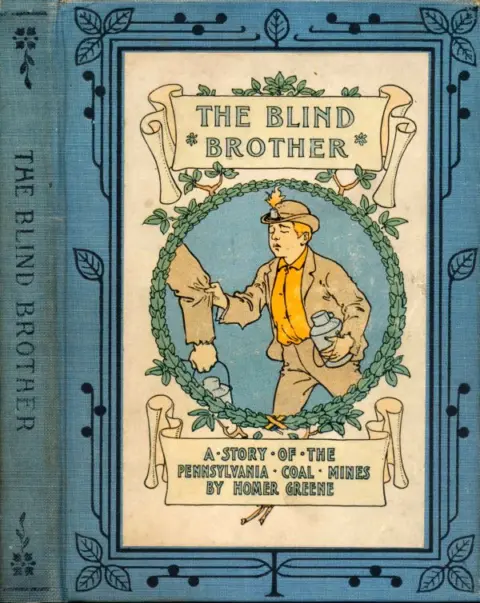
"The Blind Brother: A Story of the Pennsylvania Coal Mines" by Homer Greene is a novel written in the late 19th century. The story revolves around two brothers, Tom and Bennie Taylor, who are navigating the harsh realities of life in the Pennsylvania coal mines during a time of labor strikes. Tom, the older brother, is determined to help his blind sibling regain his sight, highlighting themes of familial loyalty, sacrifice, and the moral dilemmas faced by the working class. At the start of the novel, we are introduced to Bennie, a blind boy who works as a door-boy in the coal mine, relying on his older brother Tom for support and guidance. The narrative sets the stage for their struggles as they navigate the complexities of life in a mining community facing turmoil from strikes. A significant moment occurs when Bennie shares his hopes of saving money to seek medical treatment for his blindness, which underscores the brothers' deep bond. As the story unfolds, Bennie becomes lost in the mine, prompting a desperate search by Tom, which ultimately tests their resilience and love for one another amid a backdrop of social unrest and personal sacrifice. This opening sets up a poignant exploration of the intersection of personal dreams and harsh realities.
Introduction adapted from the source catalogue; source summaries may be automatically generated.
Free to read · English · 27,621 words · No account needed
MAKE TIME FOR A GOOD BOOK
On by default. Untick to stop anonymous reading totals. Each page counts after 10 seconds in view. How this works.
Anonymous counting is on unless you have switched it off.
This time Tom did hear it; just the faintest tap, tap, sounding, almost, as though it were miles away.
There was a little crowbar there, that had been brought down from the new chambers. Tom caught it up, and hurried into the heading, and beat, half a dozen times, on the wall there, and then, dropping the bar from sheer exhaustion, he lay down beside it and listened.
It was hard to tell if they heard his strokes, though he repeated them again and again, as his strength would permit.
But the faint tapping ceased only at intervals, and, once in a long while, a scarcely perceptible thud could be heard.
Tom crept back to Bennie, and tried to speak cheeringly, as they lay
and listened.
But the blind boy’s limbs had grown numb, and his head very heavy and painful. His utterance, too, had become thick and uncertain, and at times he seemed to be wandering in his mind. Once he started up, crying out that the roof was falling on him.
Hours passed. Echoing through the fall, the sound of pick and crowbar came, with unmistakable earnestness.
Tom had tapped many times on the wall, and was sure he had been heard, for the answering raps had reached his ears distinctly.
But they were so long coming; so long! Yet Tom nursed his hope, and
fought off the drowsiness that oppressed him, and tried to care for
Bennie.
The blind boy had got beyond caring for himself. He no longer heard the sounds of rescue. Once he turned partly on his side.
“Yes, Mommie,” he whispered, “yes, I see it; ain’t it pretty!” Then, after a pause, “O Mommie, how beautiful--how beautiful--it is--to see!”
Tap, tap, thud, came the sounds of rescue through the rock and coal.
Tap, tap, thud; but, oh, how the moments lagged; how the deadly gas increased; how the sharp teeth of hunger gnawed; how feebly burned the flame of the little lamp; how narrow grew the issue between life and death!
A time had come when Bennie could be no longer roused to consciousness, when the brain itself had grown torpid, and the tongue refused to act.
Tap! tap! louder and louder; they were coming near, men’s voices could be heard; thud! thud! the prison-wall began to tremble with the heavy blows; but the hours went slipping by into the darkness, and, over the rude couch, whereon the blind boy lay, the angel of death hung motionless, with pinions poised for flight.
“O God!” prayed Tom; “O dear God, let Bennie live until they come!”
Your reading position is saved on this browser. Take it to another device with a library code. Reading pages adapt to text, rather than matching a printed edition.
Homer Greene

Homer Greene

Homer Greene
Homer Greene
BEHIND THE BOOK
This eBook is for the use of anyone anywhere in the United States and most other parts of the world at no cost and with almost no restrictions whatsoever. You may copy it, give it away or re-use it under the terms of the Project Gutenberg License included with this eBook or online at www.gutenberg.org. If you are not located in the United States, you will have to check the laws of the country where you are located before using this eBook. Read the source licence.
The original source file, including credits and licence, is retained by this library. Request an original-format copy at no charge. Please include the book title and Project Gutenberg identifier #45232.
KEEP YOUR CURIOSITY GOING
Coulson Kernahan

Maurice Baring
Frances Wright
Cécile Tormay

Frederic Jesup Stimson

W. H. P. (William Henry Pope) Jarvis