
The unhallowed harvest
Homer Greene
THE CLASSIC COLLECTION · 1887
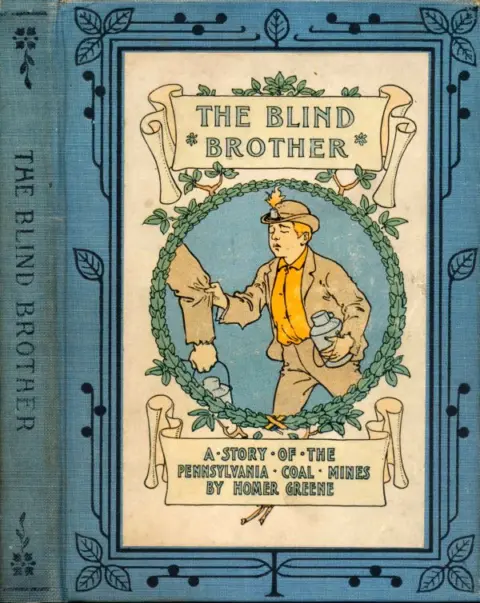
"The Blind Brother: A Story of the Pennsylvania Coal Mines" by Homer Greene is a novel written in the late 19th century. The story revolves around two brothers, Tom and Bennie Taylor, who are navigating the harsh realities of life in the Pennsylvania coal mines during a time of labor strikes. Tom, the older brother, is determined to help his blind sibling regain his sight, highlighting themes of familial loyalty, sacrifice, and the moral dilemmas faced by the working class. At the start of the novel, we are introduced to Bennie, a blind boy who works as a door-boy in the coal mine, relying on his older brother Tom for support and guidance. The narrative sets the stage for their struggles as they navigate the complexities of life in a mining community facing turmoil from strikes. A significant moment occurs when Bennie shares his hopes of saving money to seek medical treatment for his blindness, which underscores the brothers' deep bond. As the story unfolds, Bennie becomes lost in the mine, prompting a desperate search by Tom, which ultimately tests their resilience and love for one another amid a backdrop of social unrest and personal sacrifice. This opening sets up a poignant exploration of the intersection of personal dreams and harsh realities.
Introduction adapted from the source catalogue; source summaries may be automatically generated.
Free to read · English · 27,621 words · No account needed
MAKE TIME FOR A GOOD BOOK
On by default. Untick to stop anonymous reading totals. Each page counts after 10 seconds in view. How this works.
Anonymous counting is on unless you have switched it off.
Tom took the package, too much amazed, and too deeply moved to speak.
The grinding noise of settling rock came up from the region of the fall, and then, for many minutes, the silence was unbroken.
After a while, Jack said, “Put the money where they’ll find it on ye, gin ye--gin ye don’t get oot.”
Then he rose to his feet again.
“You’re not goin’ to leave us?” said Tom.
“Yes, lad, I mus’ go. It’s the way wi’ hunger, sometimes, to mak’ a man crazy till he’s not knowin’ what he does. Ye s’all no ha’ that to fear fra me. Tom,” grasping the boy, suddenly, by both hands, “don’t come up into the new chambers, Tom; promise me!”
Tom promised, and Jack added, “Mayhap I s’all not see ye again--good-by--keep up heart; that’s the gret thing for both o’ ye--keep up heart, an’ never let hope go.”
Then he loosed the boy’s hands, picked up his lamp, and, with a smile on his face, he turned away. He passed down the airway, and out by the entrance where blind Bennie lay, still sleeping, and stopped and looked tenderly down upon him, as men look, for the last time in life, on those whom they love.
He bent over, holding his heavy beard back against his breast, and touched the tangled hair on the child’s forehead with his lips; and then, weak, staggering, with the shadow of his fate upon him, he passed out on the heading, and up into the new chambers, where the poisoned air was heavy with the deadly gas, and the lamp-flame scarcely left the wick; and neither Tom Taylor nor his blind brother ever saw Jack Rennie again, in life or in death.
When Tom went back to the waiting-place, Bennie awoke.
“I had such a nice dream, Tom,” he said. “I thought I was a-lyin’ in the little bed, at home, in the early mornin’; an’ it was summer, an’ I could hear the birds a-singin’ in the poplar tree outside; an’ then Mommie she come up by the bed an’ kissed me; an’ then I thought, all of a sudden, I could see. O Tom, it was lovely! I could see Mommie a-stannin’ there, an’ I could see the sunlight a-comin’ in at the window, an’ a-shinin’ on the floor; an’ I jumped up an’ looked out, an’ it was all just like--just like heaven.”
There was a pause, and then Bennie added, “Tom, do you s’pose if I should die now an’ go to heaven, I could see up there?”
Your reading position is saved on this browser. Take it to another device with a library code. Reading pages adapt to text, rather than matching a printed edition.
Homer Greene

Homer Greene

Homer Greene
Homer Greene
BEHIND THE BOOK
This eBook is for the use of anyone anywhere in the United States and most other parts of the world at no cost and with almost no restrictions whatsoever. You may copy it, give it away or re-use it under the terms of the Project Gutenberg License included with this eBook or online at www.gutenberg.org. If you are not located in the United States, you will have to check the laws of the country where you are located before using this eBook. Read the source licence.
The original source file, including credits and licence, is retained by this library. Request an original-format copy at no charge. Please include the book title and Project Gutenberg identifier #45232.
KEEP YOUR CURIOSITY GOING
Coulson Kernahan

Maurice Baring
Frances Wright
Cécile Tormay

Frederic Jesup Stimson

W. H. P. (William Henry Pope) Jarvis