
The unhallowed harvest
Homer Greene
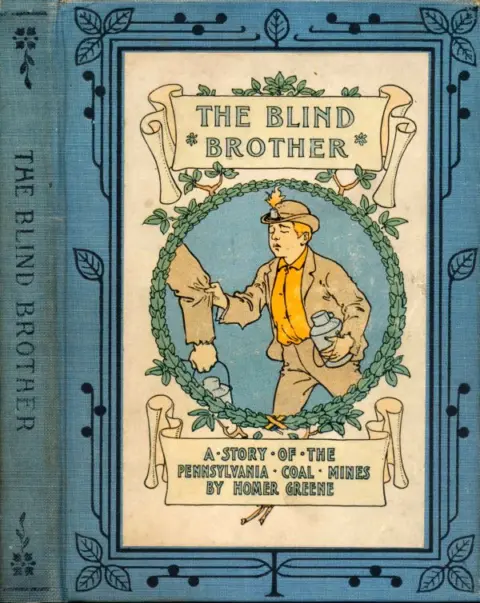
THE CLASSIC COLLECTION · 1887
"The Blind Brother: A Story of the Pennsylvania Coal Mines" by Homer Greene is a novel written in the late 19th century. The story revolves around two brothers, Tom and Bennie Taylor, who are navigating the harsh realities of life in the Pennsylvania coal mines during a time of labor strikes. Tom, the older brother, is determined to help his blind sibling regain his sight, highlighting themes of familial loyalty, sacrifice, and the moral dilemmas faced by the working class. At the start of the novel, we are introduced to Bennie, a blind boy who works as a door-boy in the coal mine, relying on his older brother Tom for support and guidance. The narrative sets the stage for their struggles as they navigate the complexities of life in a mining community facing turmoil from strikes. A significant moment occurs when Bennie shares his hopes of saving money to seek medical treatment for his blindness, which underscores the brothers' deep bond. As the story unfolds, Bennie becomes lost in the mine, prompting a desperate search by Tom, which ultimately tests their resilience and love for one another amid a backdrop of social unrest and personal sacrifice. This opening sets up a poignant exploration of the intersection of personal dreams and harsh realities.
Introduction adapted from the source catalogue; source summaries may be automatically generated.
Free to read · English · 27,621 words · No account needed
MAKE TIME FOR A GOOD BOOK
On by default. Untick to stop anonymous reading totals. Each page counts after 10 seconds in view. How this works.
Anonymous counting is on unless you have switched it off.
“Why, lads!” exclaimed Rennie; “lads!” Then, flashing the light of his lamp into the boys’ faces, “What, Tom, is it you? you and the blind brither? Ah! but it’s main bad for ye, bairnies, main bad--an’ warse yet for the poor mither at hame.”
When Tom first recognized Rennie, he could not speak for fear and amazement. The sudden thought that he and Bennie were alone, in the power of this giant whose liberty he had sworn away, overcame his courage. But when the kindly voice and sympathizing words fell on his ears, his fear departed, and he was ready to fraternize with the convict, as a companion in distress.
“Tom,” whispered Bennie, “I know his voice. It’s the man ’at talked so kind to me on the day o’ the strike.”
“I remember ye, laddie,” said Jack. “I remember ye richt well.” Then, turning to Tom, “Ye were comin’ up the fall; did ye find any openin’?”
“No,” said Tom, speaking for the first time since the meeting; “none
that’s any good.”
“An’ there’s naught above, either,” replied Jack; “so we’ve little to do but wait. Sit ye doon, lads, an’ tell me how ye got caught.”
Seated on a shelf of rock, Tom told in a few words how he and Bennie had been shut in by the fall. Then Jack related to the boys the story of his escape from the sheriff, and how his comrades had spirited him away into these abandoned workings, and were supplying him with food until such time as he could safely go out in disguise, and take ship for Europe.
There he was when the crash came.
“Noo ye mus’ wait wi’ patience,” he said. “It’ll no’ be for lang; they’ll soon be a-comin’ for ye. The miners ha’ strong arms an’ stoot herts, an’ ye’ll hear their picks a-tap-tappin’ awa’ i’ the headin’--to-morrow, mayhap.”
“An’ is it night now?” asked Bennie.
“It mus’ be, lad. I ha’ naught to mark the time by, but it mus’ be along i’ the evenin’.”
“But,” interrupted Tom, as the thought struck him, “if they find you here, you’ll have to go back to the jail.”
“I ha’ thocht o’ that,” answered Jack. “I ha’ thocht o’ that, an’ my min’s made up. I’ll go back, an’ stan’ ma sentence. I ha’ deserved it. I’d ha’ no peace o’ min’ a-wanderin’ o’er the earth a-keepin’ oot o’ the way o’ the law. An’ maybe, if I lived ma sentence oot, I could do some’at that’s better. But I’ll no’ hide any longer; I canna do it!”
Your reading position is saved on this browser. Take it to another device with a library code. Reading pages adapt to text, rather than matching a printed edition.
Homer Greene

Homer Greene

Homer Greene
Homer Greene
BEHIND THE BOOK
This eBook is for the use of anyone anywhere in the United States and most other parts of the world at no cost and with almost no restrictions whatsoever. You may copy it, give it away or re-use it under the terms of the Project Gutenberg License included with this eBook or online at www.gutenberg.org. If you are not located in the United States, you will have to check the laws of the country where you are located before using this eBook. Read the source licence.
The original source file, including credits and licence, is retained by this library. Request an original-format copy at no charge. Please include the book title and Project Gutenberg identifier #45232.
KEEP YOUR CURIOSITY GOING
Coulson Kernahan

Maurice Baring
Frances Wright
Cécile Tormay

Frederic Jesup Stimson

W. H. P. (William Henry Pope) Jarvis