THE CLASSIC COLLECTION✦Little Guzzy, and other storiesCLASSIC FREE BOOKS
Little Guzzy, and other stories
John Habberton
THE CLASSIC COLLECTION · 1877
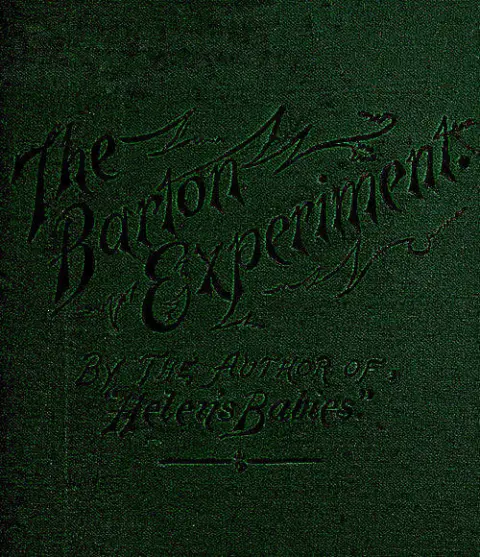
"The Barton Experiment" by John Habberton is a novel written in the late 19th century. The book primarily explores themes related to temperance and social reform in a small American town called Barton, focusing on various characters who struggle with issues of alcohol addiction, community dynamics, and personal morality. Through the lens of reformers and everyday individuals, it delves into the complexities of human behavior and societal expectations. The opening of the novel sets the stage for a significant temperance meeting in Barton, organized to address the rampant alcohol consumption in the community. As the townspeople gather at the Methodist Church, they are introduced to a rich cast of characters, including the influential Major Ben Bailey who is poised to speak against alcohol, as well as Squire Tomple, who embodies the tension between business interests and moral activism. The atmosphere is charged with excitement and hope, but underlying currents of doubt about the efficacy of these reform efforts also begin to surface—particularly through the perspectives of individuals like George Doughty and the former rum-seller, Mr. Crupp. This juxtaposition highlights the struggle between idealism and realism within the movement, setting the foundation for the characters’ journeys throughout the novel.
Introduction adapted from the source catalogue; source summaries may be automatically generated.
Free to read · English · 41,026 words · No account needed
MAKE TIME FOR A GOOD BOOK
On by default. Untick to stop anonymous reading totals. Each page counts after 10 seconds in view. How this works.
Anonymous counting is on unless you have switched it off.
Here were two elements of Barton society with which Mr. Crupp had not been so successful as he had hoped; these were the doctors, and that elastic body known as “the boys.” Individually, the physicians had promised well at first; all of them but one were members of the Barton Division of the Sons of Temperance, and the Division rooms afforded the only floor upon which Dr. White, the allopathist, Dr. Perry, the homeopathist, and Dr. Pykem, the water-cure physician, ever could meet amicably, for they belonged to separate churches. Old Dr. Matthews, who had retired from practice, was not a “Son,” only because he was a conscientious opponent of secret societies; but he had signed every public pledge ever circulated in Barton, and he had never drunk a drop of liquor in his life. All the physicians freely admitted to Mr. Crupp that alcohol was a never-failing cause of disease, or at least of physical deterioration; all declared that no class of maladies were so incurable, and so depressing to the spirits of the medical practitioner, as those to which habitual drinkers, even those who were never drunk, were subject; but--they really did not see what more they, the physicians of Barton, could do than they were already doing. Crupp discussed the matter with Parson Wedgewell, and the parson volunteered to preach a sermon to physicians from the text, “Give wine unto those that be of heavy hearts,” a text which had suggested itself to him, or, rather, had been providentially suggested to him on the occasion of his very first interview with Crupp, and which was outlined in his mind in a manner suggestive of delightful subtleties and a startling application. But when Crupp sounded the doctors as to whether such a discourse would be agreeable, Dr. White said he would be glad to listen to the eloquent divine; but he was conscientiously opposed to appearing, even by the faintest implication, to admit that the homeopathist was a physician at all. Dr. Perry felt his need, as a partaker in the fall of Adam, to being preached to from any portion of the inspired Word; but he could not sit in an audience to which such a humbug as Pykem could be admitted in an official capacity; while Dr. Pykem said that he would rejoice to encourage the preacher by his presence, if he thought any amount of preaching would do any good to a remorseless slaughterer like White, or an idiotic old potterer like Perry. Then Mr. Crupp tried another plan: he himself organized a meeting in which the exercises were to consist of short addresses upon the physical bearing of intemperance, the addresses to be made by “certain of our fellow-citizens who have had many opportunities for special observation in this direction.” Even then Drs. White and Perry objected to sitting on the same platform with Dr. Pykem, who had never attended any medical school of any sort, and who would probably say something utterly ridiculous in support of his own senseless theories, and thus spoil the effect of the physiological facts and deductions which Drs. Perry and White each admitted that the other might be intellectually capable of advancing. Crupp arranged the matter amicably, however, by having Pykem make the first address, during which the other two physicians were to occupy back seats, where they might, while unobserved, take notes of such of Pykem’s heresies as they might deem it necessary to combat: he further arranged that, immediately after Pykem had concluded, he was to be called away to a patient, provided for the occasion. Still more--and great would have been the disgust of White and Perry had they known of it--Crupp laid so plainly before Pykem the necessities of the community, and the duty, not only Christian, but of the simplest manliness, also, that men of any intelligence owed to their fellow-men, that Pykem, who with all his hobbies was a man of Christian belief and humane heart, confined himself solely to the preventive efficacy of external applications of water, not unmixed with soap, in the case of persons who felt toward alcohol a craving which they could not logically explain; he thus delivered an address which might, with cause, be repeated in every community in the United States. Then Dr. Perry, whose forte was experimental physiology, read whole tables of statistics based upon systematic observations; and Dr. White unrolled and explained some charts and plates of various internal organs, naturally unhandsome in themselves, which had been injured by alcohol. It was declared by close observers that for a few days after this meeting the demand for sponges and toilet soap exceeded the experience of the old and single apothecary of the village, and that liquor-sellers looked either sober or savage, according to their respective natures.
Your reading position is saved on this browser. Take it to another device with a library code. Reading pages adapt to text, rather than matching a printed edition.
John Habberton
John Habberton
John Habberton
John Habberton
BEHIND THE BOOK
This eBook is for the use of anyone anywhere in the United States and most other parts of the world at no cost and with almost no restrictions whatsoever. You may copy it, give it away or re-use it under the terms of the Project Gutenberg License included with this eBook or online at www.gutenberg.org. If you are not located in the United States, you will have to check the laws of the country where you are located before using this eBook. Read the source licence.
The original source file, including credits and licence, is retained by this library. Request an original-format copy at no charge. Please include the book title and Project Gutenberg identifier #53031.
KEEP YOUR CURIOSITY GOING
Coulson Kernahan

Maurice Baring
Frances Wright
Cécile Tormay

Frederic Jesup Stimson

W. H. P. (William Henry Pope) Jarvis