THE CLASSIC COLLECTION✦Little Guzzy, and other storiesCLASSIC FREE BOOKS
Little Guzzy, and other stories
John Habberton
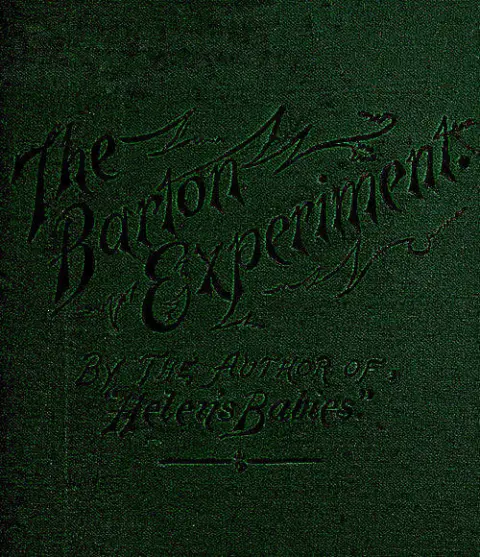
THE CLASSIC COLLECTION · 1877
"The Barton Experiment" by John Habberton is a novel written in the late 19th century. The book primarily explores themes related to temperance and social reform in a small American town called Barton, focusing on various characters who struggle with issues of alcohol addiction, community dynamics, and personal morality. Through the lens of reformers and everyday individuals, it delves into the complexities of human behavior and societal expectations. The opening of the novel sets the stage for a significant temperance meeting in Barton, organized to address the rampant alcohol consumption in the community. As the townspeople gather at the Methodist Church, they are introduced to a rich cast of characters, including the influential Major Ben Bailey who is poised to speak against alcohol, as well as Squire Tomple, who embodies the tension between business interests and moral activism. The atmosphere is charged with excitement and hope, but underlying currents of doubt about the efficacy of these reform efforts also begin to surface—particularly through the perspectives of individuals like George Doughty and the former rum-seller, Mr. Crupp. This juxtaposition highlights the struggle between idealism and realism within the movement, setting the foundation for the characters’ journeys throughout the novel.
Introduction adapted from the source catalogue; source summaries may be automatically generated.
Free to read · English · 41,026 words · No account needed
MAKE TIME FOR A GOOD BOOK
On by default. Untick to stop anonymous reading totals. Each page counts after 10 seconds in view. How this works.
Anonymous counting is on unless you have switched it off.
But the boys! Crupp found himself in time really disposed to ask Pastors Wedgewell and Brown whether there wasn’t Scriptural warrant for the supposition that Job obtained his sons by marrying a widow with a grown-up family. “The boys” numbered about a hundred specimens, ranging in age from fourteen years to forty; no two were alike in disposition, as Crupp had long known; they came from all sorts of peculiar social conditions that warred against their physical and moral well-being; some of them seemed wholly corrupt, and bent upon corrupting others; many more exhibited a faculty for promising which could be matched in magnitude only by their infirmity of performance. By a vigorous course of individual exhortation, the burden of which was that everybody knew they drank because they were too cowardly to refuse, and that nobody despised them so heartily as the very men who sold them the rum, Crupp lessened the number of drinking boys by about one-fourth, thus rescuing those who were easiest to save and most worth saving, but the remainder made as much trouble as the collective body had done. Crupp scolded, pleaded, and argued; he hired some boys to drop liquor for at least a stated time; he importuned some of the more refined citizens to interest themselves socially in certain boys; he lent some of these boys money with which to buy clothing which would bring their personal appearance up to the Barton standard of respectability, and he covertly excited some of the merchants up to a genuine interest in certain boys, by persuading them to sell to said boys coats, boots, and hats on credits nominally short.
He enjoyed the hearty co-operation of the village pastors, all of whom preached sermons to young men and to parents; but his principal practical assistance came, quite unexpectedly, from old Bunley. Bunley had not yet succeeded in finding anything to do, and, as he had on his hands all of his time which was not needed at the family woodpile, he went around talking to the boys. Bunley had been, according to the Barton classification, a “boy” himself; he had drunk in a not remote day with any boy who invited him; he knew more jolly songs than any other half dozen inebriates in the village, and was simply oppressed with the load of good (bad) stories which he never tired of telling; he had been always ready to play cards with any boy, and had come to be regarded, among the youngsters, as “the best fellow in the village.” Now that he had reformed, his success in reforming boys was simply remarkable--so much so that Parson Wedgewell began to tremble over the thought that Bunley, by the present results of the experience of his sinful days, might demonstrate, beyond the hope of refutation, the dreadful proposition that it was better that a man should be a sinner in his youth, so as to know how to be a saint when he became old. This idea Parson Wedgewell laid, with much trepidation, before the Reverend Timotheus Brown, and the two old saints and new friends had a delightfully doleful time on their knees over it, until there occurred to the Reverend Timotheus Brown a principle which he proceeded to formulate as follows: The greater the capacity of a misguided faculty for evil, the greater the good the same faculty may accomplish when in its normal condition. To be sure, the discovery was not original with him; the same statement had been made by peripatetic phrenologists at Barton; indeed, it was visible, to one who could read rather than merely repeat words, in every chapter of the Bible so dear to this good old man; but the illusion under which Parson Brown was allowed to labor worked powerfully for his own good and for that of the community, for from that time forth both he and Parson Wedgewell displayed their greatest earnestness in work with cases apparently the most hopeless. These they found among “the boys,” and harder work no reformer ever laid out for himself. The ingenuity, the persistence, the determined brutality of some of the boys, the logical acuteness displayed in varied fits of deception, only stimulated the old man to greater industry, and slowly, after hard work, often after work that seemed more like hard fighting, but yet surely, Parson Brown reformed one after another of several hard cases. The villagers, most of whom considered that their whole duty consisted in critical observation, applauded handsomely, and Bunley was astonished, and felt considerably mortified at the marked success of his new rival, while Parson Wedgewell found it necessary to pray earnestly that unchristian jealousy might be banished from his own mind. But to Parson Brown the greatest triumph occurred when Crupp--Crupp, the literalist, the hard-headed, the man who trusted in the arm of flesh, the man of action, he who slightingly received any suggestions of special thank-offerings of prayer for special services received--Crupp came to him by night--it reminded Parson Brown of Nicodemus--and exclaimed, “It’s no use, Parson; I’ve done my best on Frank Pughger, but he’s a goner if God don’t put in a special hand. I’ll turn him over to you, I guess.”
Your reading position is saved on this browser. Take it to another device with a library code. Reading pages adapt to text, rather than matching a printed edition.
John Habberton
John Habberton
John Habberton
John Habberton
BEHIND THE BOOK
This eBook is for the use of anyone anywhere in the United States and most other parts of the world at no cost and with almost no restrictions whatsoever. You may copy it, give it away or re-use it under the terms of the Project Gutenberg License included with this eBook or online at www.gutenberg.org. If you are not located in the United States, you will have to check the laws of the country where you are located before using this eBook. Read the source licence.
The original source file, including credits and licence, is retained by this library. Request an original-format copy at no charge. Please include the book title and Project Gutenberg identifier #53031.
KEEP YOUR CURIOSITY GOING
Coulson Kernahan

Maurice Baring
Frances Wright
Cécile Tormay

Frederic Jesup Stimson

W. H. P. (William Henry Pope) Jarvis