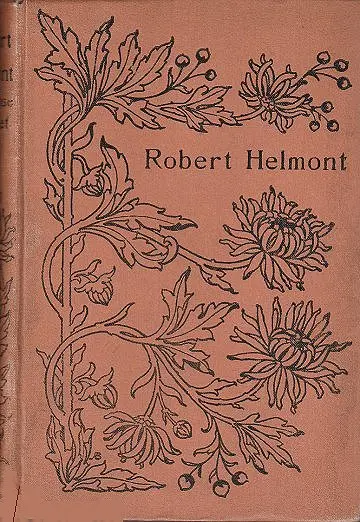
Robert Helmont: Diary of a Recluse, 1870-1871
Alphonse Daudet
THE CLASSIC COLLECTION · 1887
"Tartarin on the Alps" by Alphonse Daudet is a humorous novel written in the late 19th century. This work follows the adventures of Tartarin, a larger-than-life character who embodies the spirit of his hometown, Tarascon, known for its imaginative and boastful inhabitants. The story begins with Tartarin's misadventures in the Swiss Alps, highlighting themes of bravado and the clash between reality and fantasy as he engages with fellow tourists and prepares for an ascent. The opening of the novel introduces readers to a fog-shrouded evening at the Rigi-Kulm hotel, where tourists gather for dinner, fixated on the novelty of their surroundings. Among them is Tartarin, a rotund man cloaked in the garb of an Alpinist, who becomes the center of attention due to his unusual attire and exuberant demeanor. While he attempts to fit in and navigate the challenges of dining and engaging with other guests, he is met with a mix of confusion and disdain. The scene unfolds with comedic interactions that set the tone for Tartarin's escapades, while his aspirations to conquer the Alps ignite a humorous exploration of his character and existential musings on fame, identity, and recognition in a foreign land.
Introduction adapted from the source catalogue; source summaries may be automatically generated.
Free to read · English · 50,490 words · No account needed
MAKE TIME FOR A GOOD BOOK
On by default. Untick to stop anonymous reading totals. Each page counts after 10 seconds in view. How this works.
Anonymous counting is on unless you have switched it off.
All the delegates cried out: “Twenty-seven times! Boufre!”
“Bompard always exaggerates,” said the P. C. A. severely, but not
without a touch of envy.
In the salon they found the daughters of the minister still bending over their notices, while the father and mother were asleep at their backgammon, and the tall Swede was stirring his seltzer grog with the same disheartened gesture. But the invasion of the Tarasconese Alpinists, warmed by champagne, caused, as may well be supposed, some distraction of mind to the young conventiclers. Never had those charming young persons seen coffee taken with such rollings of the eyes and pantomimic action.
“Sugar, Tartarin?”
“Of course not, commander... You know very well... Since Africa!..”
“True; excuse me... Té! here comes M. Baltet.”
“Sit down there, qué. Monsieur Baltet.”
“Vive Monsieur Baltet!.. Ha! ha! fen dé brut.”
Surrounded, captured by all these men whom he had never seen before in his life, père Baltet smiled with a tranquil air. A robust Savoyard, tall and broad, with a round back and slow walk, a heavy face, close-shaven, enlivened by two shrewd eyes, that were still young, contrasting oddly with his baldness, caused by chills at dawn upon the mountain.
“These gentlemen wish to ascend Mont Blanc?” he said, gauging the Tarasconese Alpinists with a glance both humble and sarcastic. Tartarin was about to reply, but Bompard forestalled him:-- “Isn’t the season too far advanced?” “Why, no,” replied the former guide. “Here’s a Swedish gentleman who goes up to-morrow, and I am expecting at the end of this week two American gentlemen to make the ascent; and one of them is blind.”
“I know. I met them on the Guggi.” “Ah! monsieur has been upon the Guggi?” “Yes, a week ago, in doing the Jungfrau.” Here a quiver among the evangelical conventiclers; all pens stopped, and heads were raised in the direction of Tartarin, who, to the eyes of these English maidens, resolute climbers, expert in all sports, acquired considerable authority. He had gone up the Jungfrau!
“A fine thing!” said père Baltet, considering the P. C. A. with some astonishment; while Pascalon, intimidated by the ladies and blushing and stuttering, murmured softly:--
“Ma-a-aster, tell them the... the... thing... crevasse.”
The president smiled. “Child!..” he said: but, all the same, he began the tale of his fall; first with a careless, indifferent air, and then with startled motions, jigglings at the end of the rope over the abyss, hands outstretched and appealing. The young ladies quivered, and devoured him with those cold English eyes, those eyes that open round.
In the silence that followed, rose the voice of Bompard:--
Your reading position is saved on this browser. Take it to another device with a library code. Reading pages adapt to text, rather than matching a printed edition.
Alphonse Daudet
Alphonse Daudet
Alphonse Daudet
Alphonse Daudet
BEHIND THE BOOK
This eBook is for the use of anyone anywhere in the United States and most other parts of the world at no cost and with almost no restrictions whatsoever. You may copy it, give it away or re-use it under the terms of the Project Gutenberg License included with this eBook or online at www.gutenberg.org. If you are not located in the United States, you will have to check the laws of the country where you are located before using this eBook. Read the source licence.
The original source file, including credits and licence, is retained by this library. Request an original-format copy at no charge. Please include the book title and Project Gutenberg identifier #25768.
KEEP YOUR CURIOSITY GOING
Coulson Kernahan

Maurice Baring
Frances Wright
Cécile Tormay

Frederic Jesup Stimson

W. H. P. (William Henry Pope) Jarvis