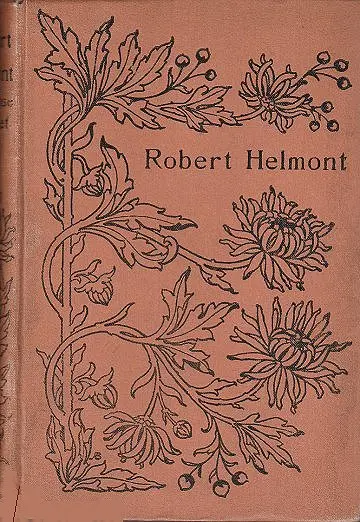
Robert Helmont: Diary of a Recluse, 1870-1871
Alphonse Daudet
THE CLASSIC COLLECTION · 1887
"Tartarin on the Alps" by Alphonse Daudet is a humorous novel written in the late 19th century. This work follows the adventures of Tartarin, a larger-than-life character who embodies the spirit of his hometown, Tarascon, known for its imaginative and boastful inhabitants. The story begins with Tartarin's misadventures in the Swiss Alps, highlighting themes of bravado and the clash between reality and fantasy as he engages with fellow tourists and prepares for an ascent. The opening of the novel introduces readers to a fog-shrouded evening at the Rigi-Kulm hotel, where tourists gather for dinner, fixated on the novelty of their surroundings. Among them is Tartarin, a rotund man cloaked in the garb of an Alpinist, who becomes the center of attention due to his unusual attire and exuberant demeanor. While he attempts to fit in and navigate the challenges of dining and engaging with other guests, he is met with a mix of confusion and disdain. The scene unfolds with comedic interactions that set the tone for Tartarin's escapades, while his aspirations to conquer the Alps ignite a humorous exploration of his character and existential musings on fame, identity, and recognition in a foreign land.
Introduction adapted from the source catalogue; source summaries may be automatically generated.
Free to read · English · 50,490 words · No account needed
MAKE TIME FOR A GOOD BOOK
On by default. Untick to stop anonymous reading totals. Each page counts after 10 seconds in view. How this works.
Anonymous counting is on unless you have switched it off.
“True, I smell it,” said Bravida. And the whole party, revived by this reminder of home, these fumes of the national dishes, which Tartarin, at least, had not inhaled for so long, turned round in their chairs with gluttonous anxiety. The odour came from the other end of the dining-room, from a little room where some one was supping apart, a personage of importance, no doubt, for the white cap of the head cook was constantly appearing at the wicket that opened into the kitchen as he passed to the girl in waiting certain little covered dishes which she conveyed to the inner apartment.
“Some one from the South, that’s certain,” murmured the gentle Pascalon; and the president, becoming ghastly at the idea of Costecalde, said commandingly:--
“Go and see, Spiridion... and bring us word who it is...”
A loud roar of laughter came from that little apartment as soon as the brave “gong” entered it, at the order of his chief; and he presently returned, leading by the hand a tall devil with a big nose, a mischievous eye, and a napkin under his chin, like the gastronomic horse.
“Vi! Bompard...”
“Té! the Impostor...”
“Hé! Gonzague... How are you?”
“Différemment, messieurs: your most obedient...” said the courier, shaking hands with all, and sitting down at the table of the Tarasconese to share with them a dish of mushrooms with garlic prepared by mère Baltet, who, together with her husband had a horror of the cooking for the table d’hôte.
Was it the national concoction, or the joy of meeting a compatriot, that delightful Bompard with his inexhaustible imagination? Certain it is that weariness and the desire to sleep took wings, champagne was uncorked, and, with moustachios all messy with froth, they laughed and shouted and gesticulated, clasping one another round the body effusively happy.
“I’ll not leave you now, vé!” said Bompard. “My Peruvians have gone... I am free...”
“Free!.. Then to-morrow you and I will ascend Mont Blanc.”
“Ah! you do Mont Blanc to-morrow?” said Bompard, without enthusiasm.
“Yes, I knock out Costecalde... When he gets here, uit!.. No Mont Blanc for him... You’ll go, qué, Gonzague?”
“I ‘ll go... I ‘ll go... that is, if the weather permits... The fact is, that the mountain is not always suitable at this season.”
“Ah! vaï! not suitable indeed!..” exclaimed Tartarin, crinkling up his eyes by a meaning laugh which Bompard seemed not to understand.
“Let us go into the salon for our coffee... We ‘ll consult père Baltet. He knows all about it, he ‘s an old guide who has made the ascension twenty-seven times.”
Your reading position is saved on this browser. Take it to another device with a library code. Reading pages adapt to text, rather than matching a printed edition.
Alphonse Daudet
Alphonse Daudet
Alphonse Daudet
Alphonse Daudet
BEHIND THE BOOK
This eBook is for the use of anyone anywhere in the United States and most other parts of the world at no cost and with almost no restrictions whatsoever. You may copy it, give it away or re-use it under the terms of the Project Gutenberg License included with this eBook or online at www.gutenberg.org. If you are not located in the United States, you will have to check the laws of the country where you are located before using this eBook. Read the source licence.
The original source file, including credits and licence, is retained by this library. Request an original-format copy at no charge. Please include the book title and Project Gutenberg identifier #25768.
KEEP YOUR CURIOSITY GOING
Coulson Kernahan

Maurice Baring
Frances Wright
Cécile Tormay

Frederic Jesup Stimson

W. H. P. (William Henry Pope) Jarvis