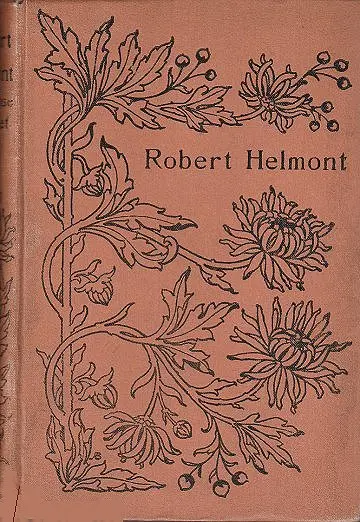
Robert Helmont: Diary of a Recluse, 1870-1871
Alphonse Daudet
THE CLASSIC COLLECTION · 1887
"Tartarin on the Alps" by Alphonse Daudet is a humorous novel written in the late 19th century. This work follows the adventures of Tartarin, a larger-than-life character who embodies the spirit of his hometown, Tarascon, known for its imaginative and boastful inhabitants. The story begins with Tartarin's misadventures in the Swiss Alps, highlighting themes of bravado and the clash between reality and fantasy as he engages with fellow tourists and prepares for an ascent. The opening of the novel introduces readers to a fog-shrouded evening at the Rigi-Kulm hotel, where tourists gather for dinner, fixated on the novelty of their surroundings. Among them is Tartarin, a rotund man cloaked in the garb of an Alpinist, who becomes the center of attention due to his unusual attire and exuberant demeanor. While he attempts to fit in and navigate the challenges of dining and engaging with other guests, he is met with a mix of confusion and disdain. The scene unfolds with comedic interactions that set the tone for Tartarin's escapades, while his aspirations to conquer the Alps ignite a humorous exploration of his character and existential musings on fame, identity, and recognition in a foreign land.
Introduction adapted from the source catalogue; source summaries may be automatically generated.
Free to read · English · 50,490 words · No account needed
MAKE TIME FOR A GOOD BOOK
On by default. Untick to stop anonymous reading totals. Each page counts after 10 seconds in view. How this works.
Anonymous counting is on unless you have switched it off.
“Switzerland, in our day, vé! Monsieur Tar-tarin, is nothing more than a vast Kursaal, open from June to September, a panoramic casino, where people come from all four quarters of the globe to amuse themselves, and which is manipulated and managed by a Company richissime by hundreds of thousands of millions, which has its offices in London and Geneva. It costs money, you may be sure, to lease and brush up and trick out all this territory, lakes, forests, mountains, cascades, and to keep a whole people of employés, supernumeraries, and what not, and set up miraculous hotels on the highest summits, with gas, telegraphs, telephones...”
“That, at least, is true,” said Tartarin, thinking aloud, and
remembering the Rigi.
“True!.. But you have seen nothing yet... Go on through the country and you ‘ll not find one corner that is n’t engineered and machine-worked like the under stage of the Opera,--cascades lighted à giorno, turnstiles at the entrance to the glaciers, and loads of railways, hydraulic and funicular, for ascensions. To be sure, the Company, in view of its clients the English and American climbers, keeps up on the noted mountains, Jungfrau, Monk, Finsteraarhorn, an appearance of danger and desolation, though in reality there is no more risk there than elsewhere...”
“But the crevasses, my good fellow, those horrible crevasses... Suppose one falls into them?”
“You fall on snow, Monsieur Tartarin, and you don’t hurt yourself, and there is always at the bottom a porter, a hunter, at any rate some one, who picks you up, shakes and brushes you, and asks graciously: ‘Has monsieur any baggage?’”
“What stuff are you telling me now, Gonzague?”
Bompard redoubled in gravity.
“The keeping up of those crevasses is one of the heaviest expenses of
the Company.”
Silence fell for a moment under the tunnel, the surroundings of which were quieting down. No more varied fireworks, Bengal lights, or boats on the water; but the moon had risen and made another conventional landscape, bluish, liquides-cent, with masses of impenetrable shadow...
Tartarin hesitated to believe his companion on his word. Nevertheless, he reflected on the extraordinary things he had seen in four days--the sun on the Rigi, the farce of William Tell--and Bompard’s inventions seemed to him all the more probable because in every Tarasconese the braggart is leashed with a gull.
“Différemment, my good friend, how do you explain certain awful catastrophes... that of the Matterhorn, for instance?..”
“It is sixteen years since that happened; the Company was not then constituted, Monsieur Tartarin.”
“But last year, the accident on the Wetterhorn, two guides buried with
their travellers!..”
Your reading position is saved on this browser. Take it to another device with a library code. Reading pages adapt to text, rather than matching a printed edition.
Alphonse Daudet
Alphonse Daudet
Alphonse Daudet
Alphonse Daudet
BEHIND THE BOOK
This eBook is for the use of anyone anywhere in the United States and most other parts of the world at no cost and with almost no restrictions whatsoever. You may copy it, give it away or re-use it under the terms of the Project Gutenberg License included with this eBook or online at www.gutenberg.org. If you are not located in the United States, you will have to check the laws of the country where you are located before using this eBook. Read the source licence.
The original source file, including credits and licence, is retained by this library. Request an original-format copy at no charge. Please include the book title and Project Gutenberg identifier #25768.
KEEP YOUR CURIOSITY GOING
Coulson Kernahan

Maurice Baring
Frances Wright
Cécile Tormay

Frederic Jesup Stimson

W. H. P. (William Henry Pope) Jarvis