THE CLASSIC COLLECTION✦An outlaw’s diary: the CommuneCLASSIC FREE BOOKS
An outlaw’s diary: the Commune
Cécile Tormay
THE CLASSIC COLLECTION · 1888
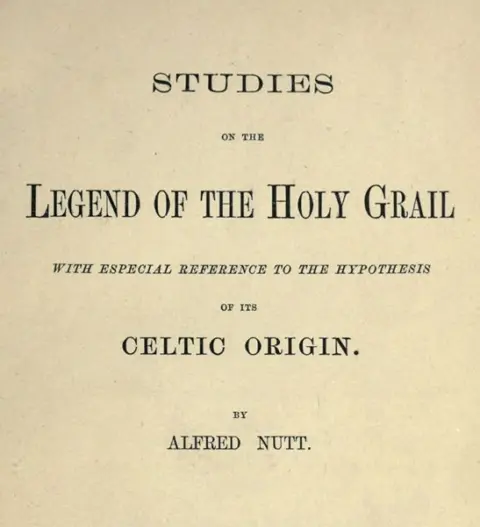
"Studies on the Legend of the Holy Grail" by Alfred Trübner Nutt is a scholarly publication written in the late 19th century. This work examines the various forms and origins of the Holy Grail legend, with a strong emphasis on its connections to Celtic traditions and influences. The book serves as both a study of the Grail Romance cycle and an investigation into the historical, literary, and mythical aspects of the legend. The opening of the scholarly work introduces the author’s intent to explore the different iterations of the Grail legend and their relationships to one another. It begins with a dedication to J. F. Campbell, highlighting the significance of Celtic tradition in Nutt's interpretation. The introduction outlines the structure of the studies, noting that the work does not aim for exhaustiveness but rather focuses on specific aspects of the Grail narrative. Nutt emphasizes the challenges historians face in tracing the origins of the Grail stories, navigating through various manuscripts and forms of the legend, while preparing to delve into the particulars of significant texts that have shaped the legend's evolution.
Introduction adapted from the source catalogue; source summaries may be automatically generated.
Free to read · English · 125,175 words · No account needed
MAKE TIME FOR A GOOD BOOK
On by default. Untick to stop anonymous reading totals. Each page counts after 10 seconds in view. How this works.
Anonymous counting is on unless you have switched it off.
So they stand lost in thought, till a voice is heard, "After my vengeance my healing" and an angel appears, touches Josephes' thigh with the lance shaft, whereupon the head comes out, and from it drop great drops of blood which the angel collects in a vessel, and wherewith he anoints Josephes' wound, making it whole, and Nasciens' eyes, restoring to him his sight. And the angel tells them that the meaning of the lance is that of the beginning of the wonderful adventures which shall befall in lands whither God purposes leading them; when the true knights should be separated from the false ones, and the earthly knighthood become a heavenly one. And at the beginning of those adventures the lance would drop blood as then, but beforehand none; and then wonders would happen all over the world where the lance was, great and terrible wonders, in recognition of the Holy Grail and of the lance; and the marvels of the Grail should never be seen save by one man alone; and by the lance wherewith Josephes was struck should but one other man be struck, and he a King of Josephes' kin, and the last of the good men; he should be struck through the two thighs, and only healed when the Grail wonders were disclosed to the Good Knight, and that one should be last of Nasciens' kin. Thus, as Nasciens was the first to behold the wonders of the Grail, that one should be the last; so saith the true crucified one, adding, "Upon the first and last of My new ministers will I spend the vengeance of the adventurous lance in token of Myself having received the lance stroke whilst on the Cross." And so many days as Josephes had born the lance head in his wound so many days should the marvellous adventures last. Now these days (years)[45] were twenty-two. (17) Josephes explains Mordrains' vision, and makes him destroy the image of a woman he had kept in a secret chamber, known, so he thought, only to himself. (18) Josephes and his company go forth from Sarras, but the tale tells nothing of them in this place, but keeps straight on. On the following night Mordrains dreams that, sitting in Sarras at table, of a sudden a thunderbolt strikes crown from his head and the first mouthful from his lips; a great wind carries him up into a far land where he is fed by a lion and lioness, and after a while an eagle carries off Nasciens' son to a land whereof the inhabitants bow down before him, and out of this nephew's belly comes a great lake giving rise to nine streams, eight of equal breadth and depth, the ninth as wide and deep as the remainder put together, and rushing and turbulent, and at first foul and muddy, but afterwards clear and pure as a precious stone; then comes down from heaven a man in likeness of one crucified, who bathes hands and feet in the lake and eight streams, but in the ninth his whole body. (19) Mordrains tells his vision to Nasciens and confesses to former treacherous and jealous feelings he had against him; they seek counsel of the priests, but none can expound the vision, and as they sit together a great tumult is heard and the sound of a horn announcing "the beginning of dread," and they fall senseless to the ground; but Mordrains is caught up by the Holy Ghost and borne off. (20) Meanwhile Nasciens is accused by Kalafier, a Christian-hater, of having made away with Mordrains, and is cast into prison with Kalafier for gaoler. (21) Meanwhile Mordrains has been carried off by the Holy Ghost to an island lying between Babylon, Scotland, and Ireland, a high land from which the western sea can be looked over as far as Spain; it was once a pirates' lair, but Pompey drove them thence. To Mordrains comes a noble man who gives his name as Tout-entour, comforts him, and exhorts him to steadfastness in the faith; when he leaves a fair woman appears and tempts the King, who luckily does not pay heed to her, and well for him, as he learns from the noble man that she is Lucifer in disguise. He is assailed by many temptations; storm, thunder, and lightning affright him; the wonderful bird Phoenix attacks him and snatches the bread from his lips; Lucifer again visits him and shows him Nasciens' dead body, but it is only an invention; finally, all these trials withstood, the noble man comes again and expounds the dream of the nine streams: the lake is a son of Nasciens, from whom descend nine Kings, all good men and true, but the ninth surpassing all in every virtue; he is the knight to whom the wonders of the Grail shall be shown, and Christ shall bathe Himself wholly in him. (22) Meanwhile Nasciens has been kept in prison together with his son, Celidoine (Heaven-given) by Kalafier. But a miraculous hand appearing from out a cloud strikes off Nasciens' fetters, and carries him out of the dungeon; Kalafier pursues but is struck down by the hand; on his death bed he orders that Celidoine be cast from the battlements, but nine hands bear him up in mid air, whilst Kalafier, slain by fire from heaven, goes to eternal death. Sarraquite, overjoyed to hear of her brother's escape, sends out messengers to meet them. Meanwhile Nasciens' wife, Flegentyne, has set out in search of her husband accompanied by the old knight, Corsapias, and his son, Helicoras. (23) Now Nasciens has been carried fourteen days journey off to the Turning Isle (concerning which many wonders are told); all of these things are true, as Christ Himself has written the book of the Holy Grail, and He never wrote aught else save the Lord's Prayer for the disciples and the judgment upon the woman taken in adultery. And no man is bold enough to say that since the Resurrection Christ wrote aught else save this "haute escripture del S. Graal." (24) A ship comes to Nasciens' isle which he would enter but for words warning him against it unless he be full of faith. However, crossing himself he enters [and finds therein the same wonders as those described in Queste, Inc. 35, 36, 37, viz.:--the sword and the three spindles, precisely the same story about which is told as in the Queste]. (25) Nasciens deeming there must be magic in this, the ship splits in twain, and had well nigh drowned him, but he regains the isle swimming, and on the morrow an old man comes in a ship and gives him an allegorical explanation of what has befallen him. (26) Meanwhile Celidoine, carried off by the hands to the land of the heathen King Label, wins his favour by expounding a dream, converts him, but at his death is cast adrift by the heathen barons in a boat with a lion, and after three days comes to Nasciens' island. (27) The two rejoice on their meeting, and leave the island together in Solomon's ship, come after four days to another island, where Nasciens, attacked by a giant, seizes Solomon's sword but it breaks in his hand, nevertheless, with another sword he overcomes the giant. He chides Solomon's sword, but Celidoine says it is some sin of his made it break. Thereafter they see a ship approaching wherein is Mordrains. There is rejoicing between the three, and much telling of past adventures. Nasciens shows the broken sword to Mordrains, who, taking it in his hands, joins it together, whereupon a voice bids them leave the ship; Nasciens, not obeying fast enough, is wounded in the shoulder by a fiery sword in punishment of his having drawn Solomon's sword. (28) The messengers sent out by Sarraquite in search of Nasciens have, meantime, had many adventures, have come across the daughter of King Label, suffered shipwreck, and been thrown upon a desert isle formerly the home of the great physician, Ypocras (of whom a long story is told how he was tricked by a Roman lady), been tempted in divers fashions, but at last they are led to Mordrains, Nasciens, and Celidoine. (29) On the third night a priest clad in white comes walking on the sea, heals Nasciens' wound, and sends off Celidoine in another ship. The remainder come to land, Mordrains and Sarraquite are reunited; Nasciens' wife, Flegentyne, is sent for; and Label's daughter is christened by Petrone, a holy man and kinsman of Joseph. She was after Celidoine's wife, as my lord Robert of Borron testifies, who translated this history from Latin into French after the holy hermit to whom our Lord first gave it. (30) Nasciens sets forth in search of his son, his knights follow on his track, and two are struck dead for their sins. Nasciens comes again to Solomon's ship, is tempted by the devil in the shape of a fair damsel, goes on board the ship and dreams as follows:--Celidoine is in the promised land with all those who had left Sarras; he, Nasciens, shall go thence likewise and never depart thence, nor shall the ship until it take back the last of his line to Sarras, together with the Holy Grail, and that shall be after three hundred years; and thereafter Celidoine leads before him nine persons, all in guise of Kings, save the eighth who was like a dog, and the ninth turns into a lion, and at his death the whole world mourns over him. And the names of these, Nasciens' descendants, are: Celidoine, Marpus, Nasciens, Alains li Gros, Ysaies, Jonans, Lancelot, Bans, Lancelot, like unto a dog until his end, Galahad, foul at the source, but afterwards clear, in whom Christ shall bathe Himself wholly, and who shall end all the adventures. On the morrow it is explained to Nasciens that the eighth of his descendants likens a dog on account of his sins, and the ninth is foul at the beginning as engendered in fornication and not as Holy Church wills. (31) The story, after touching on Flegentyne, who retires to her own land, returns to Joseph, who, with his son, Josephes, and his companions, has been wandering about. Joseph is ordered by a voice from heaven to beget a son, whose name shall be Galaad. At length the company comes to the sea shore and laments that it has no ships; Joseph rebukes them, and says those may pass who have kept chaste, whereupon four hundred and sixty come forward to confess their lechery. Josephes is told to put forward the Grail-bearers, to take the shirt off his back, and having spread it on the water, all the pure companions shall find place on it. This happens, and all find place save Symeu and his son, who are not as they should be, and who sink and are well nigh drowned. The chosen company arrive on the morrow in Great Britain, then full of Saracens and infidels. Josephes then prays for the remainder of the company; a heavenly voice says they shall come in good time, and that this is the promised land in which they shall multiply and become the worthiest race anywhere. (32) Meantime Nasciens has been led in Solomon's ship to those of Joseph's followers who had been left behind, as the history of the Holy Grail testifies. After being warned against fresh falling into sin they are brought over to Joseph, and are fed with as much meat as they could want. But the fifth day the company, not having eaten for a day, come to the tent of a poor woman, wherein are twelve loaves about which they dispute. Josephes, referred to, breaks each loaf in three, and having placed the Holy Grail at the head of the table by its power the bread suffices for more than five hundred people. (33) Hereafter the company comes to Castle Galafort, where Celidoine is found disputing with the Saracen wise men. The Christians are well received by Ganort, and shortly afterwards he and his people are baptised, one hundred and fifty who refuse being drowned. Over their bodies a tower is built, the Tower of Marvels, and thereafter, it is prophesied, a King named Arthur should reign, and from one blow of a sword adventures should arise, lasting twelve years, until the last descendant of Nasciens should end them, and till that time no knight of Arthur's house should enter the tower without having to fight as good a man as himself; thus should it be till he who was to end the adventures appeared. So they build the tower, and it lasts until Lancelot destroys it, as the "Tale of Arthur's Death" relates. (34) Joseph's wife bears a son, who receives the name of Galahad, of the Castle of Galafort. (35) The King of Northumberland, hearing of Ganort's conversion, summons him to the court, and on his refusal attacks him, but is defeated and slain by the Christians. (36) Josephes, his father, and one hundred and fifty of the Christians, leaving Galafort, come to Norgales, and are thrown into prison by King Crudel, who says, "Let them be for forty days, and see if their vessel will feed them." Our Lord comes to comfort them, and bids them be of good cheer, He will send an avenger to slay these dogs. (37) Our Lord, in the likeness of one crucified, then appears to Mordrains, bids him set forth with wife and children and King Label's daughter and Nasciens' wife and go to Great Britain, there to avenge him on King Crudel. Mordrains hearkens, and shortly after sets forth with all his household, leaving his land in charge of Duke Ganor. On the way a devil carries off the captain of the ship, who had lusted after Queen Flegentyne. They arrive in Britain and rejoin their friends; great is the joy; Nasciens' queen is like to have died of joy, and swoons twelve times. (38) Mordrains sends word to Crudel to set the Christians free, and on his refusal marches against, overthrows, and slays him, but is grievously wounded, though he suffers no pain. Josephes and his companions are freed, and thanksgivings are made before the Grail. On the morrow, as Josephes is officiating before the holy vessel, Mordains presses near to see it, in spite of a warning voice; he loses his sight and the power of his body; he confesses his folly, but prays he may not die till the Good Knight's coming, the ninth of Nasciens' descendants. A voice promises him this, and that when the Good Knight comes he shall recover his sight and his wounds be healed; but three hear this promise beside Mordrains himself, Joseph, Josephes, and Nasciens. (39) Mordrains is brought to Galafort, where Celidoine marries King Label's daughter and begets a son, Nasciens. Mordrains then, after giving his wife and shield into Nasciens' keeping, retires to a hermitage, and builds a monastery of the White Monks, and stays there till Perceval sees him and Galahad, too, as the "Tale of the Holy Grail" tells. (40) Josephes leaves Galafort, and, coming to Camelot, converts many of the people, whereat King Agrestes, being grieved, is baptised with false intent, and after Josephes' departure persecutes the Christians, and is punished by madness and death. Josephes returning, buries the martyrs, whose blood had blackened a cross, which keeps the name of the "Black Cross," till the Good Knight, Lancelot of the Lake's son comes. (41) Josephes comes to a hill called Hill of the Giant; 'tis a Friday, and Brons is sitting next him at the Grail-table, but between the two is space for a man to sit, and Brons, Josephes' kinsman, asks him why he does not invite some one to fill it. Josephes answers, only he who is a holier man than any present can fill that place, as it typifies Christ's seat at the Last Supper, and is empty waiting His coming, or whom He shall send. Such of the company as are in mortal sin take this saying as presumption and fable, and Moys declares his willingness to sit in it if his companions will ask Josephes' leave. They do so, and though Josephes minds them how Moys might hardly come to Britain, and though he solemnly warns Moys himself, he gives his leave. Moys takes the seat, and at once seven flaming bands from heaven seize upon him and carry him off to a far place burning like a dry bush. The people repent, and, in answer to their enquiries, Josephes tells them the day shall come when they shall know where Moys is. (42) After the meal Josephes, at Brons' request, has the latter's twelve sons up before him, and asks them whether they will be wedded or not. Eleven choose wedding, but the twelfth virginity and the service of the Holy Grail. Josephes, overjoyed, having married the other eleven, appoints him guardian of the Grail at his death, and he might leave the guardianship afterwards to whom he would. (43) Josephes and his companions pass through Britain converting the heathen. Now the Grail only gives food to such as are not in sin, and once as the troop is encamped by a lake, Peter, a kinsman of Josephes', bears it through the ranks, and all are fed with the best food, save the sinners; these complain, and beg Josephes to pray for them, whereupon he bids Brons' youngest son, the same he had chosen as Grail-keeper, Alains le Gros (not that Alains, Celidoine's son, he was king and wore a crown, but this one never) take the net from the Grail-table and fish with it in the pond. Alains does so and catches one fish, a big one, but say they, 'Twill not be enough; however, Alains, having shared it in three, and having prayed it might suffice, all are fed. Alains is called in consequence the Rich Fisher, and all the Grail-keepers after him bear this name, but they were more blessed than he, being crowned Kings whereas he never wore crown. (44) Joseph, leaving his companions, comes into the Forest of Broceliande, meets a Saracen who would lead him to his sick brother, but is himself slain by a lion. Joseph is thrown in prison and wounded in the thigh by the men of the sick knight's castle, but, obtaining leave to visit the sick knight, heals him, and brings back to life the Saracen slain by the lion; both brothers are baptised; a fragment of the sword remaining in the wound, Joseph draws it out, and laying it with the remainder of the sword prophecies it shall not be made whole till he come who shall achieve the adventures of the Holy Grail. (45) Joseph, returning to his companions, finds them in doubt as to how they shall cross a great water, they pray for guidance, and a white hart appears, followed by four stags, and leads them across, all save Chanaan, who crosses later in a fisherman's boat. Josephes, in answer to Alain and Pierron, explains the hart and lions as Christ and the Evangelists, and Christ would appear in that wise afterwards to Arthur, Mordred, and Lancelot. (46) The Christians come to a house where burns a great fire, out of which is heard a lamentable voice; it is that of Moys; at Josephes' prayer rain falls from heaven and quenches half the flames, but he may not be wholly delivered until the Good Knight, Galahad, come. (47) The Christians come into the land of King Escos, whence Scotland has its name. The Holy Grail refuses meat to Chanaan and to Symeu, Moys' father, whereat enraged, Symeu attacks Pierre and wounds him, and Chanaan slays his twelve brethren. Symeu is carried off by devils, whilst Chanaan's grave bursts out in flames, which may not quench till Lancelot come. (48) Meanwhile Pierre's wound having become worse, he is left behind with a priest, who leads him to the sea shore, and, at his request, places him in a boat; this carries him to the isle of the heathen king, Orcanz, whose daughter finding him on the sea shore dying, has pity on him and tends him secretly till he is healed. Her father requires a champion, Pierre offers himself, conquers, converts, and baptises Orcanz, who takes the name Lamer, and marries his daughter, and King Luces comes to the wedding and is overjoyed. From him came Gauvain, son of King Lot of Orcanie. Mordred was no true son of Lot's, but of Arthur's. Gauvain is thus of the seed of Joseph of Arimathea. (49) Josephes after fifteen years' wanderings comes back to Galafort, and finds his brother Galahad grown up; by Josephes' advice the men of Hocelice take Galahad for their king, and he became the ancestor of Ywain, son of Urien. Once whilst riding he comes to Symeu's fiery grave, which may not be quenched till Galahad, the Good Knight, comes. At Galahad's death he is buried in an abbey he founds to allay Symeu's pains, and the tombstone of his grave may not be lifted until by Lancelot. (50) Joseph dies shortly after Galahad's crowning, and Josephes, feeling death near, pays a last visit to Mordrains, who begs for a token from him. Josephes asks for the king's shield, and with blood gushing from his nose marks on it a red cross, gives it to Mordrains, and says no one shall hang it on his neck without rue till Galahad do so; the shield is placed on Nasciens' tomb. On the morrow Josephes dies; his body is carried afterwards into Scotland to still a famine, and is buried in the Abbey of Glays. (51) Before his death he has confided the Grail to Alain. The latter comes with his brethren, one of whom, Josue, is unmarried, to the Terre Foraine, converts the King and people, and marries Josue to his daughter. Here is the resting-place of the Holy Grail; a lordly castle is built for it, hight Corbenic, which is Chaldee, and signifies "holy vessel." At Josue's wedding, such is the power of the Holy Grail, that all present are as filled as if they had eaten the finest meats they could think of. And that night the King, baptized Alfasem, sleeping in the castle, beholds the holy vessel covered with crimson samite, and a man all flaming tells him no mortal may sleep where the Holy Grail rests, and wounds him through both thighs, and bids others beware of sleeping in the Palace Adventurous. And afterwards many a knight essayed the adventure, but lost his life, till Gauvain came, and he, though he kept his life, had such shame and mischance as he had not had for the Kingdom of Logres' sake. (58) Alain and Alfasem die; Josue becomes King and Grail-keeper, and after him Aminadap, Catheloys, Manaal, Lambor, all Kings and known as the Fisher, and Lambor fighting with his enemy, Bruillant, pursues him to the sea shore, and Bruillant finds there Solomon's ship and enters it, and finds the sword with which he slays Lambor, and this was the first blow struck with that sword in Great Britain, and such great woes sprang therefrom that no labourers worked, nor wheat grew, nor fruit trees bore, nor fish was found in the waters, so that the land was known as the Waste Land. But Bruillant falls dead for drawing the sword. After Lambor, Pelleans, wounded in the two thighs in a battle of Rome, whence he was always called the Maimed King, and he might not heal till Galahad the Good Knight come; and from him descends Pelles, and on his daughter does Lancelot of the Lake beget Galahad. (59) Nasciens, Flegentyne, and Sarraquite die on the self-same day. Celidoine reigns, and is followed by Marpus, he by Nasciens, Alain li Gros, Ysaies, Jonas, Lancelot, Bans, Lancelot of the Lake. Here the story ends of all the seed of Celidoine, and returns to speak of Merlin, which my lord Robert of Borron thus begins.[46]
Your reading position is saved on this browser. Take it to another device with a library code. Reading pages adapt to text, rather than matching a printed edition.
BEHIND THE BOOK
This eBook is for the use of anyone anywhere in the United States and most other parts of the world at no cost and with almost no restrictions whatsoever. You may copy it, give it away or re-use it under the terms of the Project Gutenberg License included with this eBook or online at www.gutenberg.org. If you are not located in the United States, you will have to check the laws of the country where you are located before using this eBook. Read the source licence.
The original source file, including credits and licence, is retained by this library. Request an original-format copy at no charge. Please include the book title and Project Gutenberg identifier #42205.
KEEP YOUR CURIOSITY GOING
Cécile Tormay

Moritz Busch
John L. Ransom

Maurice Baring
Frances Wright
Cécile Tormay