THE CLASSIC COLLECTION✦An outlaw’s diary: the CommuneCLASSIC FREE BOOKS
An outlaw’s diary: the Commune
Cécile Tormay
THE CLASSIC COLLECTION · 1888
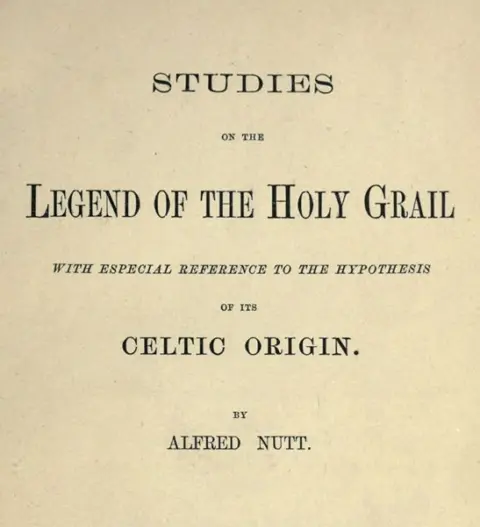
"Studies on the Legend of the Holy Grail" by Alfred Trübner Nutt is a scholarly publication written in the late 19th century. This work examines the various forms and origins of the Holy Grail legend, with a strong emphasis on its connections to Celtic traditions and influences. The book serves as both a study of the Grail Romance cycle and an investigation into the historical, literary, and mythical aspects of the legend. The opening of the scholarly work introduces the author’s intent to explore the different iterations of the Grail legend and their relationships to one another. It begins with a dedication to J. F. Campbell, highlighting the significance of Celtic tradition in Nutt's interpretation. The introduction outlines the structure of the studies, noting that the work does not aim for exhaustiveness but rather focuses on specific aspects of the Grail narrative. Nutt emphasizes the challenges historians face in tracing the origins of the Grail stories, navigating through various manuscripts and forms of the legend, while preparing to delve into the particulars of significant texts that have shaped the legend's evolution.
Introduction adapted from the source catalogue; source summaries may be automatically generated.
Free to read · English · 125,175 words · No account needed
MAKE TIME FOR A GOOD BOOK
On by default. Untick to stop anonymous reading totals. Each page counts after 10 seconds in view. How this works.
Anonymous counting is on unless you have switched it off.
In making up the slips, the summary of Borron's poem dropped out. In order not to disturb the page form, which was fixed before the omission was noticed, it has been inserted after the Grand St. Graal with a subpagination.
=Robert de Borron's Poem: Joseph of Arimathea.=--(1) Before Christ's coming all folk went to Hell, but He came born of a Virgin that He might bring them out of Hell. He took flesh what time Judæa was under Rome and Pilate governed it. Now a soldier of Pilate's loved Christ but dared not show it. Of Christ's few disciples one was bad, his chamberlain, and he betrayed Him to the Jews. (2) On Thursday Jesus gathers His disciples; Judas' question, the washing of the feet, the kiss of betrayal follow. When the Jews carry off Jesus, one of them takes the very fair vessel wherein He made His sacrament, and gave it to Pilate, who keeps it till he learns Jesus' death. (3) Joseph is angry hereat, and claims pay for his and his five knights five years' free service, and his pay is Christ's body. Pilate grants it him, and Joseph hastens to the Cross, but the guards deny him, whereon he complains to Pilate, who sends Nicodemus to see he obtain it, and also gives Joseph the vessel. (4) Joseph and Nicodemus descend the body, and wash it, which makes the blood flow afresh. Joseph puts the blood in the vessel, wraps the body in a fine cloth and entombs it. The descent into Hell and the Resurrection follow. (5) The Jews are incensed against Joseph and Nicodemus; the latter escapes, but Joseph is thrust into a horrible and dark prison. To him Christ appears with His vessel, in a great light, and instructs Joseph, telling him for his love to Him he shall have the symbol of His death and give it to keep to whom he would; He then gives Joseph the great, precious vessel wherein is His holiest blood. Joseph wonders, having hidden it in his house. Joseph is to yield the vessel to three persons only, who are to take it in the name of the Trinity. No Sacrament shall ever be celebrated but Joseph shall be remembered. But Joseph must be taught concerning the Sacrament; the bread and wine are Christ's flesh and blood, the tomb is the Altar; the grave-cloth the Corporal, the vessel wherein the blood was put shall be called Chalice, the cup-platten signifies the tombstone. All who see Joseph's vessel shall be of Christ's company, have fulfilment of their heart's wish and joy eternal. (The author adds: I dare not, nor could not, tell this but that I had the great book wherein the histories are written by the great clerks, therein are the great secrets written which are called the Graal.) Christ leaves Joseph, who remains in prison, no man heeding him (6) until, when Vespasian, the Emperor's son, was a leper, a pilgrim comes to Rome and tells of Christ's cures, and lays his head Vespasian could be cured could anything of Christ's be brought to Rome. The Emperor sends messengers, who hear Pilate's story of the Crucifixion and about Joseph. The Jews are called together, and one tells of Verrine, who is brought before the messengers, and she relates how she wiped Christ's face and thus got the likeness of Him. They take her to Rome, Vespasian is healed, and sets forth to revenge Christ's death. He kills many Jews, burning some. One Jew offers to find Joseph, and tells the story of his imprisonment. Vespasian is let down into the prison and finds Joseph alive, who, to his amazement, welcomes him by name, and reads him a lecture on Biblical history and Christian Faith. Vespasian is converted, and sells the Jews at the rate of thirty for a penny. (7) Joseph exhorts his kin, among them his sister, Enygeus, and brother-in-law, Hebron. They agree to believe, and to follow him. He sets off with them and they dwell for long in far-off lands. For awhile things go well, but then all the host does turns to naught; 'tis on account of carnal sin. The host complains to Hebron that they and their children die of hunger. (8) Hebron reports this to Joseph, who goes weeping and kneels before the vessel and asks why his followers suffer? A voice from the Holy Ghost answers he is not in fault, but he is to set the vessel before the people, and to mind him how He, Christ, had eaten with His disciples, and how the false disciple was detected. In the name of that table whereat Christ last ate, Joseph is to prepare another, and then to call his brother-in-law, Brons, and make him go into the water to catch a fish, and the first he catches Joseph is to put it on the table, and then to take the vessel, put it on the table, cover it with a towel, and then place Hebron's fish opposite it. The people are then to be called, who will soon see wherein they have sinned. And Joseph is to sit where Christ sat at the Last Sacrament, with Brons at his right. And Brons is to draw back one seat, to signify the seat of Judas, and the seat thus left empty is not to be filled until Enygeus have a child by Brons, her husband, and when that child is born there shall be his seat. The people is then to be bidden sit down to the grace of our Lord. Joseph does all this; part of the people sit, part do not, the sitters are filled with sweetness and the desire of their heart, the others feel nought. One of the sitters, named Petrus, asks if they feel nothing, and tells them it is because they are defiled with sin. The sinners then depart, but Joseph bids them come back day by day. Thus Joseph detects the sinners, and thus is the vessel first proved. (9) Joseph tells the sinners it severs them from the others, as it holds no company with nor has love towards any sinner. The sinners ask the name of the vessel: it is called Graal, as it is agreeable to all who see it. Now all this is verity, hence we call this the Story of the Grail, and it shall be henceforth known as the Grail. (10) One sinner remains, Moyses, a hypocrite (here a gap which can be filled up from the prose versions: Moyses seats himself in the empty seat, whereupon the earth opens and swallows him). (11) Joseph prays to Christ that as He came to him in prison, and promised He would come to his aid when in trouble, so now He would show him what has become of Moyses. The voice tells Joseph again about the empty seat, and how that the one at Joseph's table was not to be filled until the third man come, whom Hebron should beget and Enygeus bear, and his son should fill the seat. Moyses had stayed behind only to deceive, he had his deserts, no more should be heard of him in fable or song until he come who should fill the empty seat. (12) In course of time Brons and Enygeus have twelve sons and are greatly bothered with them, and ask Joseph what is to be done with them. Joseph prays before the vessel; eleven will marry, one remain single; this one is Alain. Joseph is told by the voice when he consults the vessel about this nephew, to relate all about Christ's death and about the vessel, to tell Alain that from him shall issue an heir who is to keep the vessel; Alain is to take charge of his brethren and sisters and go westwards. An angel will bring a letter for Petrus to read, telling him to go whither he lists; he will say: the vale of Avaron; thither shall he go and wait for the son of Alain, and shall not pass away until that one come, and to him shall Petrus teach the power of the vessel, and say what has become of Moyses, and then may he die. (13) All happens as foretold by the voice; the letter comes for Petrus, who declares his intention of departing for the vale of Avaron, bidding the host pray God he may never go against His will. Alain leaves with his brethren, and, as Joseph taught him, preaches the name of Jesus Christ. (14) Petrus stays one day more; it is, says an angel, the Lord sends to Joseph, that he may see and hear the things of the vessel. The angel continues: The Lord knows Brons for a worthy man, and 'twas, therefore His will he should go fishing; he is to keep the vessel after Joseph, who must instruct him properly especially concerning the holy words which God spake to Joseph in the prison, which are properly called the Secrets of the Grail; Brons is to be called the Rich Fisher from the fish he caught; all the people are to go westwards; Brons is to wait for the son of his son, and to give him the vessel, then shall the meaning of the blessed Trinity be made known; after the vessel has been given to Brons, Petrus is to go, as he may then truly say he has seen Hebron, the Rich Fisher, put in possession of the vessel; when all this is done, Joseph is to go to perfect joy and life pardurable. (15) On the morrow Joseph tells them the angel's message, save the words of Christ in the prison, which he tells to the Rich Fisher alone. The latter is then put in possession of Grail and headship; Joseph stays three days with him, then the Good Fisher goes away--in the land where he was born--and Joseph remains.[47]
Your reading position is saved on this browser. Take it to another device with a library code. Reading pages adapt to text, rather than matching a printed edition.
BEHIND THE BOOK
This eBook is for the use of anyone anywhere in the United States and most other parts of the world at no cost and with almost no restrictions whatsoever. You may copy it, give it away or re-use it under the terms of the Project Gutenberg License included with this eBook or online at www.gutenberg.org. If you are not located in the United States, you will have to check the laws of the country where you are located before using this eBook. Read the source licence.
The original source file, including credits and licence, is retained by this library. Request an original-format copy at no charge. Please include the book title and Project Gutenberg identifier #42205.
KEEP YOUR CURIOSITY GOING
Cécile Tormay

Moritz Busch
John L. Ransom

Maurice Baring
Frances Wright
Cécile Tormay