THE CLASSIC COLLECTION✦An outlaw’s diary: the CommuneCLASSIC FREE BOOKS
An outlaw’s diary: the Commune
Cécile Tormay
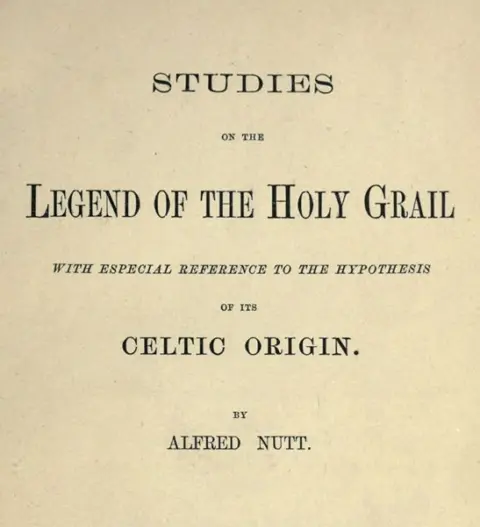
THE CLASSIC COLLECTION · 1888
"Studies on the Legend of the Holy Grail" by Alfred Trübner Nutt is a scholarly publication written in the late 19th century. This work examines the various forms and origins of the Holy Grail legend, with a strong emphasis on its connections to Celtic traditions and influences. The book serves as both a study of the Grail Romance cycle and an investigation into the historical, literary, and mythical aspects of the legend. The opening of the scholarly work introduces the author’s intent to explore the different iterations of the Grail legend and their relationships to one another. It begins with a dedication to J. F. Campbell, highlighting the significance of Celtic tradition in Nutt's interpretation. The introduction outlines the structure of the studies, noting that the work does not aim for exhaustiveness but rather focuses on specific aspects of the Grail narrative. Nutt emphasizes the challenges historians face in tracing the origins of the Grail stories, navigating through various manuscripts and forms of the legend, while preparing to delve into the particulars of significant texts that have shaped the legend's evolution.
Introduction adapted from the source catalogue; source summaries may be automatically generated.
Free to read · English · 125,175 words · No account needed
MAKE TIME FOR A GOOD BOOK
On by default. Untick to stop anonymous reading totals. Each page counts after 10 seconds in view. How this works.
Anonymous counting is on unless you have switched it off.
=The Queste del Saint Graal.=--[Furnivall's text (F.) has been taken as the basis of the present summary. Words and passages not found in the Welsh translation (W) are italicised; words or passages found in the Welsh translation instead of those in Furnivall are in parentheses. The variants from Birch-Hirschfeld's Summary (B. H.) are given in the notes.]
(1) On Whitsun Eve the companions of the Round Table being assembled at Camelot, a damsel (youth) comes in great haste, asks for Lancelot and bids him from King Pelles (for the sake of whatever he loved most) accompany her to the forest. Notwithstanding Guinevere's opposition he does so, and comes to a nunnery where he finds his two cousins, Boort and Lionel. Three nuns then bring Galahad, a child the like of whom might scarce be found in the world; one asks Lancelot to knight him, he consents, and on the morrow Lancelot and his companions return to Camelot; his cousins think the child must be Lancelot's son, but Lancelot answers no word. (2) At the Round Table the seat of each knight is marked, but on the Seat Perillous it is written that four hundred and fifty-four (four hundred and fifty) years have passed since the Lord's Passion, and that on this Whitsun Day the seat shall find its master. Lancelot covers these words, and, whilst at Kay's reminding, the court awaits an adventure before sitting down to meat, a youth tells them of a stone floating on the water. It is a block of red marble, in which sticks a sword, and upon it written that none may draw the sword save the best knight in the world. Lancelot declares that the wonders of the Holy Grail are about to begin, and refuses to essay the adventure; Gawain, Perceval, and others try, but fail; they then sit down to table served by twelve kings; an old man enters, leading a knight in vermeil armour, whom he proclaims the desired knight, of the seed of David and kin of Joseph of Arimathea, who shall achieve the adventures of the Holy Grail. He draws near the Seat Perillous, on which is now written, "This is Galahad's seat," sits himself therein, dismisses the old man, and bids him greet, "My uncle, King Pelles, and my grandfather, the rich fisher."[14] (3) Great honour is done to the new knight, whom Lancelot recognises as his son, and Bors and Lionel as the youth begot by Lancelot upon the daughter of the Fisher King (King Pelles). The Queen is told that the knight is come, and her ladies say he shall end the wonders of Great Britain, and through him the Maimed King shall be healed. Galahad is then urged by Arthur to essay the adventure of the sword, consents, easily draws out the sword, and asks for a shield. (4) A damsel appears, weeps for Lancelot as having lost his place as the best knight in the world, and tells the King from Nasciens, the hermit, that on that day he would send the Holy Grail to feed the companions of the Round Table. A tournament is ordered, in which Galahad is held the best, as he overthrows all save Lancelot and Perceval. After vespers the court sits down to table, a clap of thunder is heard, followed by the brightest of sunbeams, so that all are as if lighted by the Holy Ghost. None know whence the light comes, and none has power to say a word. The Holy Grail enters, covered with white samite, but none may see who carries it; the hall is filled with sweet odours, and as the Grail passes along the tables each seat is filled with such meat as each one longs for. Then it departs, none may say how, and those can now speak who before could say no word. (5) All return thanks to God for the grace vouchsafed them, and Gawain tells them that heretofore no man had been served with whatever he might desire save at the Maimed King's (at the court of King Peleur). But they could not behold the Grail openly, and Gawain declares he will go on quest of it for a year and a day. The knights of the Round Table make a like vow. Arthur is much distressed, as he knows many will die on the quest. The Queen and her ladies weep likewise, and propose to join their knights, but an old priest tells them from Nasciens, the hermit, that no knight entering on the quest of the Holy Grail is to have with him his lady or damsel--the quest is no earthly one. On the morrow, at King Bandamagus' suggestion, all the questers, Galahad first, swear to maintain the quest for a year and a day and longer if need be. After the Queen has taken leave of Lancelot, and Arthur has vainly tried to force a shield on Galahad, the questers set off together and pass the first night at Vagan's Castle. On the morrow they ride forth and separate. (6) After five days Galahad comes to an abbey where he finds King Bandamagus and Ywain "li aoutres." The abbey contains a shield which no knight save the destined one may take and go unslain or unhurt. King Bandamagus would take it, but is overthrown by a White Knight; Galahad then takes it, and his right to do so is admitted by the White Knight, who tells him as follows concerning it:--Forty-three years after our Lord's Passion, Joseph of Arimathea, who took our Lord's body down from the Cross,[15] came to the city Sarras, where dwelt King Evelac, then a Saracen, who was at war with his neighbour, Tholomes. Josephes, Joseph's son, warned Evelac against going forth to battle unprepared, and, in answer to the King's questions what he should do, told him of the new law and Gospel truth and the Saviour's death, and fixed on his shield a cross of sandal. He was to uncover this on the fourth day's fighting, and to call on the Lord. When he did so he beheld a bleeding, crucified figure. He won the battle, and on his telling the story his brother-in-law, Nasciens, received baptism. The shield then restored to a man his lost hand. Evelac was baptized, and guarded the shield in lordly fashion. Josephes came with his father to Great Britain, where King Crudel threw them with many other Christians into prison. Mordrains[16] and Nasciens then invaded Great Britain, released Josephes and remained with him in the land. When Josephes was on his deathbed, and Evelac asked him for a remembrance, then he bade King Mordrains bring his shield, and with the blood streaming from his nose marked on it a cross; this would always remain red, and no knight should with impunity unhang the shield till Galahad should come, last of Nasciens' line. Where Nasciens lay buried, there the shield was to be kept. (7) Galahad draws near a tomb in the abbey graveyard, whence issues a voice telling him not to approach and drive it out. But he does so, and a smoke in man's form comes out; on opening the tomb a dead knight's body is found lying therein, this is cast out. These things are a symbol: the hard tombstone signifies the hard-heartedness of the world (the hardship which Jesus Christ had in this world);[17] the dead body those dead in sin, and as in Christ's time when they slew Him and were harried out of their land by Vespasian as a punishment; the smoke was a devil who fled from Galahad because he was a virgin. (8) On the morrow Galahad rides forth accompanied by Melians, a youth who had begged to be allowed to serve him, and whom he had knighted. They separate at a cross road, Melians takes the left hand road in spite of warning, comes to a tent where hangs a golden crown, seizes it, meets a strange knight who overthrows and had slain him but for Galahad coming to the rescue and overcoming first one, then a second assailant. Melians is taken to an abbey to be tended, and learns that the two knights who almost overpowered him were his pride in taking the left hand path, his covetousness in carrying off the crown of gold. (9) Galahad enters a hermitage to pray there, and hears a voice bidding him proceed to the Castle of Maidens and rid it of its bad customs. He encounters on the way seven knights whom he must overcome, such was the custom of the castle. He forces them to flight, and an old priest brings him the keys of the castle. He finds therein numberless maidens, and learns that the former lord of the castle had been, with his son, slain by the seven knights, who had striven beforehand to carry off his daughter. She foretold that as they had gained the castle for a maiden's sake, they would lose it through a maiden, and be overcome by a single knight, whereupon they determined to make prisoner every maiden passing that way. Galahad delivers the captives, and puts a daughter of the former duke in possession of the castle. He learns then that the seven brothers have been slain by Gawain, Gheriot, and Ywain. (10) The story now returns to Gawain. He passes by the abbey where Galahad found the shield, then that where Melians lay ill, is reproached by a friar with being too sinful to be with Galahad, meets Gheheries, his brother, meets Ywain on the morrow, meets the seven brothers who attack them and are slain; then Gawain comes alone to a hermitage, confesses for the first time since fourteen years, is admonished by the hermit, learns that the Castle of Maidens signifies hell, the captives the good souls wrongfully therein confined before Christ's coming, the seven knights the seven sins. Gawain is pressed, but vainly, to make penitence. (11) The story returns to Galahad. After wandering for awhile without adventures he meets Lancelot and Perceval. They do not recognise him, not knowing his arms (shield),[18] and attack him. He overcomes them, but learning from the words of a recluse, who sees the combat, that she really knows him, and, fearing recognition, he hurries off.[19] (12) Perceval stays with the recluse, and Lancelot starts in pursuit of the Unknown Knight. He comes in the night to a stone cross near which stands (an old)[20] chapel. He dismounts and enters, but an iron rail hinders his progress; through it he sees an altar whereon burn seven candles (a silver candlestick, a wax taper).[21] He leaves the chapel, unsaddles his horse, and lies down to sleep by the cross. Then comes a sick knight on a bier drawn by two horses, dolourously lamenting. He looks at Lancelot, but says no word, thinking him asleep, nor does Lancelot say aught, but remains half asleep. And the sick knight laments, "When may I have solace from the holy vessel for the pain I suffer for such a small fault (was ever so much pain as is upon me who have done no evil at all)?"[22] But Lancelot says no word, nor when the candlestick comes towards the cross and the Holy Grail approaches the sick knight, who prays he may be made whole to join likewise the quest. Then crawling to the table whereon the vessel stands, and touching his eyes with (kissing) it, feels relief and slumbers. The Grail disappears and Lancelot still says never a word, for which aftertimes much mischance was his. The sick knight arises well, a squire appears and arms him (with Lancelot's sword and helm),[23] and brings him Lancelot's steed, and the knight swears never to rest till he knows why the Holy Grail appears in so many places of the Kingdom of Logres, and by whom it was brought to England. So he departs, and his squire carries off Lancelot's armour. Lancelot awakes wondering whether what he has seen be dream or truth. And he hears a voice saying--harder than stone, bitterer than wood, more despised than the fig tree--he must away, not pollute the spot where is the Holy Grail. He wanders forth weeping, comes to a hermit, confesses his great sin, his love for Guinevere, is admonished to tear it from his heart, when there may still be hope for him. Lancelot promises, and has the adventure at the chapel explained to him, and stays with the hermit for penance and instruction. (13) The story now returns to Perceval. The recluse orders he be well taken care of, she loves him well, he is her nephew. She dissuades him from fighting Galahad as he wishes, does he wish to die and be killed as his brothers for their outrages (in their combats and tournaments)? He and Galahad and Bors will achieve the Quest. She is his aunt, formerly Queen of the Waste Land. He asks about his mother whom he fears he has badly treated, and learns she died when he went to Arthur's court.[24] He asks further concerning the knight with the red arms, and is told as follows:--Since Christ's coming were three chief tables; first, the table at which Christ often ate with his Apostles; second, the table of the Holy Grail, established in semblance and remembrance of the first, by which so many miracles were wrought in this land in the time of Joseph of Arimathea, in the beginning when Christianity was brought to this country. He came with four thousand poor companions. One day, wandering in a forest, they had nothing to eat, but an old woman brought twelve (ten) loaves, these they bought and they were wroth with one another when they came to divide them. Joseph angry, took the twelve loaves, made the people sit, and by virtue of the Holy Grail multiplied the loaves to their need. At that table was a seat where Josephes, son of Joseph, might sit, but none other, for, as the history tells, the place was blessed by our Lord himself. Now two brothers, relatives of Josephes, envied him his leadership, saying they were of as good seed as he, and one sat in Josephes' seat, and was straightway swallowed up by the earth, whence the seat was called the Dreaded Seat. Last came the Round Table, made by Merlin's counsel, to show the roundness of the world and of the firmament. And Merlin foretold that by companions of this table should the truth of the Grail be known, and that three should achieve it, two virgins and one chaste, and the one should surpass his father as man surpasses wolf, and he should be master, and for him Merlin made a great and wonderful seat, wherein none might sit unharmed save he, and it was known as the Seat Perillous. And as at Whitsuntide the Holy Spirit came to the Apostles in guise of fire, so at Whitsuntide Galahad came clad in red armour. And on the day he came the questing for the Grail began, which might not cease till the truth concerning it and the lance was known. To find Galahad, Perceval must first try Castle Gher (Goth) where dwells a cousin of Galahad, and then Castle Corbenic where dwells the Maimed King. (14) His aunt then tells how after that her husband fell in war against King Laban she withdrew into that wild place. And her son went to serve King Pelles, their relative, and since two years she only knows of him that he is following tournaments throughout Great Britain. (15) On the morrow Perceval comes to a monastery, and seeing mass being performed would enter but cannot, and sees a sick bed with a man or woman lying on it, whom, as he rises when the body of our Lord is raised, he sees to be an old man crowned, with his body full of wounds and crying out, "Father, forget me not." He seems as if he were over four hundred (one hundred and four) years old. Perceval asks concerning these wonders, and is told as follows:--When Joseph of Arimathea came to this land, the Saracen, King Crudel, hearing of the Grail by which he lived, threw him and his son Josephes and some hundred others into prison for forty days, and forbade food to be given them. But they had the holy vessel with them. When Mordrains and his brother-in-law, Seraphe, heard these things, they assembled their host, landed in Britain, overcame Crudel, and freed Joseph. On the morrow Evelac, as he was called before he became Christian, desired to see the Holy Grail plainly, and though warned to desist pressed forward to do so, and was struck blind and helpless. He accepted his punishment submissively, but only prayed to Christ that he might survive till the good knight should come, the best[25] of his seed (the knight who is to achieve the adventures of the Holy Grail). A voice answered his prayer should be granted, and then he should receive the light of his eyes and his wounds should be made whole. This happened four hundred (one hundred and four) years before, and it was that King Evelac whom Perceval had seen, and during that while he had fed on nought else save the Lord's body. (16) Perceval riding forth on the morrow is attacked by twenty knights, sore pressed, and only rescued by the Red Knight's help, who then disappears. (17) Perceval, having lost his horse, asks one vainly from a passing squire, from whom it is shortly afterwards carried off by another knight, whom Perceval, mounted on the squire's cob, attacks but is overthrown. (18) At night a woman appears and offers him a horse if he will do her will--she is, in truth, the enemy. He agrees, she mounts him, he comes to a river, and, before essaying to ford it, makes the sign of the cross, whereupon the horse rushes howling into the water. (19) Perceval, rescued from this peril, finds himself on a wild island mountain, full of savage beasts; he helps a lion against a snake and wins its service. He is ill at ease on his island, but he trusts God, and is not like those men of Wales where sons pull their fathers out of bed and kill them to save the disgrace of their dying in bed. (20) That night, sleeping by the lion's side, Perceval dreams of two women visiting him, one mounted on a lion, the second on a serpent; this one reproaches him for killing the serpent. On the morrow an old man comes ship-borne, comforts Perceval with good counsel, and interprets his dream: the dame on the lion was Christ's new law, she on the serpent the old law. (21) A damsel then appears, warns Perceval against the old man, prepares for him a rich banquet with good wine, not British, as in Great Britain they only drink cervoise and other home-made drinks, and excites his passion. He is on the point of yielding, but seeing the cross-handled pommel of his sword crosses himself, and the damsel disappears in flames. Perceval pierces his thigh with his sword in his contrition. The old man reappears, exhorts, explains the various features of his temptation, and finally takes him away with him in his ship. (22) The story now returns to Lancelot. After three exhortations from the hermit he sets forth, and first meets a servant, who assails him bitterly as an unfaithful traitorous knight, in that having openly seen the Holy Grail doing its wonders before him, he yet moved not from his seat. (23) He comes to a hermit's hut and finds the hermit lamenting over the dead body of his companion, who, at his nephew, Agaran's, request, had left the hermitage to aid him against his enemies, and had been treacherously slain by the latter. These things are told by a devil, which had entered into the dead hermit's body. Lancelot is admonished at great length, receives stripes, puts on the dead hermit's hair shirt, and finally leaves with the advice that he should confess every week. (24) He meets a damsel who encourages him, but tells him he will find no lodging for the night. He dismounts at the foot of a cross at the cross-ways, and has a vision of a man surrounded with stars, crowned and accompanied by seven Kings and two knights, who pray to be taken to heaven; a man descending from heaven orders one of the knights away, whilst to the other he gives the shape of a winged lion, so that he flies up to heaven and is admitted.[26] (25) Lancelot meets the knight who had carried off his arms, and who attacks, but is overthrown by him. (26) He comes to a hermitage, confesses, tells his vision, and learns that it has a great meaning in respect of his lineage, which must be expounded at much length: forty-two years after the Passion of Christ, Joseph of Arimathea left Jerusalem, came to Sarras, helped Evelac, who received baptism at the hands of Josephes, together with his brother-in-law, Seraphe (who took the name Nasciens), and who became a pillar of the holy faith, so that the great secrets of the Holy Grail were opened to him, which none but Joseph had beheld before, and no knight after save in dream. Now Evelac dreamed that out of his nephew, son of Nasciens, came forth a great lake, whence issued nine streams, eight of the same size, and the last greater than all the rest put together; our Lord came and washed in the lake which King Mordrains thus saw flowing from Celidoine's belly. This Celidoine was the man surrounded by stars in Lancelot's vision, and this because he knew the course of the stars and the manner of the planets, and he was first King of Scotland, and the nine streams were his nine descendants, of whom seven Kings and two knights:--first, Warpus; second, Chrestiens;[27] third, Alain li Gros; fourth, Helyas; fifth, Jonaans, who went to Wales and there took to wife King Moroneus' daughter; sixth, Lancelot, who had the King of Ireland's daughter to wife; seventh, Bans. These were the seven Kings who appeared to Lancelot. The eighth stream was Lancelot himself, the elder of the knights of the vision. The ninth stream was Galahad, begot by Lancelot upon the Fisher King's daughter, lion-like in power, deepest of all the streams.[28] (27) Lancelot comes to a castle with a meadow before it, whereon a throng of black armoured knights is tourneying against knights in white armour. Lancelot goes to the help of the former,[29] but is captured, and on being released rides off lamenting. At night, as he sleeps, a man comes from heaven and reproaches him with his ill faith. A hermitess expounds the allegorical meaning of the adventure. The white knights are those of Eliezer, son of King Pelles, the black those of Argastes, son of King Helain; this symbolised the Quest, which was a tournament between the heavenly knights and the earthly ones, and in that Quest none might enter who was black with sin; and Lancelot though sinful, having entered thereon had joined the black knights, and his capture by the others was his overthrow by Galahad, and his lamentation his return to sin, and it was our Lord who reproached him in his vision; let him not depart from truth. (28) Lancelot comes to Lake Marchoise, is attacked by a knight in black armour, who kills his horse and rides off; he lays down on the shore and awaits trustfully God's help. (29) The story returns to Gawain. After journeying many days adventureless, he meets Hector de Mares. Neither has heard aught of Lancelot, Galahad, or Bohors. Travelling together they come to a deserted chapel, where, passing the night, Gawain dreams he sees in a meadow one hundred and fifty bulls all spotted, save three, one being dingy, the two others being pure white. Of the one hundred and forty-seven who set off to find better pasture many die and some return, of the three one returns, but two remain between whom strife arises and they separate. Hector dreams that he and Lancelot, being companions, are attacked by a man who knocks Lancelot off his horse and sits him on an ass, after which Lancelot, coming to a fair fountain, would drink of it, but it vanishes; he, Hector, keeping his horse comes to a castle, the lord of which refuses him admission for that he is too high mounted. Whilst telling one another their dreams, a hand with a taper appears and vanishes, and a voice tells them that, poor of belief as they are, they cannot attain the Holy Grail. On their way to find a hermit who may explain these wonders, Gawain is attacked by and kills a knight, Ywains the Adulterer, son of King Urien. They then come to the hermit, Nasciens, who explains the bulls as the companions of the Round Table, the spotted ones those stained by sin, the three unspotted ones are the achievers, two white, virgins--Galahad and Perceval--one dingy, having once sinned carnally, Bors. The last part of the dream may not be explained, as evil might come of it. In Hector's dream the two horses are Pride and Ostentation. Lancelot's being seated on an ass signifies the putting off of pride, the fountain is the Holy Grail. Both knights are too full of sin to continue in the quest of the Grail. They ride forth and meet with no adventure worth notice. (30) The story returns to Bors. After first coming to a hermit, who exhorts him to abandon the Quest if he do not feel himself free from sin, to whom he confesses, from whom he receives absolution, and to whom he vows to eat nought save bread and water till the Quest be achieved, he comes to a castle whose mistress is sore oppressed by her sister, against whose champion, Priadam the Black, she has vainly sought a defender. Bors promises to come to help. He passes the night at the castle and will not sleep in the rich bed she offers him, though in the morning he tumbles it as if he had lain in it. He overcomes Priadam, and reinstates the lady in her lordship. (31) On the morrow he meets his brother, naked, bound on a hack, being beaten with thorns by two knights. At the same moment passes a very fair maiden being carried off by a knight, and she cries to him for help. He is in anguish, but goes to the maiden's help, wounds her would-be ravisher, and restores her to her friends. (32) He then hurries after his brother, but meets a seeming monk who makes him believe his brother is dead, and gives him an explanation of dreams he has had. He then comes to a tower and is welcomed by its inmates. A damsel offers him her love, and when he refuses threatens with twelve other damsels to throw herself from the tower. Bors is full of pity, but thinks they had better lose their souls than he his. They fall from the tower, Bors crosses himself, and the whole vanishes, being a deceit of the devil. His brother's corpse that had been shown him is also gone. (33) On the morrow he comes to an abbey, where he learns that his brother lives, and where all his dreams and adventures are allegorically explained. He then meets Lionel, his brother, who reproaches him bitterly for his conduct, and falls upon him with intent to kill. First a hermit, then a passing knight, Calogrenant, would stop him, but he slays both. Bors is at length, in spite of prayers and entreaties, compelled to draw in self defence, but a voice tells him to flee, and a fiery brand comes from heaven between them. Bors follows the command of the voice directing him towards the sea, where Perceval awaits him. He comes to a ship covered with white samite, and finds therein Perceval, who at first does not know him again, and who tells him all that he has passed through. (34) The story returns to Galahad. After countless adventures he finds himself one day opposed to Gawain and Hector de Mares in a tournament; he deals the former such a blow as knocks him out of his saddle. (35) He is brought to the ship wherein are Perceval and Bors by a damsel, who accompanies them until, fourteen days' sail from Logres, they come to a desert isle off which is another ship, on which is written[30] that those who would enter should see they were full of faith. The damsel then tells Perceval she is his sister, daughter of King Pellehem. They enter the ship and find a rich bed with a crown at its head, and at its foot a sword six inches out of the scabbard, its tip a stone of all the colours in the world, its handle of the bones of two beasts, the serpent Papagast, the fish Orteniaus; it is covered with a cloth whereon is written that only the first of his line would grasp the sword. Perceval and Bors both essay vainly. Galahad, on being asked, sees written on the blade that he only should draw who could strike better than others. The damsel tells the story of the sword as follows:--When the ship came to the Kingdom of Logres there was war between King Lambar, father to the Maimed King, and King Urlain, heretofore Saracen, but newly baptised. Once Urlain, discomfited, fled to the ship, and, finding therein the sword, drew it and slew King Laban[31] with it, and that was the first blow struck with the sword in the Kingdom of Logres, and there came from it such pestilence and destruction in the land of the two kingdoms that it was afterwards called the Waste Land. When Urlain re-entered the ship he fell down dead. (36) Galahad, further examining the sword, finds the scabbard of serpent's skin, but the hangings of poor stuff. On the scabbard is written that the wearer must surpass his fellows, and the hangings be changed only by a King's daughter and she a maid; on turning the sword over, the other side is found black as pitch, and bearing words that he who should praise it most should blame it most in his greatest need. Perceval's sister explains this as follows: Forty years after our Lord's Passion, Nasciens, Mordrains' brother-in-law, came to the Turning Isle, and found this ship, and therein bed and sword, this last he coveted, but had not the hardihood to draw it, though he stayed eight days food and drinkless longing for it; on the ninth day a tempest drove him to another island, where, assailed by a giant, he drew the sword, and though it snapped in two and thus fulfilled the inscription, yet he overcame the giant. He afterwards met Mordrains and told him of these wonders; Mordrains reunited the fragments, then, in obedience to a voice, they left the ship, but in going Nasciens was wounded for having dared to draw a sword of which he was not worthy, thus he who praised it most had most reason to blame it. As for the other words, King Pelles,[32] called the Maimed King (a lame King who was my, i.e., the damsel's, uncle) once came to this ship on the shore of the sea over against Ireland, and entering it found the sword, drew but was wounded through the thighs by a lance, and might not be healed till Galahad come.[33] (37) They then examine the bed and find it has three spindles; that in front, snow white; that behind, blood red; that above, emerald green, and lest this be thought a lie the story turns from its straight path to explain about these spindles. After Eve, yielding to the devil's advice, had caused Adam to sin, and both knew themselves carnal and were ashamed, and were driven forth from Paradise, Eve kept the branch of the Tree of Life which she had plucked, and planted it and it grew to a tree with branches and leaves white in token that Eve was a virgin when she planted it. Sitting one day beneath the tree, God commanded them to know one another carnally, and when they were ashamed to set about such foul work sent darkness over them. Abel was thus begotten, and the Tree of Life turned green. Afterwards Cain slew Abel underneath that same tree and it turned red. At the Deluge it remained unharmed and lasted till Solomon's time. Whilst the wise King was pondering over the malice of his wife and of all women, a voice told him a woman of his line should bring men more joy than her sex had caused sorrow, and that a virgin knight should be the last of his lineage. His wife, whom he consults as to how he shall let this knight know he had foreknowledge of his coming, advised the building of the ship, and the taking of David's sword to be fitted with a new hilt of precious stones, and a new pommel and scabbard, and placed in the ship together with Solomon's crown on a rich bed; she furthermore had three spindles made from the Tree of Life and from trees grown from it. And when all was ready Solomon saw in dreams angels coming from heaven and putting the different inscriptions on the sword and ship. (38) The story speaks now of other things. New hangings had not been put on the sword, this was to be done by a damsel. Perceval's sister supplies hangings made of her own hair, and names the sword "The Sword of Strange Hangings," and the scabbard "Memory of Blood," and Galahad girds on the sword. (39) On the morrow they set sail and come to Castle Carchelois, in the March of Scotland, the inmates whereof attack them but are all slain. Galahad is sorry for those he has killed, but a priest tells him they are heathens, and he has done the best work in the world, as the three knights who held the castle had ravished their own sister and wounded their father, Count Ernous, to death. Before the latter dies he urges Galahad to go to the assistance of the Maimed King (to undertake other adventures).[34] (40) On the morrow they meet a white stag led by four lions; these come to a hermitage, hear mass, the stag becomes a man and sits on the altar, the lions a man, an eagle, a lion, and an ox, all winged. (41) On the morrow Perceval takes Galahad's sword, which he will wear from henceforth. They come to a castle, the inmates of which demand that Perceval's sister should pay the custom of the castle, which is to give a dishful of blood from her right arm. The three companions protect Perceval's sister against overwhelming odds till nightfall, when, learning that the blood is asked to heal the Lady of the Castle suffering from leprosy, Perceval's sister sacrifices herself. Before dying she gives directions that her body is to be put in a ship and buried in the Palace Spiritual in Sarras. Bors then leaves his two companions to succour a wounded knight pursued by a knight and a dwarf;[35] and Perceval and Galahad, after seeing the castle they had thus left destroyed by fire from heaven in vengeance of the blood of the good maidens which had there been shed, likewise separate. (42) The story returns to Lancelot. He is at the Water of Marcoise, surrounded by the forest and high rocks, but he does not lose faith in God; in obedience to a voice he goes on board a passing ship and finds therein Perceval's sister, whose story he learns from the letter at her head. After a month's journeying a knight joins them who proves to be Galahad, and they pass together half a year achieving marvellous adventures. After Easter, at the new time when the birds sing their sweet and varied songs, they come to land, and a knight in white arms bids Galahad leave his father, which he does. (43) After a month's further wandering on the sea, Lancelot comes to a castle guarded by two lions,[36] against whom he would at first defend himself, but is reproved for trusting his strength rather than his Creator. Entering, he comes to a room wherein are the Holy Vessel, and a priest celebrating mass; Lancelot is warned not to enter, but when he sees that the priest about to raise the body of God has a man put into his hands, he cannot refrain from pressing forward to his aid, but is struck down by a fiery wind and remains fourteen days dumb, food- and drinkless. He finds he is in Castle Corbenic, and a damsel tells him his quest is ended. King Pelles rejoices to see him, at dinner the Holy Grail fills the tables so that living man could not think of greater plenty; whilst at dinner Hector de Mares comes to the castle door, but is ashamed to enter, hearing that Lancelot is within, and rides off pursued by the reproaches and taunts of those of the castle. Lancelot returns to Arthur's court, passing on the way the tomb of Bandamagus, whom Gawain had slain. (44) The story returns to Galahad. He comes to an abbey wherein is King Mordrains, who knows his approach, and asks that he may die in his arms; Galahad takes him on his breast, Mordrains dies and all his wounds are found healed. (45) Galahad cools the boiling fountain by putting his hand in it. (46) Galahad delivers from the tomb where he had been burning three hundred and fifty-four years his relative, Symeu, who thus expiated his sin against Joseph of Arimathea. (47) Galahad rides five years before he comes to the house of the Maimed King (the court of King Peleur), and during all the five years Perceval bears him company, and within that time they achieve the great adventures of the Kingdom of Logres (cast out the evil adventures of the Island of Britain). (48) One day they met Bors, who in the five years had not been in bed four times. The three come to Castle Corbenic[37] (the court of King Peleur) where they are greeted by King Pelles, and where Eliezer, King Pelles' son, brings the broken sword with which Joseph had been pierced through the thighs; Bors cannot rejoin the pieces, Perceval can only adjust them together, Galahad alone can make the sword whole, and it is then given to Bors. (50) At vesper-time a hot wind strikes the palace, and a voice orders all unfit to sit at Christ's table to depart, as the true knights were to be fed with Heaven's food. All leave save King Pelles, Eliezer, his son, and his niece, the most religious maid on the earth (a young maiden); to them enter nine knights[38] and salute Galahad: three are from Gaul (Wales), three from Ireland, three from Denmark. Then four damsels bring in on a wooden bed a man, crowned, in evil plight, who greets Galahad as his long-expected deliverer. A voice orders out of the room him who has not been a companion of the Quest, and straightway King Pelles and Eliezer and the damsel depart. From heaven comes a man clad like a Bishop and borne in a chair by four[39] angels, who place him before the table upon which stands the Holy Grail. Upon his forehead is written that he was Joseph (son of Joseph of Arimathea) first Bishop of Christendom, whereat they wonder, as they know that man lived three hundred years before. He kneels before the altar and opens the door of the ark (chamber), and four angels[39] issue, two bearing burning lights, the third a cloth of red samite, the fourth a lance bleeding so hard that the drops run into a box he holds in his other hand (two with torches, the third with the lance, the fourth holding the box into which the blood drops); the candles are placed on the table, the cloth is placed on the holy vessel so that the blood fell into it. Joseph then celebrates the Sacrament, and on his raising the wafer, as it were a child descends from heaven and strikes itself into the wafer, so that it takes man's form. Joseph then kisses Galahad and bids him be fed by the Saviour's own hand, and vanishes. But there comes out of the holy vessel, a man with hands bleeding and feet and body, and says He will reveal His secrets, and give the high food so long desired and toiled for. He gives the Sacrament to Galahad and his companions, and explains that the Grail is the dish of the Last Supper, and Galahad shall see it more fully in the City of Sarras, whither it is going, Britain being unworthy of it, and whither he is to follow it with Perceval and Bors; but as he must not leave the land without healing the Maimed King he is to take some of the blood of the lance and therewith anoint his legs.[40] Galahad asks why all may not come with him; but Christ says they are twelve who have eaten as the Apostles were twelve, and they must separate as the Apostles separated. Galahad then heals the Maimed King, who goes into an abbey of white monks. (51) The three companions, after sending messages to Arthur's court through Estrois de Gariles and Claudius, son of King Claudas,[41] coming to Solomon's ship, herein they find the Holy Grail, set sail; on landing bury Perceval's sister, heal a cripple to help them carry the Grail-table, are cast in prison by King Escorant for a year, are fed by the Holy Grail; at Escorant's death Galahad is made King, fashions a tree of gold and precious stones over the Grail and prays before it every morning as do his companions. (52) On the anniversary of Galahad's crowning the three see before the holy vessel a man clad like a Bishop, who begins mass and calls Galahad to see what he has so longed to see, and at the sight Galahad trembles very greatly, and he thanks God for letting him see that which tongue may not describe nor heart think, and he begs that he may pass away from this earthly life to the heavenly one. The Bishop then gives him the body of God, and reveals himself as Josephus, son of Joseph of Arimathea. Galahad kisses Perceval and Bors, and sends greetings to Lancelot through Bors, his soul then leaves his body and angels take it away. A hand from heaven then comes to the vessel and takes it and the lance, and bears it heavenwards, so that since there was no man bold enough to say he has seen the Holy Grail (except Gwalchmai once). (52) Galahad's body is buried. Perceval goes into a hermitage, where Bors stays with him for a year and two months; Perceval dies, and is buried by Bors in Galahad's tomb; Bors left alone in a place as strange as Babylon, sets sail for Britain, and comes to Camelot, when all are greatly joyed to see him; he tells the adventures of the Holy Grail; they are written down and kept in the Abbey of Salisbury, and from these Master Walter Map drew to make his book of the Holy Grail for the love of King Henry his lord, who had the story translated from Latin into French. The story now is silent and tells no more concerning the adventures of the Holy Grail.[42]
Your reading position is saved on this browser. Take it to another device with a library code. Reading pages adapt to text, rather than matching a printed edition.
BEHIND THE BOOK
This eBook is for the use of anyone anywhere in the United States and most other parts of the world at no cost and with almost no restrictions whatsoever. You may copy it, give it away or re-use it under the terms of the Project Gutenberg License included with this eBook or online at www.gutenberg.org. If you are not located in the United States, you will have to check the laws of the country where you are located before using this eBook. Read the source licence.
The original source file, including credits and licence, is retained by this library. Request an original-format copy at no charge. Please include the book title and Project Gutenberg identifier #42205.
KEEP YOUR CURIOSITY GOING
Cécile Tormay

Moritz Busch
John L. Ransom

Maurice Baring
Frances Wright
Cécile Tormay