THE CLASSIC COLLECTION✦An outlaw’s diary: the CommuneCLASSIC FREE BOOKS
An outlaw’s diary: the Commune
Cécile Tormay
THE CLASSIC COLLECTION · 1888
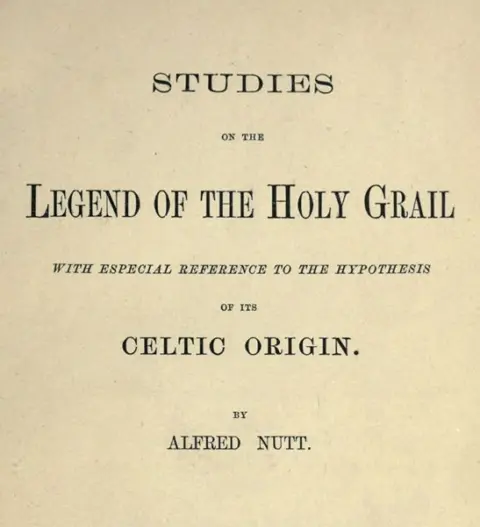
"Studies on the Legend of the Holy Grail" by Alfred Trübner Nutt is a scholarly publication written in the late 19th century. This work examines the various forms and origins of the Holy Grail legend, with a strong emphasis on its connections to Celtic traditions and influences. The book serves as both a study of the Grail Romance cycle and an investigation into the historical, literary, and mythical aspects of the legend. The opening of the scholarly work introduces the author’s intent to explore the different iterations of the Grail legend and their relationships to one another. It begins with a dedication to J. F. Campbell, highlighting the significance of Celtic tradition in Nutt's interpretation. The introduction outlines the structure of the studies, noting that the work does not aim for exhaustiveness but rather focuses on specific aspects of the Grail narrative. Nutt emphasizes the challenges historians face in tracing the origins of the Grail stories, navigating through various manuscripts and forms of the legend, while preparing to delve into the particulars of significant texts that have shaped the legend's evolution.
Introduction adapted from the source catalogue; source summaries may be automatically generated.
Free to read · English · 125,175 words · No account needed
MAKE TIME FOR A GOOD BOOK
On by default. Untick to stop anonymous reading totals. Each page counts after 10 seconds in view. How this works.
Anonymous counting is on unless you have switched it off.
=The Thornton MS. Sir Perceval.=--(1) PERCYVELLE is son of Percyvelle and Acheflour, Arthur's sister. His father is slain in a tournament by the Red Knight whom he had previously overcome in a former tournament. His mother takes to the woods, brings up her son without instruction till he is fifteen years, when she teaches him to pray to God. (2) He then meets with three knights of Arthur's court--Ewayne, Gawayne, and Kay. He takes them for gods. Learning that they are knights, he determines to go to Arthur's court and become a knight himself, catches a wild horse, and, returning to his mother, announces his attention. She counsels him to be always of measure, to salute knights when he meets them, and at his departure gives him a ring for token. (3) He sets forth, and finding on his way a house makes himself free of it, eats, drinks, and finding a lady sleeping on a bed takes from her her ring, leaving his mother's in its place. (4) Coming to Arthur's hall he rides into it and up to the King so that his mare kisses Arthur's forehead. He demands knighthood at Arthur's hands, threatening to slay him if refused. Arthur sees the likeness to his father, laments over the latter's untimely fate, and recalls that books say the son should avenge the father's bane. Percyvelle bids him let be his jangling and dub him knight. Whilst sitting down to table the Red Knight comes in, carries off Arthur's cup (five years long had he done so) none daring to hinder him. At the King's lament Percyvelle engages to slay the Red Knight, and bring the cup back if knighthood be granted him. The King promises, Percyvelle follows the ravisher, who scorns him, but is slain by a dart flung at him. He captures the knight's steed, and not being able otherwise to remove his armour, and recalling his mother's injunction "out of the iron burn the tree" kindles a fire to burn the body. Gawayne, who has followed him, shows him how to unlace the armour; when that is removed Percyvelle casts the body into the fire to roast. He refuses to return to Arthur, looking upon himself as great a lord as the King, but sends the cup back through Gawayne and rides on. (5) He meets an old witch, mother to the Red Knight, who addresses him as her son; her he spears and casts into the fire. (6) He meets ten knights, who flee, taking him for the Red Knight, but on his raising his vizor the oldest knight, reassured, relates how the Red Knight bore him and his sons enmity, and how, fifteen years before, he had slain his brother. Learning that Percyvelle had burnt his enemy, he invites him to his castle. (7) Whilst at meat a messenger comes in from the Maiden-land begging help from the Lady Lufamour against a "Sowdane," who would have her to wife. Percyvelle starts forth with three of the old knight's sons, whom, however, he sends back each after a mile. Meanwhile, the King at Carebedd, mourning for Percyvelle, receives Lufamour's messages, gains from him tidings of Percyvelle, and sets forth with his court to follow him. Percyvelle, coming to the Sowdane's camp, is set upon by the guard, but slays them all, and then lays him down to rest under the castle wall. In the morning Lufamour's men make her aware of the slaughter wrought upon her enemies. She perceives Percyvelle and sends her chamberlain, Hatlayne, to bid him to her chamber. Whilst at table together tidings are brought that the enemy have nearly taken the town. Percyvelle sallies forth alone and soon leaves not one alive. He is then ware of four knights--Arthur, Ewayne, Gawayne, Kay. He pricks against them and Gawayne receives his onslaught. They recognise each other, and all proceed to Lufamour's castle. The next day the Sowdane challenges all comers; Percyvelle, dubbed knight by Arthur, slays him, and thereafter weds Lufamour. (8) After a year he thinks on his mother's loneliness, and sets forth to seek her. Hearing a damsel lamenting in the wood, he finds her bound to a tree, for that a year before, while sleeping, a stranger had robbed her of a ring leaving his own in its stead. Now her ring was of a stone of such virtue that neither death nor hurt could come to the wearer. He releases her, overcomes the Black Knight who had bound her, reconciles them and claims his own ring for the ring he had taken. But the Black Knight has given it to the lord of the land--a giant. (9) Percyvelle slays the giant, and claims the ring of the porter. The latter tells him how his master, loving a fair lady, had offered her that same ring, but she, exclaiming that he had killed her son, rushed into the forest and was since then bereft of her senses. Percyvelle puts on a goat's skin, and after nine days search finds her. A magic drink of the giant's throws her into a three days' sleep, after which, restored to her right mind, she goes home with her son. He afterwards goes to the Holy Land, and is there slain.
Your reading position is saved on this browser. Take it to another device with a library code. Reading pages adapt to text, rather than matching a printed edition.
BEHIND THE BOOK
This eBook is for the use of anyone anywhere in the United States and most other parts of the world at no cost and with almost no restrictions whatsoever. You may copy it, give it away or re-use it under the terms of the Project Gutenberg License included with this eBook or online at www.gutenberg.org. If you are not located in the United States, you will have to check the laws of the country where you are located before using this eBook. Read the source licence.
The original source file, including credits and licence, is retained by this library. Request an original-format copy at no charge. Please include the book title and Project Gutenberg identifier #42205.
KEEP YOUR CURIOSITY GOING
Cécile Tormay

Moritz Busch
John L. Ransom

Maurice Baring
Frances Wright
Cécile Tormay