THE CLASSIC COLLECTION✦An outlaw’s diary: the CommuneCLASSIC FREE BOOKS
An outlaw’s diary: the Commune
Cécile Tormay
THE CLASSIC COLLECTION · 1888
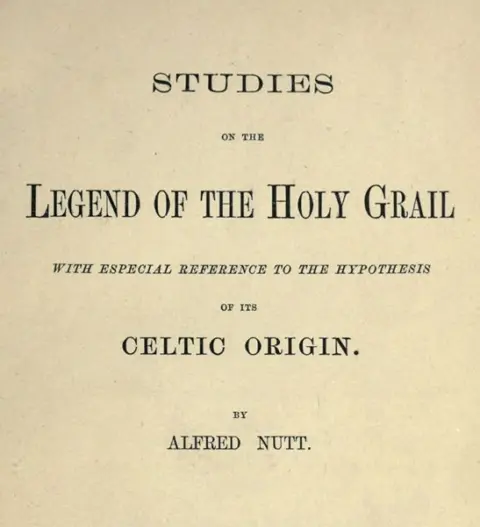
"Studies on the Legend of the Holy Grail" by Alfred Trübner Nutt is a scholarly publication written in the late 19th century. This work examines the various forms and origins of the Holy Grail legend, with a strong emphasis on its connections to Celtic traditions and influences. The book serves as both a study of the Grail Romance cycle and an investigation into the historical, literary, and mythical aspects of the legend. The opening of the scholarly work introduces the author’s intent to explore the different iterations of the Grail legend and their relationships to one another. It begins with a dedication to J. F. Campbell, highlighting the significance of Celtic tradition in Nutt's interpretation. The introduction outlines the structure of the studies, noting that the work does not aim for exhaustiveness but rather focuses on specific aspects of the Grail narrative. Nutt emphasizes the challenges historians face in tracing the origins of the Grail stories, navigating through various manuscripts and forms of the legend, while preparing to delve into the particulars of significant texts that have shaped the legend's evolution.
Introduction adapted from the source catalogue; source summaries may be automatically generated.
Free to read · English · 125,175 words · No account needed
MAKE TIME FOR A GOOD BOOK
On by default. Untick to stop anonymous reading totals. Each page counts after 10 seconds in view. How this works.
Anonymous counting is on unless you have switched it off.
Epilogue.--Merlin comes to Arthur's court and relates all that had taken place. The knights, finding the Quest of the Grail is over, and mindful of Merlin's former words, urge Arthur to invade the continent. He does so, overcomes Frollo, King of France; refuses tribute to the Emperor of Rome, overcomes him, but is recalled to England on learning Mordret's treachery. The latter is slain; but Arthur, wounded mortally, is carried to Avallon to be healed of Morguen, his sister. Lastly, Merlin tells Perceval how he will withdraw from the world, and be no more seen of men. And the tale says no more of Merlin and the Grail.
=The Mabinogi of Peredur ab Evrawc.=--Evrawc, Earl of the North, has seven sons, six of whom, like himself, fall in tournaments and combats. His wife carries off her youngest son, Peredur, to the desert, and forbids horses or arms being shown to him. He grows up strong and active, and can outrun his mother's goats and hinds. (1) One day he sees three knights passing--Gwalchmai, the son of Gwyar, and Geneir Gwystyl, and Owain, the son of Urien. His mother declares them to be angels; whereupon he determines to join them. He questions Owain concerning his accoutrements and the use of his weapons. His mother swoons away at the thought of his leaving her; but he picks out a horse and saddles it. Before leaving, his mother counsels him to repeat his paternoster wherever he sees a church; to take food and drink if none offer them; to aid when any outcry is, especially a woman's; if he sees a fair jewel to take it and give it to another; to pay his court to fair women whether they will or no. (2) After two days and nights Peredur comes to a tent, where he finds a damsel. Half of the food and drink she has he takes, half leaves to her; asks her for her ring at leaving, which she gives him. Her lord returning, is jealous, and sets forth to avenge his supposed wrong. (3) Peredur journeys on to Arthur's court. A knight has been there before him, and grievously insulted Gwenhwyvar by dashing a goblet of wine in her face, and carrying the goblet out, and has dared any to avenge the insult; but all hang their heads. Peredur enters the hall and demands knighthood. On Kai's protesting he is too meanly equipped, a dwarf, who, with his female companion has been a year at Arthur's court without speaking, salutes him as the flower of knighthood. Kai strikes him for this, and kicks the female dwarf, who repeats the salutation. Kai bids Peredur seek the knight and win back the goblet, then shall he have knighthood. Peredur does so, and slays the knight. Owain, who has followed, shows him how to undo the armour and to clad himself in it, and bids him back to Arthur. But Peredur refuses, he will not come back to the court till he have avenged the injury done by Kai to the dwarf and dwarfess. (4) Peredur overcomes sixteen knights and sends them to Arthur with the same message. (5) Peredur comes to a castle by a lake, and sees a venerable man sitting by the lake and his attendant fishing, and the old man is lame. And Peredur enters the castle, and is practised in the use of weapons, and learns courtesy and noble bearing; and the old man is his uncle--his mother's brother. He is to leave his mother's habits and discourse, and if he sees aught to wonder at, not to ask the meaning of it. (6) Peredur leaves his uncle and comes to a castle where dwells a second uncle of his--brother likewise of his mother. His strength is tested by his having to cut through an iron staple with a sword. Twice he does it and the broken pieces re-unite, but the third time neither would unite as before. He has arrived at two-thirds of his strength, and when he attains his full power none will be able to contend with him. Whilst talking, two youths enter the hall bearing a mighty spear with three streams of blood flowing from the point to the ground. All wail and lament; but as Peredur is not vouchsafed the meaning of what he sees he forbears to ask concerning it. Then enter two maidens with a salver in which a man's head swims in blood. The outcry redoubles. Peredur retires to sleep. (7) On the morrow, with his uncle's permission, he rides forth, finds a beautiful woman lamenting over the corpse of a knight. She reveals herself as his foster-sister; calls him accursed for causing his mother's death by leaving her; and tells him it is her husband she mourns for, slain by the Knight of the Glade. Peredur meets the latter, overcomes him, and makes him take his foster-sister in marriage. (8) Peredur comes to a castle where are eighteen youths and five maidens, and he had never seen one of so fair an aspect as the chief of the maidens. A flask of wine and six loaves are brought by two nuns, and that must suffice for all. The youths press the maiden to offer herself to Peredur as his wife or lady love. She refuses; but consents when they threaten leaving her to her enemies. She comes weeping to Peredur and relates how she is besieged by an earl who seeks her hand. She implores his aid, and offers to place herself in his hands. Peredur bids her go sleep, he will assist her, The next day he overthrows the master of the household of the earl. To save his life the latter must deliver up one-third of the besieged maiden's lands. The second day it fares the same with the earl's steward; the third with the earl himself. Peredur thus wins back all his hostess' lands, and tarries with her three weeks; but for her love he would not have stayed so long. (9) Peredur next meets the Lady of the Tent, ill-entreated of her husband concerning him. Him he overcomes, compels to acknowledge her innocence, and sends both to Arthur. (10) Peredur comes to the castle of a tall and stately lady, who bids him escape from the sorceresses of Gloucester, who will attack the castle that night; but he resolves to remain, and defends one of the watch when overtaken by a sorceress. The latter hails him by his name. She foreknows she is to suffer harm from him. If he will go with her he shall learn chivalry and the use of arms. Peredur consents on her promising to refrain from injuring the countess, and stays with her three weeks. (11) Peredur comes to a hermit's cell. In the morning it has snowed. A hawk has killed a fowl in front of the cell, but is scared away by Peredur's horse; a raven has alighted on the bird. Peredur likens the blackness of the raven and the whiteness of the snow and the redness of the blood to the hair and the skin and the two red spots on the cheeks of the lady he loves best. Whilst thus lost in thought, Arthur and his household come up with him, but fail to recognise him. A youth accosts him, but receives no answer; whereupon he thrusts at Peredur but is struck to the ground. Twenty-four youths essay the same, and are repulsed in like manner. Kai then comes and speaks angrily, but Peredur breaks his arms for him. Gwalchmai then approaches him courteously, learns his name, and brings him to Arthur, who does him honour. Thus all return to Caerlleon. (12) Peredur solicits the love of Angharad Law Eurawc, and when she denies him, vows to speak to no Christian till she loves him. (13) Peredur comes to the castle of a huge grey man, a heathen, after slaying a lion, his porter. The grey man's daughter warns him of her father, and at his request brings his horse and arms to his lodging. Peredur overcomes the vassals, and slays the sons of the grey man, and sends the whole household to Arthur to be baptized. (14) Peredur slays a serpent lying upon a gold ring, and wins the ring. For a long time he speaks to no Christian, and loses colour and aspect through longing for Arthur and his lady love. He returns to Arthur's court, but none know him, and he suffers Kai to thrust him through the thigh without his saying a word. He overcomes many knights, and at length Angharad Law Eurawc confesses her love for him. He remains at Arthur's court. (15) Peredur comes to the castle of a huge, black, one-eyed man. The latter's daughter warns him against her father. But Peredur stays, overcomes the latter, and learns how he lost his eye. On the Mound of Mourning is a cairn, in the cairn a serpent with a stone in its tail, the virtue whereof is to give as much gold to the possessor as he may desire. In fighting the serpent he had lost his eye. He directs Peredur to the serpent, and is slain by him. Peredur refuses the love of the maidens of the castle, and rides forth. (16) He comes to the palace of the son of the King of the Tortures. Every day the Addanc of the Lake slays them. Whilst at discourse a charger enters the hall with a corpse in the saddle. They anoint the corpse with warm water and balsam, and it comes to life. The same happens with two other youths. The morrow they ride forth anew against the Addanc, refusing Peredur, who would go with them; but he follows and finds seated on a mound the fairest lady, who, if he will pledge her his love, will give him a stone by which he may see the Addanc and be unseen of it. He promises, and she gives him the stone, telling him to seek her in India. Peredur passes through a valley wherein is a flock of white sheep, and one of black, and when they cross the river flowing through the valley they change colour. He learns of their shepherd the way to the Addanc's cave, slays it, meets his three companions of the night before, who tell him it was predicted that he should slay the monster, offers them its head, refuses their sister whom they proffer him in marriage; accepts the services of a youth, Etlym Gleddyv Coch, who wishes to become his attendant, and rides forth. (17) He comes to the court of the Countess of Achievements, overthrows her three hundred knights; but learning she loves Etlym resigns her to him. (18) Peredur, accompanied by Etlym, comes to the Mound of Mourning, slays two out of the three hundred knights he finds guarding the serpent, slays the latter, repays the remaining hundred knights all they have spent, gives Etlym the stone and sends him back to his love. (19) Peredur comes to a valley wherein are many coloured tents, lodges with a miller, from whom he borrows food and lodging, and learns that a tournament is forward. He overcomes all the knights present, and sends their horses and arms to the miller as repayment. The Empress of the Tournament sends for him, he repels her messengers thrice, the fourth time he yields. She reveals herself as the lady who had helped him against the Addanc, and she entertains him for fourteen years. (20) Arthur is at Caerlleon-upon-Usk, with him his knights, and among them Peredur. There enters, riding upon a yellow mule, a maiden of hideous aspect. She greets all save Peredur, to whom she reproaches his silence at the court of the Lame King; had he asked the meaning of the streaming spear and of the other wonders the King would have regained health and the dominions peace--all his misfortunes are due to Peredur. She then tells of a castle where are five hundred and seventy knights, each with the lady he loves best--there may fame be acquired; and of a castle on a lofty mountain where a maiden is detained prisoner, whoso should deliver her should attain the summit of the fame of the world. Gwalchmai sets forth to release the imprisoned maiden, Peredur to enquire the meaning of the bleeding lance. Before they leave a knight enters and defies Gwalchmai to single combat, for that he had slain his lord by treachery. (21) Gwalchmai meets a knight who directs him to his own castle, where he is welcomed by his sister. The steward of the castle accuses him to the knight of being the slayer of his, the knight's, father. Gwalchmai demands a year to acknowledge or deny the accusation. (22) Peredur, who, seeking tidings of the black maiden, but finding none, has wandered over the whole island, meets a priest who chides him for being in armour on Good Friday. Peredur dismounts, asks the priest's blessing, and learns of a castle where he may gain tidings of the Castle of Wonders. (23) Peredur proceeds thither, and meets the King of the castle, who commends him to his daughter, by whom he is well received. A little yellow page accuses him to the King of winning his daughter's love, and advises that he should be thrown into prison. But the damsel befriends him, and assists him to take part in a tournament, where, for three days, he overthrows all opponents. The King at last recognises him, and offers him his daughter; but he refuses and sets forth for the Castle of Wonders. (24) On arriving there he finds the door open, and in the hall a chessboard and chessmen playing by themselves. He favours one side which loses, whereupon he casts the chessboard in the lake. The black maiden comes in and reproaches him--he may find the chessboard again at the Castle of Ysbidinongyl, where a black man lays waste the dominions of the Empress. Him Peredur overcomes, but spares his life; this the black maiden chides him for, and he slays him; but the black maiden still refuses him access to the Empress unless he can slay a stag, swift as the swiftest bird, with one sharp horn in his forehead. She gives him a little dog belonging to the Empress which will rouse the stag. With its aid he slays the latter, but a lady, riding by, carries off the dog, and chides him for slaying the stag. He can only win her friendship by going to a cromlech which is in a grove, and challenging to fight three times a man who dwells there. Peredur complies, and fights with a black man clad in rusty armour; but when he dismounts his adversary disappears. (25) Peredur, riding on, comes to a castle where sits a lame grey-headed man, and Gwalchmai by him. A youth enters the hall and beseeches Peredur's friendship--he had been the black maiden who came to Arthur's court, and who had chid Peredur concerning the chessboard; he was the youth who came with the bloody head in the salver, and the head was that of Peredur's cousin slain by the sorceresses of Gloucester, who also lamed Peredur's uncle, and he, the speaker, was Peredur's cousin. Peredur seeks aid of Arthur, and they start against the sorceresses. One of the latter slays three of Arthur's men; whereupon Peredur smites her, and she flees, exclaiming this was Peredur, who had learnt chivalry of them, their destined slayer. She and all her companions are slain. Thus is it related concerning the Castle of Wonders.
Your reading position is saved on this browser. Take it to another device with a library code. Reading pages adapt to text, rather than matching a printed edition.
BEHIND THE BOOK
This eBook is for the use of anyone anywhere in the United States and most other parts of the world at no cost and with almost no restrictions whatsoever. You may copy it, give it away or re-use it under the terms of the Project Gutenberg License included with this eBook or online at www.gutenberg.org. If you are not located in the United States, you will have to check the laws of the country where you are located before using this eBook. Read the source licence.
The original source file, including credits and licence, is retained by this library. Request an original-format copy at no charge. Please include the book title and Project Gutenberg identifier #42205.
KEEP YOUR CURIOSITY GOING
Cécile Tormay

Moritz Busch
John L. Ransom

Maurice Baring
Frances Wright
Cécile Tormay