THE CLASSIC COLLECTION✦An outlaw’s diary: the CommuneCLASSIC FREE BOOKS
An outlaw’s diary: the Commune
Cécile Tormay
THE CLASSIC COLLECTION · 1888
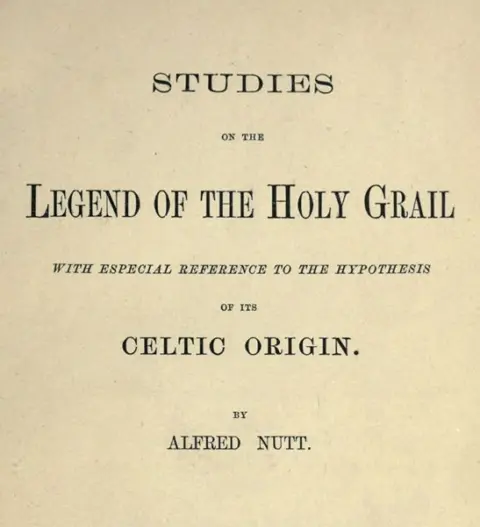
"Studies on the Legend of the Holy Grail" by Alfred Trübner Nutt is a scholarly publication written in the late 19th century. This work examines the various forms and origins of the Holy Grail legend, with a strong emphasis on its connections to Celtic traditions and influences. The book serves as both a study of the Grail Romance cycle and an investigation into the historical, literary, and mythical aspects of the legend. The opening of the scholarly work introduces the author’s intent to explore the different iterations of the Grail legend and their relationships to one another. It begins with a dedication to J. F. Campbell, highlighting the significance of Celtic tradition in Nutt's interpretation. The introduction outlines the structure of the studies, noting that the work does not aim for exhaustiveness but rather focuses on specific aspects of the Grail narrative. Nutt emphasizes the challenges historians face in tracing the origins of the Grail stories, navigating through various manuscripts and forms of the legend, while preparing to delve into the particulars of significant texts that have shaped the legend's evolution.
Introduction adapted from the source catalogue; source summaries may be automatically generated.
Free to read · English · 125,175 words · No account needed
MAKE TIME FOR A GOOD BOOK
On by default. Untick to stop anonymous reading totals. Each page counts after 10 seconds in view. How this works.
Anonymous counting is on unless you have switched it off.
(1) Arthur proposes holding a tournament at Easter, the greatest the world had seen, to honour the Round Table. Perceval at first takes no part in the tournament; but afterwards, for love of Aleine, niece of Gauvain, who incites him thereto, and sends him a suit of red armour, he enters the lists unknown, and overbears all opponents, so that all say he should fill the empty place at the Round Table. Perceval claims the empty place from the King, and when refused threatens to return to his land and never visit the court again. Arthur yields, and Perceval seats himself. Then the rocks and the earth groan dolorously, and a voice reproaches Arthur with having disobeyed Merlin's command. Were it not the goodness of Alein le Gros Perceval had died the death of Moys. Now should Arthur know the vessel our Lord gave Joseph was in the keeping of the rich fisher, and he was ill and infirm, and until the best knight in the world should come might not die. And when that knight should come to the rich fisher and ask concerning the vessel, then should he be cured, but die within three days after giving the vessel to that knight, and teaching him the secret words handed down by Joseph. Thus the enchantments of Britain should cease. (2) Perceval swears not to lie one night where he had lain the night before till he find the rich fisher. Gauvain, Sagremors, Beduers, Hurgains, and Erec swear the same. The knights set forth amid general lamentation. They part at a chapel, and the story follows Perceval. (3) He comes, after two days, upon a damsel weeping over a knight, Hurganet, one of the Round Table, who had gone forth on the Grail Quest. He had delivered her from a giant, and ridden with her into a tent where they found knights and ladies, who warned them not to await the owner, the "Orgoillos Delandes," who would kill him. And whilst speaking a dwarf entered, scourge in hand, who threw down the tent. The Lord of the Tent then appeared, clad in red armour, and slew Hurganet. Perceval determines to avenge his death; rides to the tent with the damsel; is warned of its inmates; is surprised by the dwarf, who smites the damsel with his scourge, whereupon Perceval fells him to the ground. The Knight of the Tent appears; after a desperate struggle Perceval overcomes him and sends him with the damsel to Arthur's court. She had fain stayed with him, but he thought of other things. (4) Perceval comes to the finest castle in the world, enters, and finds no inhabitant. Only a chessboard he finds. He begins to move the pieces, and they play against him, and he is checkmated three times running. Full of anger he prepares to throw the chessmen into the castle moat--suddenly a damsel shows herself and reproaches him. He will abstain if she comes to him. She consents, and after her squires and maidens have disarmed Perceval he joins her. Overcome by her beauty he requests her love. She will grant it him if he capture the white stag of the wood. She lends him her hound, and recommends him to take the utmost care of it. Perceval chases the stag, captures it, and, having cut off its head, starts back. But meanwhile an old woman has carried off the hound. She will only give it up if Perceval will go to a grave whereunder is a knight painted, and say: "Felon, he that put you there." Perceval complies; whereupon appears a knight on a black horse armed in black. They strive, and Perceval overcomes him. But meantime a second knight has carried off both the stag's head and the hound from the old woman. Perceval's adversary flees to the tomb, which closes upon him, and Perceval follows the second knight after a vain attempt to get help from the old woman. (5) Him he found not; but after feats longer than I can tell, comes to his father's house, where he was born. He only finds his sister and a niece. The former tells him concerning her brother, who went to Arthur's court; whereupon their mother died of grief. Perceval reveals himself, and is amazed at what she relates concerning the Grail and its guardian, and asks if he may come to behold it. She answers, Yes; whereupon he vows not to rest till he have found it. She attempts to dissuade him, but he remains firm. She then urges him to go to their uncle, who is a hermit, to whom he may confess the sin of his mother's death, and who will advise him concerning the Quest. (6) Both proceed thither. He rejoices to see them, and asks if Perceval has been to the house of his father, guardian of the vessel named Grail, and, on hearing that he has not, tells him how at the table which Joseph and himself had made, the voice of the Holy Ghost had come to them, telling them to go westward, and ordering the rich fisher, his father, to come to that land where the sun goes down (avaloit), telling him he should not die till the son of Alein had become the best knight in the world. Perceval had been chosen to do his Lord's service; he is to slay no knight nor to lie with any woman, that being luxurious sin. His sins have prevented his reaching Brons. He is to be careful to keep himself from sin and felony, being of a race our Lord so loved that He committed His blood to their keeping. Much else he says, and on the morrow Perceval and his sister ride forth. (7) They meet a knight who challenges them. Perceval, thinking of the damsel who had given him the hound, at first pays no attention, but then overcomes and slays him. Perceval is much grieved at having so soon broken his uncle's injunction. On the morrow he leaves his sister, promising to return so soon as he may. (8) He meets a knight, accompanied by a damsel the most wonderfully ugly nature ever made, whereat he signs himself and laughs. The knight, indignant, challenges him, but is overcome and sent with the damsel to Arthur's court. Kay makes mock of them; but Arthur reproves him and receives them courteously. They remain at the court, and know that she was the most beautiful woman in the world! (9) Perceval comes to a ford and is challenged by its guardian, whom he overcomes. His name is Urban of the Black Thorn; his lady had set him to guard the ford. Her castle vanishes with a great noise, and she comes to her lover's aid with her maidens in shape of birds. Perceval slays one who becomes a woman, and is carried off by the others to Avallon. (10) Perceval comes to a tree at the crossing of four roads, among its branches he sees two naked children of seven years old. They speak to him concerning the Grail, and direct him to take the road to the right. They vanish, and a voice tells him to heed their counsel. (11) Perceval comes to a river whereon are three men in a boat, and the master of the boat bids him go down the stream till he should come to his house. Perceval rides a whole day without finding it, and curses the fisher. At last he comes to a castle with lowered drawbridge, enters, and is robed in scarlet by two squires. Meanwhile four attendants have carried the Fisher King, father of Alein, and grandfather of Perceval, into the hall. The King wished to do Perceval what honour he might. They eat, and whilst at table a squire comes out of a chamber, and brings in both hands a lance, whence flows a drop of blood. Him follows a damsel bearing two silver plates and clothes; then a squire with a vessel in which was our Lord's blood. All bow as he passes, and Perceval had fain asked, but he fears to displease the King, minding him of the worthy man to whom he had confessed, and who forbade his speaking too much and enquiring overmuch--for a man of idle words is displeasing to our Lord. All night Perceval thinks of the lance and of the Grail, and in the morning, on waking, finds neither man nor woman. He sets forth to seek some one, but in vain, and is greatly distressed. (12) He finds a damsel weeping bitterly, who, seeing him, cries out: "Percevaux le Gallois, be accursed, unhappier art thou than ever, having been in the house of the rich Fisher King, and not having asked concerning the Grail. Thy Lord hates thee; and 'tis wonder the earth do not open beneath thee." Had he not seen Grail and lance pass? Had he asked what one did with them, the King, cured of his infirmity, would have returned to his youth; our Lord's prophecy to Joseph been fulfilled, and the enchantments of Britain undone. But Perceval is neither wise, valiant, nor true man enough to have charge of the blood. But he shall come again and ask concerning the Grail, and his grandfather shall be cured. (13) The damsel departs, and Perceval, unable to find his grandfather's house, rides on and comes to a tree under which a damsel is sitting, and in whose branches the stag's head, which had been carried off from him, is hanging. Perceval takes it, and when his hound following a stag comes up, takes possession of it likewise. But the knight who had taken them appears. Perceval fights with and overcomes him; learns that he is the brother of the Knight of the Tomb, who lives therein with his love, sister of the damsel for whose sake Perceval had hunted the stag. To her Perceval now returns, gives her hound and stag's head, and then departs refusing the offer of her love, even to stop one night with her. (14) Perceval wanders for seven years achieving many feats, and sending more than one hundred knights prisoners to Arthur; but, not being able to find his grandfather's house, he falls into such melancholy as to lose his memory, so that he minds him no more of God, and never enters Church. One Good Friday, fully armed, he meets a knight and ladies in penitents' dress, who reproach him for going armed on a day that our Lord was crucified. Perceval repents; returns to his uncle, the hermit; learns that his sister is dead, and does penitence. The songmen, in their pleasing rhymes, say nothing of this; but we tell you of it as we find it in the tale Merlin made Blaise write down. (15) Perceval rides forth and meets seven squires of Melianz de Liz, who is going to a tournament at the White Castle, the damsel of which is to be the victor's prize. All the knights of the Round Table will be there, having returned that Whitsuntide from the Quest of the Grail without achieving aught. Perceval leaves the squires and come to a castle where he puts up. His host urges him to take part in the tournament. The morrow they ride forth and look on; Melianz wears the scarf of the lady of the castle; he and Gauvain prove themselves the best knights, the onlooking ladies know not to whom to award the prize. The next day, Perceval, having resolved upon taking part, accepts the scarf of his host's daughter, overcomes all adversaries, and sends steeds to the lady in return for her scarf. Being asked by his host if he will not woo the damsel of the White Castle, Perceval answers he may not take wife. Then appears an old man who reproaches Perceval for going to a tournament, and with forgetting his vow to sleep no two nights in the same house till the Quest be accomplished. He is Merlin, come from Hortoblande, to say that owing to the prayers of Perceval's uncle, our Lord wills that the latter may have his blood to keep. He is to go to his grandfather. Perceval asks when he shall get there. "Before a year," is the answer. "'Tis a long time." "Not so," says Merlin, who leaves him, and tells all to Blaise, from whose writing we know of it. (16) That same night Perceval comes to his grandfather's house, is received by the Fisher King, and as they sit at table the Grail appears, and the relics with it, and when Perceval sees it he asks to what use is the vessel put? Forthwith the King is cured, and his being changed. Perceval must say first who he is before learning such holy things. Upon learning it is his grandson before him, the King leads him to the Grail, and tells him with this lance Longis pierced the side of Jesus Christ, whom he knew in the flesh. In this vessel is the blood, Joseph caught as it ran to the ground. It is called Grail because it is agreeable to worthy men; none may sin in its presence. Then Brons, kneeling, prays, and the voice of the Holy Ghost tells him the prophecy will be fulfilled; and he is to teach Perceval the secret words our Lord on the cross told Joseph, and Joseph told him. He does, but I cannot and may not say what these words were. Then angels carry him off; and Perceval remains, and the enchantments of Britain and of the whole world cease. And that same day Arthur and his knights sitting at the Round Table are aware of a great noise, and the seat is made whole again which had broken under Perceval. Merlin appears to Blaise, tells him his work is ended, and takes him to Perceval, who was right glad of his company.
Your reading position is saved on this browser. Take it to another device with a library code. Reading pages adapt to text, rather than matching a printed edition.
BEHIND THE BOOK
This eBook is for the use of anyone anywhere in the United States and most other parts of the world at no cost and with almost no restrictions whatsoever. You may copy it, give it away or re-use it under the terms of the Project Gutenberg License included with this eBook or online at www.gutenberg.org. If you are not located in the United States, you will have to check the laws of the country where you are located before using this eBook. Read the source licence.
The original source file, including credits and licence, is retained by this library. Request an original-format copy at no charge. Please include the book title and Project Gutenberg identifier #42205.
KEEP YOUR CURIOSITY GOING
Cécile Tormay

Moritz Busch
John L. Ransom

Maurice Baring
Frances Wright
Cécile Tormay