THE CLASSIC COLLECTION✦An outlaw’s diary: the CommuneCLASSIC FREE BOOKS
An outlaw’s diary: the Commune
Cécile Tormay
THE CLASSIC COLLECTION · 1918
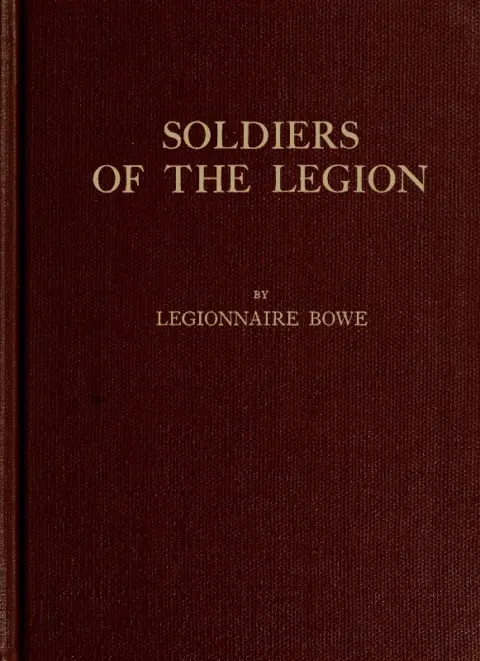
"Soldiers of the Legion, Trench-Etched" by John Bowe is a historical account written in the early 20th century. This narrative sheds light on the experiences of American volunteers who enlisted in the French Foreign Legion during World War I, aiming to capture the essence of camaraderie, sacrifice, and the diverse backgrounds of the legionnaires. The author, a veteran himself, aims to provide both a personal and broader view of these soldiers' motivations and encounters on the battlefield. At the start of the book, Bowe introduces his own journey as he prepares to join the Foreign Legion in France. He recounts his initial experiences at the Hotel des Invalides in Paris, where a mix of international soldiers undergoes intense training amid the backdrop of an advancing German army. The narrative emphasizes the harsh conditions, the diverse personalities present, and the immediate need for men at the front, ultimately highlighting the strong sense of unity and equality among the legionnaires, despite their varied origins. As Bowe transitions into his training, the opening sets the stage for a gripping exploration of war, identity, and the shared human experience amidst the chaos of conflict.
Introduction adapted from the source catalogue; source summaries may be automatically generated.
Free to read · English · 44,707 words · No account needed
MAKE TIME FOR A GOOD BOOK
On by default. Untick to stop anonymous reading totals. Each page counts after 10 seconds in view. How this works.
Anonymous counting is on unless you have switched it off.
The night before the attack of September 25, 1915, Bouligny and I went over to Battalion C. He picked up a piece of cheese that Morlae had. Munching away, he demanded, “Where did you get this?”
“In Suippe.”
“I thought we were forbidden to go out.”
“We are.”
“How did you get by?”
“I told the sentry I did not speak French, showed him my old Fourth of July pass, and walked through.”
Bouligny said: “Well, we will eat this cheese so they’ll have no
evidence against you.”
Morlae replied: “We shall need somebody to help carry the load we have
stacked up.”
“What have we got?” inquired Casey.
“Two canteens of wine instead of one.”
“Good,” said Casey.
“And 250 rounds of cartridges instead of 120,” called Nelson.
“And a steel helmet, instead of a cloth cap,” from Dowd.
“And four days’ reserve of food instead of two,” added King.
“And a new knife for the nettoyers” (moppers-up), put in Scanlon.
“And a square white patch of cloth sewed on our backs, so our own artillerymen can recognize and not blow us up,” finished John Laurent.
“I’d rather be here, leaning against this tree,” said Chatcoff, “than in little old New York, backed against a telephone pole, trying to push it into the North River.”
“Yes,” agreed Seeger, “this is the life. The only life worth living is when you are face to face with death—midway between this world and the next.”
For one week the Legion had marched each night fifteen kilometers to the front, dug trenches and returned to camp in the early morning. Again that night we went out, and daylight, September 25, found us established in a badly demolished trench from which we emerged at the time set for the attack, 9:15.
The four hours between daylight and the attack were passed under a furious bombardment. Many were killed or wounded while we waited to go over the top.
The French had, unknown to the Germans, brought up their 75 cannon and dug them down in another trench 25 yards behind us. The din was terrific. Smoke screens and gas shells nearly blinded us. Men were uneasy and dodged. The captain caught a fellow flopping. “Here, you young whelp, don’t you know that noise comes from our own guns behind?”
Pera, a Tunis Jew, tore open his first aid bandage and we filled our ears with cotton to deaden the noise.
The attack was carried out by seven long lines of soldiers advancing two yards apart, each line about 100 yards behind the other.
Your reading position is saved on this browser. Take it to another device with a library code. Reading pages adapt to text, rather than matching a printed edition.
BEHIND THE BOOK
This eBook is for the use of anyone anywhere in the United States and most other parts of the world at no cost and with almost no restrictions whatsoever. You may copy it, give it away or re-use it under the terms of the Project Gutenberg License included with this eBook or online at www.gutenberg.org. If you are not located in the United States, you will have to check the laws of the country where you are located before using this eBook. Read the source licence.
The original source file, including credits and licence, is retained by this library. Request an original-format copy at no charge. Please include the book title and Project Gutenberg identifier #54057.
KEEP YOUR CURIOSITY GOING
Cécile Tormay

Moritz Busch
John L. Ransom
Frances Wright
Cécile Tormay

Mabel Potter Daggett