THE CLASSIC COLLECTION✦A dead man’s diaryCLASSIC FREE BOOKS
A dead man’s diary
Coulson Kernahan
THE CLASSIC COLLECTION · 1916
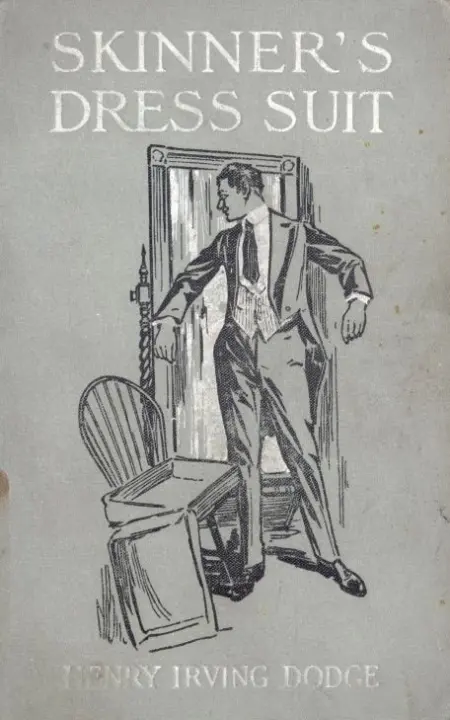
"Skinner's Dress Suit" by Henry Irving Dodge is a novel written in the early 20th century. The story revolves around the central character, Skinner, a cashier at McLaughlin & Perkins, who is trapped in his mundane job and longs for a raise to accommodate his wife's aspirations. The narrative explores themes of self-esteem, ambition, and the transformative power of outward appearances, particularly highlighted by Skinner's apprehensions and dreams associated with his desire for a dress suit. The opening of the book introduces Skinner, affectionately dubbed the "cage man" by messenger boys, who is gripped by anxiety over asking his boss for a raise. Skinner's fears stem not from physical intimidation, but from his internal struggle and fear of failure, as he has always strived to be a hero in the eyes of his supportive wife, Honey. The narrative captures his reluctance and reflections on their modest savings, the sacrifices Honey has made, and the pressure he feels to prove himself. Ultimately, the stage is set for Skinner's journey as he steps out of his comfort zone, seeking validation and transformation through the lens of social status and material success, embodied by the coveted dress suit.
Introduction adapted from the source catalogue; source summaries may be automatically generated.
Free to read · English · 26,756 words · No account needed
MAKE TIME FOR A GOOD BOOK
On by default. Untick to stop anonymous reading totals. Each page counts after 10 seconds in view. How this works.
Anonymous counting is on unless you have switched it off.
Skinner's feelings were not of the most amiable when on Saturday he drew his first check on his own private bank account to pay himself his first week's raise. And he swore lightly as he realized that this would be a weekly reminder of his folly, perhaps for years to come.
But Honey chirked up wonderfully when he handed her the "extra ten." "I'll deposit this the first thing Monday morning," she cried. "I'm so glad we're beginning to put money back into the bank--we've drawn so much out. And we 'll do it every week until we've paid back every cent we took out!"
And Skinner was glad that she was glad, although he reflected that her process of putting money back into the bank as fast as he drew it out would be about as effectual as the efforts of a squirrel in a little wire treadmill!
At dinner the Skinners opened their hearts to each other. Dearie took out his little book containing the dress-suit account and read off the items to Honey. The balance seemed to be heavily on the debit side.
"Well," said Skinner, "there won't be any more debits, anyway. We've spent all we're going to spend--and don't you forget it! I promise you that!"
"We don't need to spend any more," said Honey. "We have our clothes."
"Yes," said Skinner, "so we have."
"Cheer up, Dearie. There's one thing you forgot to put down to the credit of that dress-suit account. It has made your little wifey very, very happy!"
Honey put her head on Dearie's shoulder.
"For that reason," said Skinner, "and for that alone"--he winked
solemnly at the wall over Honey's shoulder--"it has made me very
happy!"
He stroked Honey's glossy hair and held her close.
"No," said Honey, resuming her place at the table, which she had left in her exuberance to give Dearie a hug, and knitting her brows, "there's no way of spending any more money. We've made our original investment."
"The initial cost," Dearie corrected.
"We've invested in ourselves," Honey went on.
"Yes, and we've bought our own bonds," Skinner added.
"And they'll pay better than any old bank," cried Honey. Then quickly, "But we won't buy any more!"
"There are other financial stunts besides putting money in the bank," observed Skinner. "Look at Lewis. He invested in himself."
"Just as we're doing," Honey broke in.
"Er--not precisely," Skinner qualified. "But his investment has already returned self-respect, social opportunity, enhanced efficiency."
"And he has n't half as much brains as you have!"
Your reading position is saved on this browser. Take it to another device with a library code. Reading pages adapt to text, rather than matching a printed edition.
BEHIND THE BOOK
This eBook is for the use of anyone anywhere in the United States and most other parts of the world at no cost and with almost no restrictions whatsoever. You may copy it, give it away or re-use it under the terms of the Project Gutenberg License included with this eBook or online at www.gutenberg.org. If you are not located in the United States, you will have to check the laws of the country where you are located before using this eBook. Read the source licence.
The original source file, including credits and licence, is retained by this library. Request an original-format copy at no charge. Please include the book title and Project Gutenberg identifier #26080.
KEEP YOUR CURIOSITY GOING
Coulson Kernahan

Maurice Baring
Frances Wright
Cécile Tormay

Frederic Jesup Stimson

W. H. P. (William Henry Pope) Jarvis