THE CLASSIC COLLECTION✦A dead man’s diaryCLASSIC FREE BOOKS
A dead man’s diary
Coulson Kernahan
THE CLASSIC COLLECTION · 1916
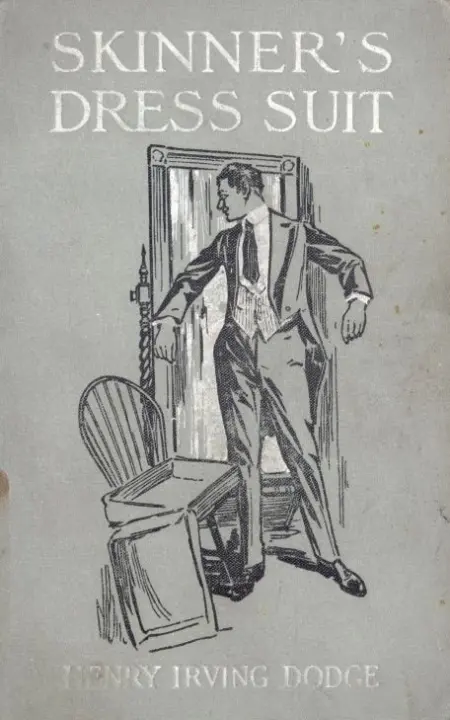
"Skinner's Dress Suit" by Henry Irving Dodge is a novel written in the early 20th century. The story revolves around the central character, Skinner, a cashier at McLaughlin & Perkins, who is trapped in his mundane job and longs for a raise to accommodate his wife's aspirations. The narrative explores themes of self-esteem, ambition, and the transformative power of outward appearances, particularly highlighted by Skinner's apprehensions and dreams associated with his desire for a dress suit. The opening of the book introduces Skinner, affectionately dubbed the "cage man" by messenger boys, who is gripped by anxiety over asking his boss for a raise. Skinner's fears stem not from physical intimidation, but from his internal struggle and fear of failure, as he has always strived to be a hero in the eyes of his supportive wife, Honey. The narrative captures his reluctance and reflections on their modest savings, the sacrifices Honey has made, and the pressure he feels to prove himself. Ultimately, the stage is set for Skinner's journey as he steps out of his comfort zone, seeking validation and transformation through the lens of social status and material success, embodied by the coveted dress suit.
Introduction adapted from the source catalogue; source summaries may be automatically generated.
Free to read · English · 26,756 words · No account needed
MAKE TIME FOR A GOOD BOOK
On by default. Untick to stop anonymous reading totals. Each page counts after 10 seconds in view. How this works.
Anonymous counting is on unless you have switched it off.
As a matter of fact, Miss Mayhew had never taken the trouble to notice the Skinners, but now that Skinner had made an impression on the exclusive Mrs. Crawford, that altered the case.
"I'm glad," said Mrs. Crawford. "Go get him."
Skinner found Mrs. Crawford most engaging. She was neither haughty nor full of the pedantry with which social leaders try to disabuse the mind of the ordinary citizen that the rich must necessarily be dubs. Twenty minutes later, Deacon Crawford came up and Skinner was presented.
"I'm mighty glad to know you, Mr. Skinner," said the deacon. "Some views I heard you expressing just now were quite in accord with my own."
Skinner left the Crawfords presently with his head in the clouds. But he was brought down to earth by some one plucking him by the sleeve.
"Gee, Skinner, where did you get it?" said Allison, who stood there in
a sack suit, grinning.
"Like it?" said Skinner, pleased.
"You bet! It's a Jim Lulu!"
"My wife made me get it," said Skinner, winking at Allison.
"Well, I hope you'll continue to recognize us," said Allison--and Skinner again felt the touch of envy, but he did n't like it, for Skinner was no snob.
As Skinner and Honey were departing, Lewis touched him on the arm. "We'll drop you and Mrs. Skinner at the house," he said. "We've plenty of room in our car."
The Lewises and the Skinners bade each other a very cordial, if not affectionate, good-night when Lewis's car pulled up at Skinner's door.
"Can you beat it?" said the "cage man" as they closed the door behind them. "Lewis has scarcely noticed me for two years."
"It was the dress suit, Dearie."
"It's earned a dollar and a half already."
"How?" said Honey, surprised.
"Cab fare! Say, I'm going to keep an account of what this dress suit actually cost me and what it brings in," said Skinner.
"And to think of it, Dearie,--it's all because of your getting that
raise."
Honey laid her head on Dearie's shoulder, as she always did when she
felt sentimental.
"Eh-huh," said Skinner absently.
"I'm so grateful to think you got it--I just couldn't help telling Mrs.
McLaughlin--"
"Huh?" Skinner interrupted. "You did n't mention that raise to Mrs.
McLaughlin, did you?"
"Why should n't I?"
"But did you?" said Skinner, with apprehension.
"Why, no. I simply told her I was so grateful for the mark of
appreciation they'd shown!"
"And what did Mrs. McLaughlin say?"
"She asked me what I meant."
"And what did you say?"
"I told her her husband would understand and I wanted him to know just
how I felt about it."
Your reading position is saved on this browser. Take it to another device with a library code. Reading pages adapt to text, rather than matching a printed edition.
BEHIND THE BOOK
This eBook is for the use of anyone anywhere in the United States and most other parts of the world at no cost and with almost no restrictions whatsoever. You may copy it, give it away or re-use it under the terms of the Project Gutenberg License included with this eBook or online at www.gutenberg.org. If you are not located in the United States, you will have to check the laws of the country where you are located before using this eBook. Read the source licence.
The original source file, including credits and licence, is retained by this library. Request an original-format copy at no charge. Please include the book title and Project Gutenberg identifier #26080.
KEEP YOUR CURIOSITY GOING
Coulson Kernahan

Maurice Baring
Frances Wright
Cécile Tormay

Frederic Jesup Stimson

W. H. P. (William Henry Pope) Jarvis