THE CLASSIC COLLECTION✦An outlaw’s diary: the CommuneCLASSIC FREE BOOKS
An outlaw’s diary: the Commune
Cécile Tormay
THE CLASSIC COLLECTION · 1899
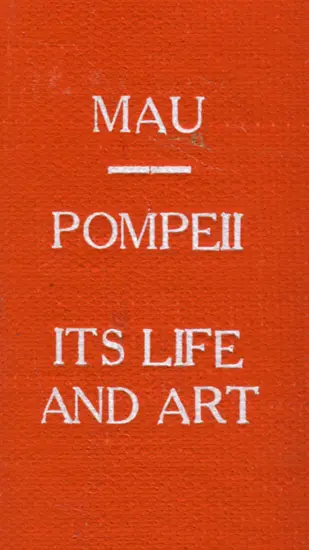
"Pompeii, Its Life and Art" by August Mau is a detailed historical account written in the late 19th century. The book explores the ancient city of Pompeii, focusing on its history, culture, architecture, and art, particularly in the context of its tragic destruction by the eruption of Mount Vesuvius in 79 A.D. The author showcases his extensive research and personal engagement with the archaeological site, offering insights into the rebuilding efforts of its citizens, the lives they led, and the remnants of their civilization. The opening of the work presents a comprehensive introduction to Pompeii's geographical context and historical significance. Mau vividly describes the city's strategic location near Vesuvius and its surrounding fertile landscape, which contributed to its prosperity. He sets the stage for a discussion of Pompeii's urban development prior to the devastating eruption, highlighting essential details about its inhabitants, their cultures, and the eventual transformations they underwent leading up to 79 A.D. Through a careful examination of evidence from the excavation of the city, the opening frames an essential understanding of Pompeii's vibrant life before its destruction, preparing readers for a deeper exploration of the archaeological findings that follow.
Introduction adapted from the source catalogue; source summaries may be automatically generated.
Free to read · English · 177,872 words · No account needed
MAKE TIME FOR A GOOD BOOK
On by default. Untick to stop anonymous reading totals. Each page counts after 10 seconds in view. How this works.
Anonymous counting is on unless you have switched it off.
bacchantes, 326, 336, 448, 468, 473.
bacchic figures in capitals of columns, 309, 349;
in paintings, 329.
Bacchus, reliefs of Blue Glass Vase, 415;
triumph of, 336;
in paintings, 88, 354;
as tutelary divinity, 236, 417;
finds Ariadne, 339, 354, 480;
in sculptures, 175, 325, 448.
bakery, arrangements of, 386-392.
Basilica, 52, 70-79.
bath, toilet appliances of, 377.
Baths, public, 186-189;
Stabian, 189-201;
Baths near the Forum, 202-207;
Central Baths, 208-211;
Baths, private, of M. Crassus Frugi, 408; in houses, 267, 297, 306-307, 346, 357, 362-363.
Bay of Naples, 2, 6, 358.
bisellium, 369, 370, 421, 423.
block. See Insula.
Boccharis, myth of, 17.
Bonaparte, Joseph, excavations under, 27.
Boscoreale, villa rustica at, 14, 361-366;
treasure of, 366, 380-382, 507-508.
bricks, Pompeian, 36.
Briseis, delivered to the messenger of Agamemnon,
painting, 316-318.
building materials, 35-36.
bust stones, 412, 418, 421, 428, 432 et seq.
L. Caecilius Jucundus, herm of, 447, 477;
house of, height of shops, 276;
cellar of, 268;
decoration of tablinum, 348, 479;
meeting in house of, 496;
names of sons of, 507;
receipts of, 499-505;
relief in the house of, 64.
Your reading position is saved on this browser. Take it to another device with a library code. Reading pages adapt to text, rather than matching a printed edition.
BEHIND THE BOOK
This eBook is for the use of anyone anywhere in the United States and most other parts of the world at no cost and with almost no restrictions whatsoever. You may copy it, give it away or re-use it under the terms of the Project Gutenberg License included with this eBook or online at www.gutenberg.org. If you are not located in the United States, you will have to check the laws of the country where you are located before using this eBook. Read the source licence.
The original source file, including credits and licence, is retained by this library. Request an original-format copy at no charge. Please include the book title and Project Gutenberg identifier #42715.
KEEP YOUR CURIOSITY GOING
Cécile Tormay

Moritz Busch
John L. Ransom
Frances Wright
Cécile Tormay

Mabel Potter Daggett