
Switch off
Oliver Optic
THE CLASSIC COLLECTION · 1898
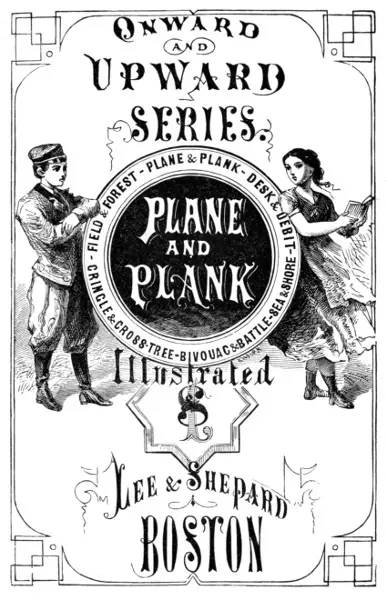
"Plane and Plank; or, The Mishaps of a Mechanic" by Oliver Optic is a novel written in the late 19th century. The story revolves around Phil Farringford, a young mechanic navigating the challenges of his trade and the society around him while exploring themes such as personal growth, morality, and the impact of intemperance. Set against the backdrop of the Missouri River and St. Louis, the book delves into Phil's aspirations to master carpentry while facing obstacles that reflect broader social issues. The opening of the narrative introduces Phil Farringford as he travels on a steamboat along the Missouri River, filled with curiosity and determination to learn a trade. Engaging in conversation with Mr. Gracewood, Phil expresses his desire to become a mechanic, showing both excitement and trepidation about his future. Upon arriving in St. Louis, he encounters Mr. Leonidas Lynchpinne, who initially appears friendly but ultimately tricks him into losing his money during a gambling incident. This initial mishap sets the stage for Phil’s journey as he navigates the complexities of life as a mechanic, setting a tone for the challenges and moral lessons that will unfold throughout the story.
Introduction adapted from the source catalogue; source summaries may be automatically generated.
Free to read · English · 55,862 words · No account needed
MAKE TIME FOR A GOOD BOOK
On by default. Untick to stop anonymous reading totals. Each page counts after 10 seconds in view. How this works.
Anonymous counting is on unless you have switched it off.
"You were robbed in the territory of Kansas, and not in the city of St. Louis," replied the officer.
"Must I lose my money for that reason?"
"Certainly not; but the complaint against Lynch must be made at Leavenworth, and a requisition from the governor of the territory must be sent here."
The case was full of difficulties, and Lynch, in charge of a policeman, was sent out of the room to enable us to consider the best means of proceeding. I could not go back to Leavenworth very conveniently, and it would cost me more than the amount of money I had lost. We decided to let the matter rest till the next day, and Lynch was called in again.
"I propose to detain you till to-morrow, when Farringford will complain of you for an assault," said the officer.
"I would rather give a hundred dollars than be detained," said Lynch.
"We don't settle cases in that way. Of course we intend to reach the robbery matter in some manner."
"I will give the boy the money he claims to have lost," added the
culprit.
"If you wish to restore the money, you can," replied the sergeant.
"I do not admit the truth of his story."
"Then you shall not give him any money. You shall not be swindled here."
"If I admit the--"
"Don't commit yourself unless you choose to do so. Whatever you say may be used as evidence to convict you."
"You put me in a tight place," said Lynch. "If I commit myself, you will prosecute me. If I don't commit myself, I cannot give the boy the money."
"I did not say I should prosecute you. The crime, if any, was committed beyond the limits of this state. I cannot enter a complaint. The young man may do so if he thinks best."
"Can I make Phil a present of a hundred dollars?" demanded Lynch,
desperately.
"You can do as you please with your own money," answered the officer.
The robber counted a hundred dollars from his pocket-book, and handed it to Mr. Lamar, who declared that the amount was right, and the bills were good. It was passed to me; but I declined to receive any more than I had lost, and changing a bill, I returned two dollars and a half.
"I will make no complaint for assault now," said Farringford.
"Then I cannot detain him. If the young man chooses to complain of Lynch in Leavenworth, he is still liable to prosecution."
"I will risk that," said Lynch, more cheerfully.
"You can leave," added the officer.
The rascal promptly availed himself of this permission, and left the
office.
Your reading position is saved on this browser. Take it to another device with a library code. Reading pages adapt to text, rather than matching a printed edition.
BEHIND THE BOOK
This eBook is for the use of anyone anywhere in the United States and most other parts of the world at no cost and with almost no restrictions whatsoever. You may copy it, give it away or re-use it under the terms of the Project Gutenberg License included with this eBook or online at www.gutenberg.org. If you are not located in the United States, you will have to check the laws of the country where you are located before using this eBook. Read the source licence.
The original source file, including credits and licence, is retained by this library. Request an original-format copy at no charge. Please include the book title and Project Gutenberg identifier #44950.
KEEP YOUR CURIOSITY GOING
Coulson Kernahan

Maurice Baring
Frances Wright
Cécile Tormay

Frederic Jesup Stimson

W. H. P. (William Henry Pope) Jarvis
