THE CLASSIC COLLECTION✦An outlaw’s diary: the CommuneCLASSIC FREE BOOKS
An outlaw’s diary: the Commune
Cécile Tormay
THE CLASSIC COLLECTION · 1888
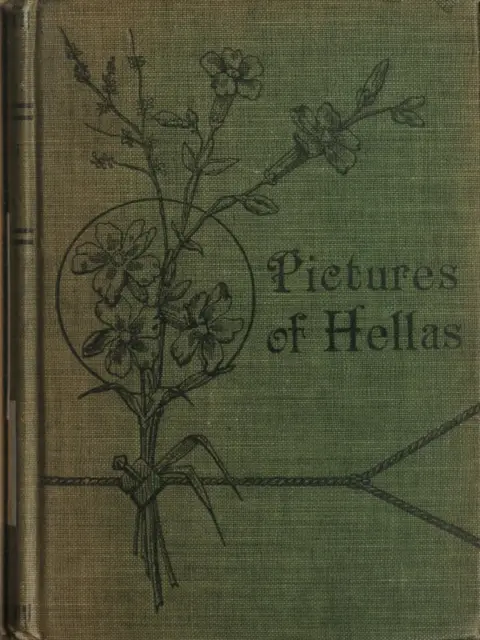
"Pictures of Hellas: Five Tales of Ancient Greece" by Peder Mariager is a collection of historical narratives written in the late 19th century. This work explores the ancient Greek world, focusing on life, culture, and the human element during a period referred to as the flowering of Hellas. Through its five tales, the book aims to bring to life the ordinary figures and daily experiences of ancient Greeks, offering readers a glimpse into a time shaped by divine influences and heroic deeds. The opening of the work sets the stage by introducing the narrative framework and providing a context for the author’s exploration of ancient Greek life. The preface outlines the challenges of capturing the essence of this era due to the scarcity of detailed personal accounts in historical texts. The first tale, "Zeus Hypsistos," centers around a cliff-city called Kranaai, where the conflict between Cychreans and native Pelasgians simmers beneath the surface. Key characters such as Lyrcus, a formidable warrior, and Byssa, the daughter of a priest, illustrate the complex social dynamics and themes of love, jealousy, and conflict that will unfold throughout the tales. The narrative promises to interweave historical elements with personal stories, aiming for an authentic representation of an ancient culture that deeply resonates with modern readers.
Introduction adapted from the source catalogue; source summaries may be automatically generated.
Free to read · English · 75,632 words · No account needed
MAKE TIME FOR A GOOD BOOK
On by default. Untick to stop anonymous reading totals. Each page counts after 10 seconds in view. How this works.
Anonymous counting is on unless you have switched it off.
Ninus bent lower and kissed the stone three times--a strange, weak voice, which seemed to issue from it with difficulty, said slowly, syllable by syllable, the two words:
“O-bey Do-ris!”
Hipyllos had been made no wiser by this scene. He did not yet know what terrible thing had happened to Clytie or for what reason she sought advice.
The priestess of Sabazius wiped the perspiration from her forehead, and in absolute silence washed the baetylus and put on its swaddling clothes.
“See!” she said as she replaced it in the basket, “the spirit is departing again.... But know one thing, girl; you must do what the baetylus advised; the ‘Unknown’ do not give their counsel in vain.”
“I will do it,” replied the muffled figure sighing. “But--the other thing of which Doris told you?”
Ninus smiled.
“You haven’t seen him for ten days,” she murmured. “And you think that he has forgotten you?”
“Dear Ninus!” cried the girl, pressing her hand upon her bosom. “He is my hope, my only hope. Your spells will not harm him?”
There was such tender anxiety in the question, that Hipyllos felt an almost unconquerable desire to spring forward and clasp the young girl in his arms.
“No,” replied Ninus. “These spells will do no harm. But, since I fulfil your wishes in this, give me the ring you showed me just now.”
Clytie hastened to comply with the demand.
Ninus then drew out an article wrapped in a cloth. “This is one of his sandals,” she whispered. Scattering sulphur on the charcoal she held the sandal in the smoke, then flung salt into the flame, saying in a slow, solemn tone:
“Hi-pyl-los, Cly-ti-e!”
The young man felt a shiver run through his limbs at hearing his name
so suddenly.
Ninus glanced around. This was the moment when the person summoned, drawn by an invincible power, ought to appear and fall at his loved one’s feet.
The priestess shrugged her shoulders.
“Hm!” she muttered, as though baffled. “Your fear was not groundless, pretty maid. Take this vessel I use in pouring libations and wrap the purple wool around it, put these laurel branches on the flames, hold the wax near them, and set the dish beneath.”
At the same time Ninus raised aloft a tri-colored wax image and flung fragrant boughs upon the fire before it.
“Hear me, most terrible of goddesses, mysterious Hecate!” she cried, “mercifully aid us and make our spells more powerful than those of Medea and Circe. Let his blood burn as these laurel leaves are consumed in the flame, and his heart bleed and melt with tenderness for this maiden as this wax melts from the heat.”
Your reading position is saved on this browser. Take it to another device with a library code. Reading pages adapt to text, rather than matching a printed edition.
BEHIND THE BOOK
This eBook is for the use of anyone anywhere in the United States and most other parts of the world at no cost and with almost no restrictions whatsoever. You may copy it, give it away or re-use it under the terms of the Project Gutenberg License included with this eBook or online at www.gutenberg.org. If you are not located in the United States, you will have to check the laws of the country where you are located before using this eBook. Read the source licence.
The original source file, including credits and licence, is retained by this library. Request an original-format copy at no charge. Please include the book title and Project Gutenberg identifier #56929.
KEEP YOUR CURIOSITY GOING
Cécile Tormay

Moritz Busch
Coulson Kernahan
John L. Ransom

Maurice Baring
Frances Wright