THE CLASSIC COLLECTION✦An outlaw’s diary: the CommuneCLASSIC FREE BOOKS
An outlaw’s diary: the Commune
Cécile Tormay
THE CLASSIC COLLECTION · 1888
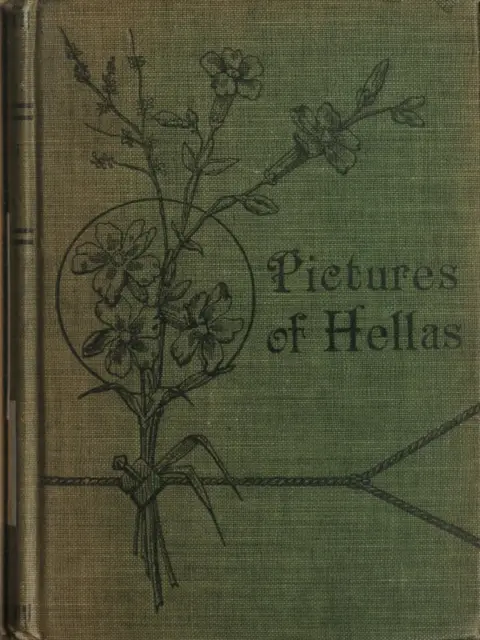
"Pictures of Hellas: Five Tales of Ancient Greece" by Peder Mariager is a collection of historical narratives written in the late 19th century. This work explores the ancient Greek world, focusing on life, culture, and the human element during a period referred to as the flowering of Hellas. Through its five tales, the book aims to bring to life the ordinary figures and daily experiences of ancient Greeks, offering readers a glimpse into a time shaped by divine influences and heroic deeds. The opening of the work sets the stage by introducing the narrative framework and providing a context for the author’s exploration of ancient Greek life. The preface outlines the challenges of capturing the essence of this era due to the scarcity of detailed personal accounts in historical texts. The first tale, "Zeus Hypsistos," centers around a cliff-city called Kranaai, where the conflict between Cychreans and native Pelasgians simmers beneath the surface. Key characters such as Lyrcus, a formidable warrior, and Byssa, the daughter of a priest, illustrate the complex social dynamics and themes of love, jealousy, and conflict that will unfold throughout the tales. The narrative promises to interweave historical elements with personal stories, aiming for an authentic representation of an ancient culture that deeply resonates with modern readers.
Introduction adapted from the source catalogue; source summaries may be automatically generated.
Free to read · English · 75,632 words · No account needed
MAKE TIME FOR A GOOD BOOK
On by default. Untick to stop anonymous reading totals. Each page counts after 10 seconds in view. How this works.
Anonymous counting is on unless you have switched it off.
How long Byssa sat thus she knew not.
She felt neither hope nor fear; she had no distinct consciousness of
what had happened.
A shadow passed before the entrance of the cave; there was a howl of joy, and Byssa felt herself pushed against the cliff.
It was Bremon, who in delight at finding her trail at the foot of the mountain, had snatched his chain from Lyrcus’ hand and now leaped upon her, overwhelming her with caresses.
The dog’s affection cheered Byssa’s heart; she roused herself from her stupor and covered the faithful animal with tears and kisses.
Again a shadow glided past the opening of the cavern.
Lyrcus, armed with spear and shield, stood before her, gazing wildly beyond her into the cave as though his glance sought someone. Then he looked searchingly into her eyes, as if he would fain read her inmost soul.
Byssa rose--her knees no longer trembled. As though answering the doubt in her husband’s glance, she pointed to the Pelasgian stretched in the dust and said:
“I have killed him.”
A shudder ran through Lyrcus’ limbs and he stared, as though unable to trust his eyes, at the lifeless form lying in the darkness.
“Byssa!” he cried, stretching out his arms to embrace his wife.
But she shrank back, shrieking:
“No, no, do not touch me.” Then in a low tone she added: “Shall I go to Mekone to be purified from the blood?”
For a moment Lyrcus made no answer, then he replied:
“No. Go to your father. It was a righteous murder.”
When, a short time after, they left the cave Lyrcus lingered behind and, unnoticed by his wife, drew the murderous weapon from the wound and thrust it into his own belt.
Scarcely had Bremon followed the pair out, ere in his joy, he leaped and danced around them, barking with all his might.
Instantly the whole mountain seemed to be alive. The loose stones above the cave rattled again and, urged by some dark foreboding, Periphas’ faithful herdsman hastily descended. At the same time, from the nearest chasm on each side, emerged half a score of armed men, yawning, rubbing their eyes, and straightening their skin cloaks, as if suddenly roused from sleep.
The shepherd entered the cave, but instantly came out again, looking very pale and troubled, as pointing to the two retreating figures he shouted wrathfully:
“Seize them! They have killed him ... with his own knife.”
The sleepy Pelasgians opened their eyes and several recognized the
Cychrean leader.
“It’s Lyrcus!” they shouted to the other party.
“Let us surround him,” was the reply.
Your reading position is saved on this browser. Take it to another device with a library code. Reading pages adapt to text, rather than matching a printed edition.
BEHIND THE BOOK
This eBook is for the use of anyone anywhere in the United States and most other parts of the world at no cost and with almost no restrictions whatsoever. You may copy it, give it away or re-use it under the terms of the Project Gutenberg License included with this eBook or online at www.gutenberg.org. If you are not located in the United States, you will have to check the laws of the country where you are located before using this eBook. Read the source licence.
The original source file, including credits and licence, is retained by this library. Request an original-format copy at no charge. Please include the book title and Project Gutenberg identifier #56929.
KEEP YOUR CURIOSITY GOING
Cécile Tormay

Moritz Busch
Coulson Kernahan
John L. Ransom

Maurice Baring
Frances Wright